Featured

Writing vengeance

I will write to avenge my people, writes Ernaux.

Revenge, writes Szymborska.

Why do these Nobelists write vengeance?

Sixty years ago, Ernaux wrote a sentence in her diary, that was the springboard for her Nobel lecture:

‘I will write to avenge my people, j’écrirai pour venger ma race’. It echoed Rimbaud’s cry: ‘I am of an inferior race for all eternity.’ I was twenty-two, studying literature in a provincial faculty with the daughters and sons of the local bourgeoisie, for the most part. I proudly and naively believed that writing books, becoming a writer, as the last in a line of landless labourers, factory workers and shopkeepers, people despised for their manners, their accent, their lack of education, would be enough to redress the social injustice linked to social class at birth…And so, without being aware of it at the time, that first book, published in 1974, mapped out the realm in which I would situate my writing, a realm both social and feminist. Avenging my people and avenging my sex would, from that time on, be one and the same thing.

Nobel lecture 2022 by Annie Ernaux, translated by Alison L. Strayer

Writing in her diary as a student, Ernaux was clear who she wanted to avenge, and that writing was the way to do it. Decades later, she thought she’d been naïve – but when she had a worldwide audience, she started with the same thing. Vengeance.

Sixty years ago, Szymborska wrote a poem that ended like this:

The joy of writing.
The power of preserving.
Revenge of a mortal hand.

The Joy of Writing by Wisława Szymborska, From No End of Fun (1967)
Translated by Stanisław Barańczak & Clare Cavanagh (1996)

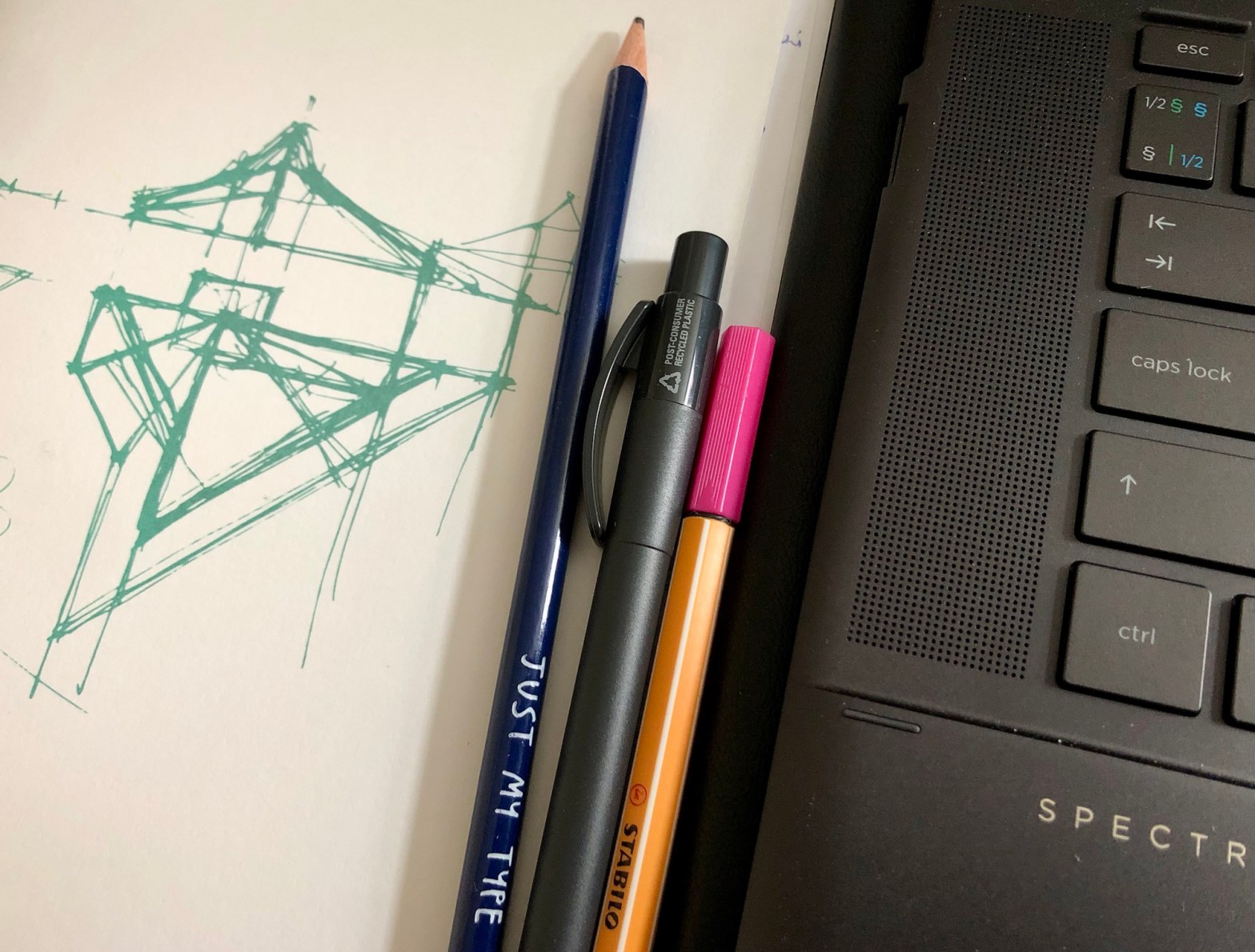
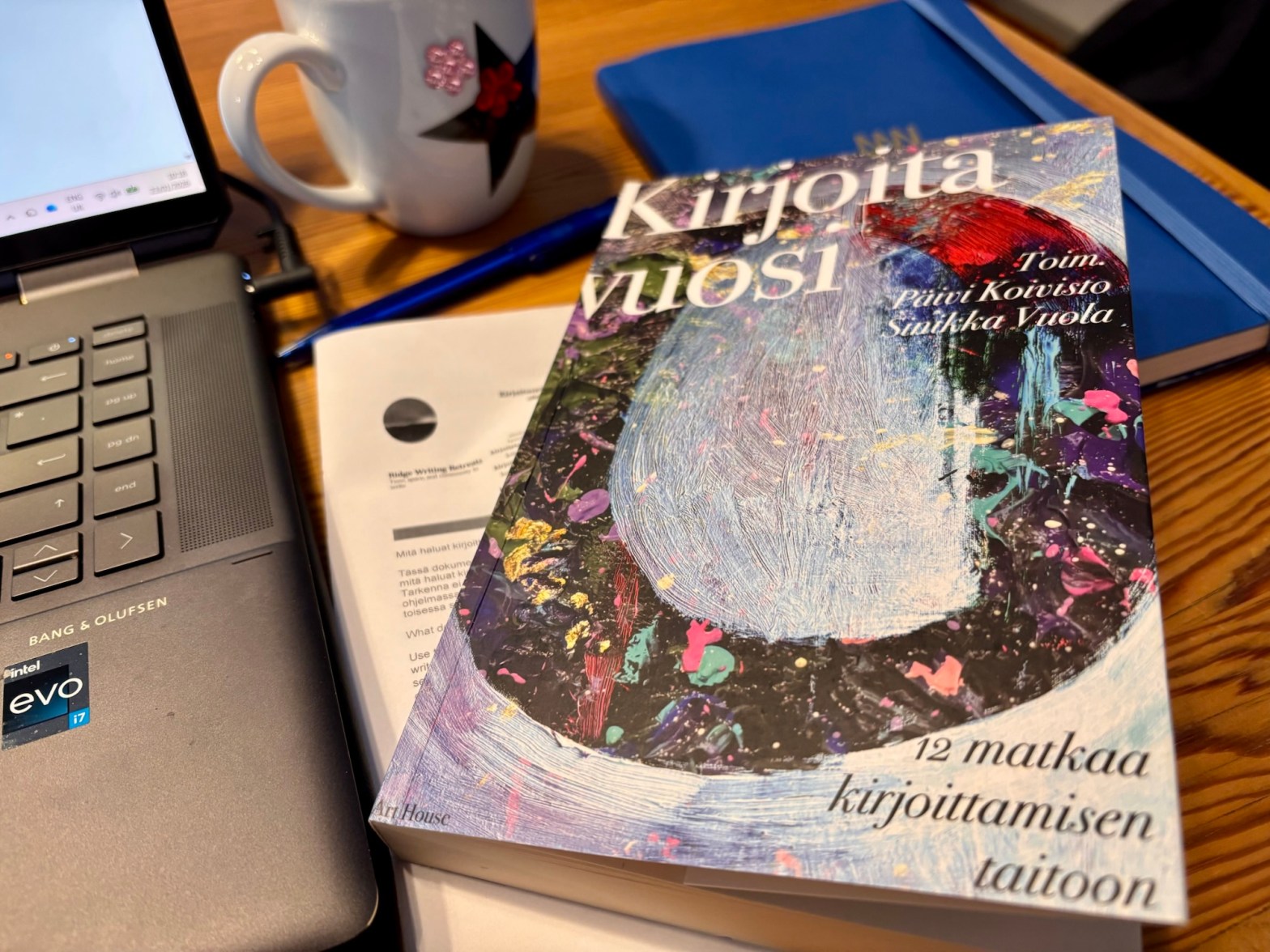
Whenever I think about writing, I think of this poem, The Joy of Writing, or Radość pisania in Polish. I think of joy with power, and revenge. Of the joy in discovering Szymborska as a student, seeing how simple the words were and how complex the meaning was. And how amazing the translators were – a pair of poets writing another poet from one language to another. And that a woman like me, yet so different from me, can win the Nobel Prize for Literature. That was in 1996, when we wrote our translations with paper and pencil. Only later in my degree did we go into the library to type up our essays on the computer. I got my first laptop in 1998, to start my PhD. Writing changed. But the joy, power, and revenge have not gone. And I have moved outside the academy walls. Writing on retreats, I am trying to recapture the joy I first felt inside the academy, to preserve it for others in another space. To take revenge, perhaps, on a negative writing culture by creating a positive one.

Featured

Write with us throughout 2024

How far in advance do you block out writing time? I’ve just got my own writing retreat dates sorted for the rest of the year. There might be more to come, but now we know that every couple of months, we have a couple of days to write together in person.

Your fellow writers have spoken! Here are our writing retreat dates for the rest of 2024. All retreats are bilingual, in English and Finnish, except Tohtoriverkosto retreats which are in Finnish only. You can write in any language. When I asked, you wanted a mix of locations, online and around Finland, and these dates were the most popular. If you want a retreat tailored to your group or department on a particular date, please contact me at least a couple of months in advance, as I tend to book up quite far ahead.

10. toukokuuta, Tohtoriverkoston verkkoretriitti

Yksi paikka vapautui, vain Tohtoriverkoston jäsenille mutta jäsennys ehdottomasti kannattaa! Lisätietoa tästä. Lisää verkkoretriittejä tulossa 13. syyskuuta sekä 14. ja 15. marraskuuta, ilmoitauttuminen Tohtoriverkoston kautta lähempänä.

16 & 17 May, Säynätsalo ­­Town Hall

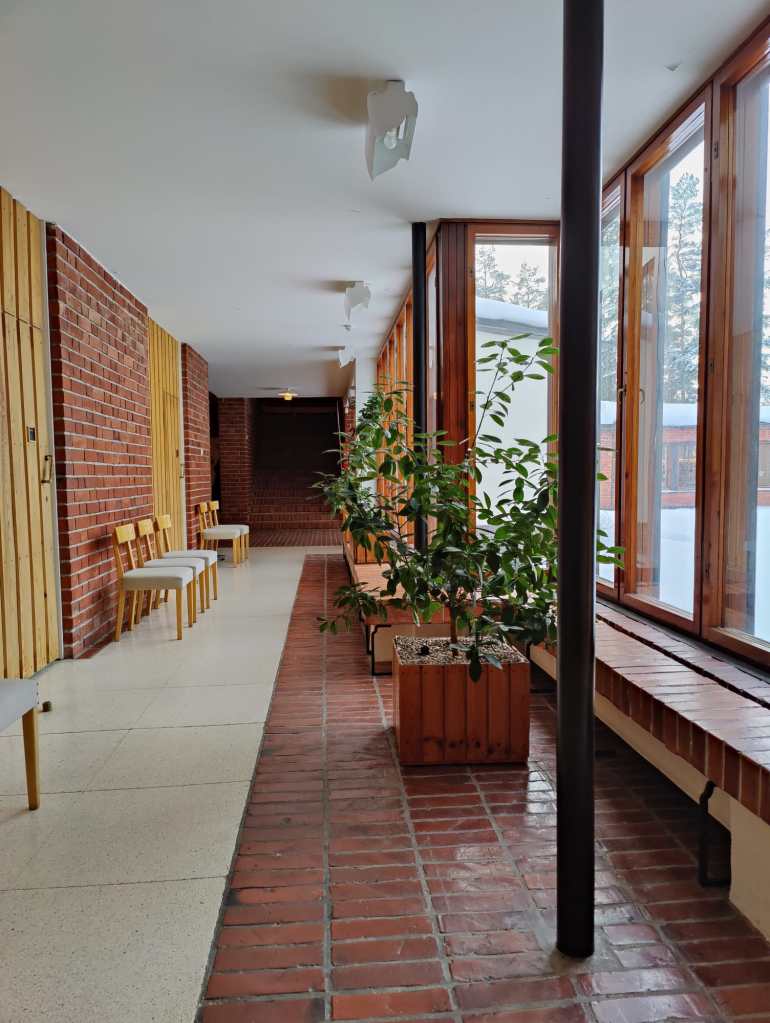
Write in a unique Aalto venue on an island in the middle of Finland’s second biggest lake. If you really want to get away from it all and focus, Säynätsalo Town Hall is the place for you to write. Just a couple of spaces left, book by 2 May here.

15 & 16 August, Porvoo, One Breath Workshop

Jie Zhao’s delightful small venue in the old town of Porvoo, One Breath Workshop has a few places to stay overnight or is easy to get to from the southern coast and Helsinki. This is our first retreat in Porvoo! Book here.

3 & 4 October, Tampere, Unity

You loved Unity so much this new year, that we are going back for more. Just ten minutes by bus from the railway station, on the ridge by the lake in forested Pyynikki, this is a beautiful place to write. Book here.

4 & 5 December, Helsinki, Valo Hotel and Work

Valo is a firm favourite, and before Christmas, we are back in this award-winning venue. Friday 6 December is Independence Day, a public holiday in Finland, so this retreat is Wednesday and Thursday instead of the usual Thursday and Friday. Book here.

New year 2025, Jyväskylä and Säynätsalo. We will come back to Central Finland again in the new year. Keep your ideas for venues coming, it is time we went back to Kirjailijatalo in Jyväskylä, and later next year, should we try Tekstin talo?

If none of those dates are good for you, help me choose next time by joining our mailing list. We write for an hour on Zoom on Wednesdays too, which is also bilingual and free.

Sign me up for monthly news

Featured

Prove you wrote it yourself

Recently, I had to prove that I’d written 300,000 words myself. Why? I’m now a qualified member of the UK Institute of Translation and Interpreting (MITI) for all my three source languages: Finnish, German and Polish into English. If you translate into or out of the “big four” languages, or FIGS (French, Italian, German and Spanish), you qualify as a member by doing an exam. The assessment is as close as possible to a real translation assignment. You get a text, a couple of days to research and translate it, and then you submit it, with a commentary explaining your decisions. I did this for German into English years ago, and now I assess other translators’ assignments. But if your working language is not so easy to study in the UK, there are not enough assessors to mark the exam. Helping with assessment was my motivation to qualify as a MITI in two “smaller” languages (Finnish and Polish). That process was different: I had to gather a portfolio of evidence about my translation work. But if I say I’ve translated something, how can they know it was me? It should be easy enough, when translators are named. While my name is in the published books I’ve translated, for other texts, we don’t always know the translator. The author or publisher of that writing might not acknowledge their work. Or the translator might not be able to say, if the document is confidential.

Proving it was you is getting difficult for other kinds of writers. A few weeks ago Lizzie Wolkovich explained in Nature how a journal wrongly accused her of using ChatGPT to write a research paper. It works the other way too; large language models are using authors’ work without their consent, breaching copyright. In its response to this issue, the UK Society of Authors is clear that “machines cannot be authors. Our copyright regime relies on concepts of human originality and skill and labour. Only humans can create and receive copyright protection.” The Russell Group universities in the UK have come up with very broad principles on the use of generative AI in higher education. They raise ethical concerns and make a commitment “to ensure that academic rigour and integrity is upheld.” In such a fast-changing field, the practical policy is much harder work.

If you write yourself, assess people’s writing, or help others to write better, I’m sure you’ve been thinking about this. I have, too, with my editor and translator colleagues, and the academics I work with. We’ve been talking about how machines affect human writing at writing retreats, on training courses, and in committee meetings. While some have already had more than enough of it, the conversation is only beginning. Shaping policy is hard work – but exciting. We can prove the value of human originality and skill and labour. When you write, you should be able to prove it.

new retreat dates – seuraavat retriitit

Featured

Women writing socially in academia: the lineage of an idea

You might not notice when you started writing something. An idea can take years to develop, and years more to come to fruition. But looking back can be revealing and help you look forward. If you’ve never tried this, I absolutely recommend it. Inspired by Margy Thomas and Helen Sword in #Acwrimoments8 I decided to trace the lineage of the idea for our book on social writing. It goes back almost a decade…

September 1998 – I start writing my PhD, living in a shared house with five other humanists (all but one are women). Some of us go to the brand-new British Library to write. We meet for lunch, plan what we’ll have for dinner at home, and talk about our writing. I didn’t know this had a name…

September 2015 – at international translation day in Helsinki, my colleague Virve Juhola talks about Nordic Editors and Translators. I join NEaT straight away.

October 2017 – METM17 – my first METM, or Mediterranean Editors and Translators Meeting, in Brescia. Professor Rowena Murray gives a keynote. I can see the potential in my work for social writing.

April 2019 – I train to facilitate structured writing retreats with Rowena Murray in Scotland and write that retreating is engaging when you put writing first, together.

November 2019 – Ridge Writing Retreats has its first day retreat. We write in the former city library designed by Wivi Lönn, the first woman architect with her own office in Finland. I’ll go on to write more about her later…

March 2020 – we move all our retreats online. Writing together virtually becomes increasingly important when we can’t meet physically.

June 2020 – retreat facilitators start meeting together online. These zooms see us through the Covid-19 restrictions and we realise we have more to share with others.

July 2020 – with Wendy Baldwin and Joana Pais Zozimo, we plan a book proposal to Palgrave Studies in Gender and Higher Education.

November 2021 – The book is born. Our proposal is peer reviewed and accepted by the end of the year.

2022 – we write the book! A dozen authors contribute from all over the world, mostly in Europe but also in New Zealand, Canada and Australia.

November 2023 – I start writing a chapter for another book about social writing, edited by a member of our writing retreat facilitators group.

December 2023 – we finalize and submit the proofs of our book to Palgrave.

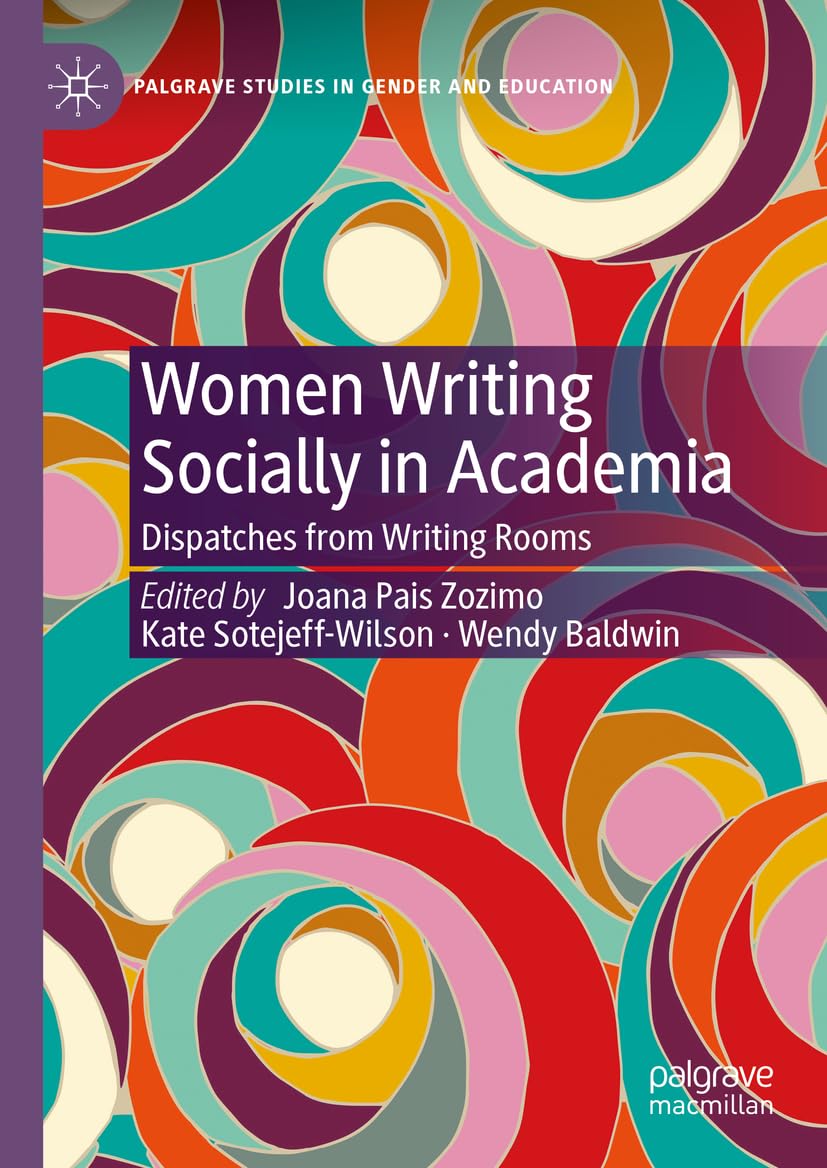
January 2024 – the book is published: Women Writing Socially in Academia: Dispatches from Writing Rooms

February 2024 – we plan the launch.

March 2024 – we present the book at the launch meeting of the WRAP network for social writing, research and academic practice. Join us at the summit on 18 March! Find out more about WRAP and register for the summit here.

new retreat dates – seuraavat retriitit

Featured

New year, new words

At the end of the year, the English dictionaries hit us with words of 2023 thick and fast. In 2024, which ones do you think will stick?

Artificial intelligence (Collins)  was the obvious choice. In 2023, this meant generative AI based on large language models you could ‘talk’ to, like ChatGPT (the Economist). But these technologies hallucinate (Cambridge), which means they make stuff up. So how do you distinguish between what’s artificial and what’s real, to find what’s authentic (Merriam-Webster)? Generative AI charmed a lot of people – did it have charisma, or rizz (Oxford)? But a lot of others worried about losing their jobs and the cost of living, or cozzie livs (Macquarie). The Germans went further and picked Krisenmodus, or crisis mode (Gesellschaft für deutsche Sprache). You might relate to that: the Polish youth word of the year is rel (PWN).

The Institute for the Languages of Finland (Kotus) added five thousand words to their database in 2023. These ranged from ahneusinflaatio, or greedflation, to äänikloonaus, or voice cloning. See, Finnish is easy! I have two personal favourites from the Finnish list. Käärijänvihreä, or käärijä green is the neon shade worn by the Finns’ 2023 Eurovision candidate. Heviballetti, or heavy metal ballet, was born through a surprisingly successful collaboration between Black Sabbath and Birmingham Royal Ballet. I think those two will stick, but will they? We’ll find out this year.

Mystical dictionary in käärijä green from HDWallpapers.

new retreat dates – seuraavat retriitit

Featured

All I want for Christmas is time to write

The holidays are coming closer and so are deadlines, but if all you want for Christmas is writing time, we have new dates and a new venue for the new year. Looking forward to writing with you in 2024!

Writing in a Winter Wonderland, Unity Tampere 8&9.2.2024

Unity is a brand-new venue for us, in Pyynikki, with a beautiful light-filled writing room, accommodation, restaurant and sauna overlooking the lake. If you are staying overnight, ask me for an accommodation discount code. If you aren’t, you can still stay after writing to use the sauna with us for free. Book here.

Write in the Light, Valo Helsinki 21&22.3.2024

This will be our fifth retreat at Valo, our most popular venue to date. If you want to stay in the capital but away from your usual writing space and up onto the rooftop spa, this is for you. If you are staying overnight, ask me for an accommodation discount code. Book here.

Spring into Writing, Säynätsalon Kunnantalo, Jyväskylä 16&17.5.2024

This is our fifth retreat in Säynätsalo Town Hall, too. We had a wonderful retreat last month and I’m looking forward to having you back on my home island. The venue is a unique Alvar Aalto building surrounded by Päijanne, Finland’s second biggest lake. Book here.

Scholarships

The pricing of retreats reflects the different costs of different venues; some scholarships are available so ask me before you book on Eventbrite.

Tohtoriverkoston retriitit verkossa

Seuraavat päivämäärät vahvistetaan uuden vuoden puolella. Nämä verkkoretriitit ovat ilmaisia Tohtoriverkoston jäsenille.

Retreats are in English and Finnish (except the Tohtoriverkosto ones, in Finnish only), but you can write in any language. If you can’t make these, but want to know about future dates, join my mailing list. If you want a retreat just for your own group, offline or online, get in touch.

And the Christmas chocolate in the top photo? That’s from our retreat last month. We spent 12 days writing together in 2023, not counting Wednesdays on Zoom; looking forward to more in 2024.

sign me up for monthly news

Featured

Lydia Davis – Essays One

Here is one of those delightful books that lure you into the pages of their fellows. Reading it, I kept wanting to send photos of pages to particular people. And to read what she’s been reading. By the end, I felt I had made a new friend.

Lydia Davis is deftly insightful about her own and others’ writing processes, the forces that shape them, and the books they bore.

In the opening essays she explains how she moved from forcing herself to hone classic New Yorker short stories to her own unique voice.

Essays One is also one of those books that make you want to write better. Like First you write a sentence or Steering the Craft, it urges you to pick up your own pen. And I mean pen or pencil here, not keyboard. Her micro-stories are snippets of delight. She shows you how other writers do things and what effect it has – till you have to experiment yourself. “Can you write the same thing in radically different ways? If you write it so differently, are you, in fact, saying the same thing?” Her thirty recommendations for good writing habits could be summarized as “observe, observe, observe.”

Before picking this up, I wasn’t aware of Davis‘s translations. Essays One includes essays ranging from her translation of Proust to John Ashbery’s translation of Rimbaud. Her analysis had me reaching right away for Essays Two, which focuses on translating.

This is a fat book crammed with ideas, but also a page-turner – I was drawn straight from finishing one essay into the next.

Read it – like Davis, with a notebook and pencil by your side. Essays One will keep you reading and get you writing!

Sign me up for monthly news

Featured

When should you write in a language you learned later in life?

When should you write in a language you learned later in life?

Some people never do. They are monolingual and they only write in the one language they learned to speak and listen and read and write in as a child. That is true of fewer people than you might think.

Some people always do. They have to write in a more privileged language to get published at all. Their own strongest language is not considered “serious” enough. Or the community of speakers and readers is too small to support publishing what they want to say. Or the community of readers and writers in their stronger language(s) doesn’t let them in. So they go to write elsewhere.

Some people have to. For example, if you are an academic, the pressure to publish in English is enormous. English is the lingua franca of the best recognized scholarly journals and publishers. Your funding, your project, and your whole career can depend on publishing in English. I help academics get published in English, so I know a lot about this. If you want to get published at all, you may have to write in the strongest language of the country you live in. Most of the publishing world in Finland, for instance, is in Finnish. Finland’s other languages – Swedish, Romani and Saami languages, signed languages – have a much weaker status. Not to mention the languages of people who were not born in Finland. Writers in these languages find it much harder to reach an audience. I know about this too, as I am only beginning to write for publication in Finnish.

Some people don’t want to. They want to write in the languages they learned first, to keep those languages alive and growing. They think and feel in those languages and want to help others do the same. This is essential. Languages are ecosystems that need resources: water, air, light, food. The biodiversity of languages is threatened and needs environmental activists.

Some people want to write in a language learned later. But it is not easy. It takes years of dedicated hard work to learn a language well enough to write in it and be published. You have to read widely. You have to find good teachers. You may need an editor – editing helps any writer, but some need it more than others. You need fluent speakers of the language you are writing in, who are on your side, and create space for you to share your work. You might end up creating those spaces yourself, with others. Because the traditional publishing channels are so hard to access.

The people who never, always, have to and (don’t) want to write in a language learned later in life need to talk to each other. This needs to happen on an equal footing. Soon, I’m talking about authors’ editors as access allies at a conference. Recently, we talked about writing in a language learned later at a book fair. Before that, I was at an event where somebody spoke about “us” and “immigrants who don’t have degrees.” I felt like I couldn’t challenge the speaker in plenary, in my fourth language, and say “I’m an immigrant with a PhD and I’m here.” Next time I will. For many of us, the conversation is just beginning.

Featured

Writing with Pleasure

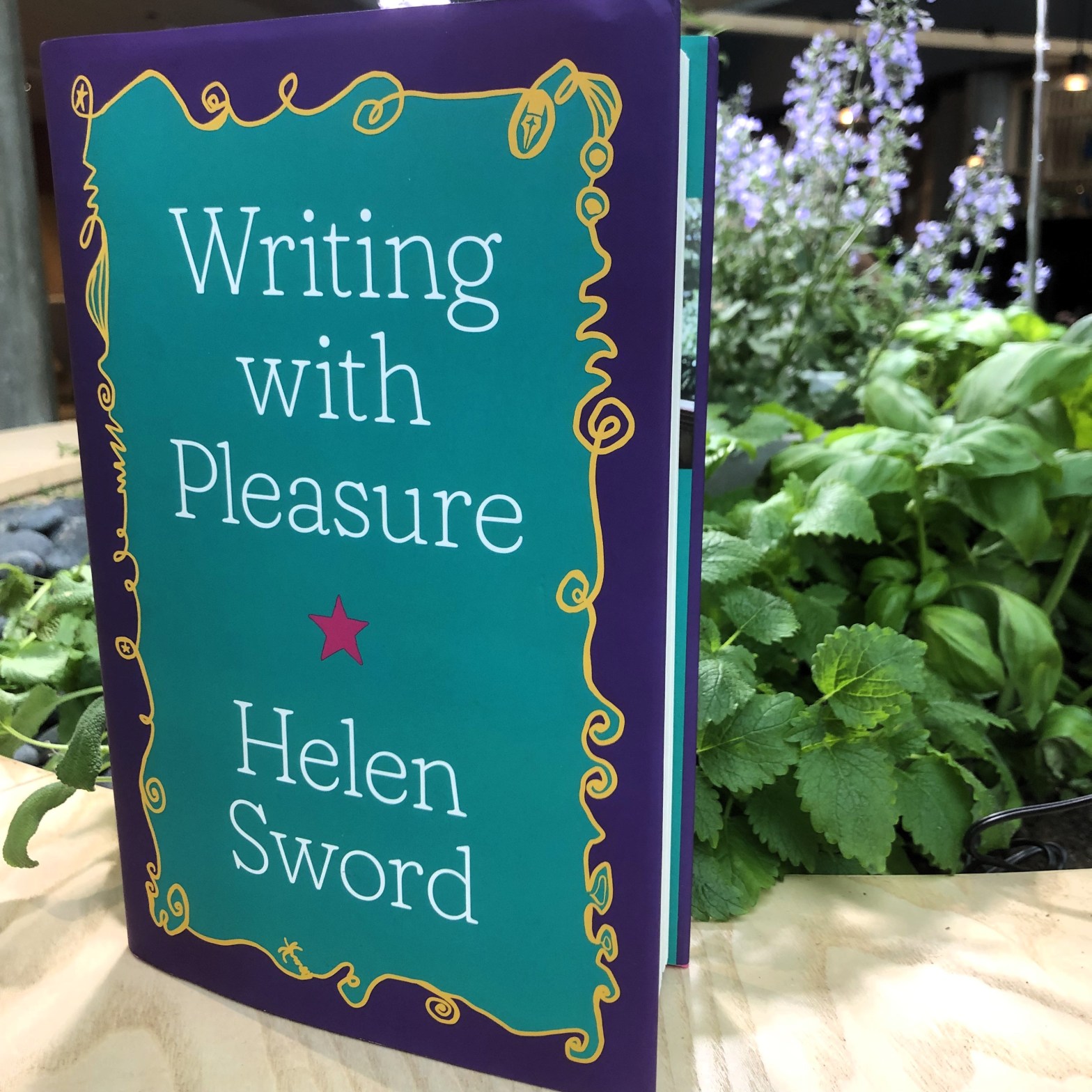
Writing with Pleasure is a pleasure to read. I whizzed through it on the train down to facilitate a writing retreat. I was travelling to a pleasurable writing experience, with people I had written with before as individuals, though not in the same group. But I also knew the experience would be a pain. I had to make corrections to a text I’d started months ago, and I expeted it to be hard work. Could this book help?

It did.

Helen Sword writes beautifully, using metaphor to get complex ideas across in a memorable way. From Air and Light and Time and Space I knew I would enjoy her latest book too. But part of me worried it would be a bit Pollyannaish – is it possible to ignore the dark side of writing, the difficulties it causes?

Sword sees a research gap “you could drive a bus through” here. Plenty of books address the problems and inequalities that make writing a pain. Productive and creative writers must enjoy it on some level: but few books say why, and how. As in Air and Light, Sword asked over 500 academics what made writing a pleasure for them, and the book is peppered with their stories. Interspersed with these are pictures and poems by Selina Tusitala Marsh. Instead of traditional endnotes, there is a delightful reading notes section. This was scholarly and organized too, but the only piece missing from the book is an index of exercises.

SPACE is the core concept that structures Writing with Pleasure. What makes writing socially and solo, physically engaging, aesthetic, a creative and cognitive challenge, that gives you an emotional uplift? How can you do this in practice? What tools, processes, and identities help? The book closes with a road map for making that bit of your writing you hate, a bit more loveable (for Helen Sword, it’s email).

You don’t have to read the book from one end to the other and take notes. You can start at any point that interests you, pop out, and dip back in.

But you do have to do the exercises.

Exercise one is to find yourself a new notebook. You then use it to free write and reflect on what can make writing a pleasure for you. On retreat, I did the first exercises in my brand-new notebook from the Glass Mountain (the Latvian National Library). I talked through them too with my fellow writers. We remembered when we had enjoyed writing, such as in the early hours before anyone else was up. We shared what else we enjoy doing that could feed into our writing SPACE. One said that ballet is like research – there is a strict framework, rules within which you can create. We got ideas from each other.

Starting to work through this book, I realized – again! – that I love starting writing, but hate finishing. The bit I dislike doing for myself is something I love doing for others; the final edit. The details of that last text need to be right, but by then I already have one foot, one hand, and one brain lobe in the next. Once I’ve finished the exercises, I should have found a way to make that last self-edit more of a pleasure.

If you’d like to write the exercises together and talk about them, let me know. But first, get Writing with Pleasure from Princeton University Press. Here it is in situ during that retreat…

Sign me up for monthly news

Featured

Little and often

I’d love to have vast swathes of time to do nothing but write, but I haven’t got it. So little and often works for me. What about you?

For three years now, pretty much every Wednesday, I’ve been writing with others on Zoom. We started in spring 2020 (no prizes for guessing why, but here’s some context), and I can’t imagine stopping. Except for holidays, of course. We started doing half-day mini writing retreats, because that’s what I had been doing offline. With a colleague in the library once a week, ending with a long lunch. Now, we meet online on Wednesdays at 9:30 am Helsinki time. We share our goals for a few minutes (camera on), write for an hour (cameras and mikes off), then take a few more minutes to plan our next steps. For me, mid-week works well, as even with a six-day weekend, I should be writing then. And if there are other deadlines, I can fit them in later that day. It’s a popular time for team meetings, but that’s what this is, too.

It’s a writing meeting. As Rowena Murray and Morag Thow say, if you can’t make time for writing that other people will respect, call it a meeting. Then they won’t bother you. Your diary is full, you’ve booked your room. You can work undisturbed.

While a writing session like this has a clear structure, it’s more flexible than a retreat. On a writing retreat, I expect people to commit to the whole day or all the days, with no distractions. There are costs involved. The online writing sessions are free. And so long as you don’t disturb other writers, you can be freer with the structure. If you have to be somewhere else, pop a message in the chat and leave early. If you come in late, you keep your mike and camera off and join the flow. If you can’t make it for months because you’re teaching, or have a dance class, or have been ill, or are too busy, that’s fine. If you only come when you’ve got a massive deadline, you can start writing without some friendly faces round you. If you write with me every single week, I’ll be delighted. Because that’s what I aim to do. And I’m happy to see you when you can make it.

During these Wednesday sessions, we write all sorts of things from blogposts to books. In early summer one of us joined from a different country every week, as they moved around doing research. In the new year we used it to write an article in 12 weeks. You use it for what you want to write, when you need to write it. And you can write in any language. We speak a mix of Finnish and English, and most weeks, people are writing in more languages than that.

Perhaps a huge project is looming over you like a storm cloud. Or there’s that one tiny task that you can’t find time for. Or you need a bit of a push to get back into something you’ve been putting off. For some, the hardest part of writing is starting, for others, it’s finishing. But an hour isn’t so bad. Having some other people to write with, just for an hour, is doable. Little and often adds up to a lot.

If you want to join us, help me choose where and when we’re writing next, and I can send you our regular Wednesday link. See you on Wednesday?

PS For Finnish speakers: 1.9. Camilla Lindholmin kanssa puhutaan yhteisöllistä kirjoittamista Tohtoriverkoston kirjakahveilla. Tervetuloa mukaan!

Featured

We wrote a book

This week, with two colleagues, I sent a book we had edited off to the publisher for peer review. This same week, I finished the first draft translation of another book. I’m working on that one with the author and a master’s student on placement with me. So in both cases, we were a team of three getting ready to send the manuscript to the publisher. These aren’t the first books I’ve worked on, and they won’t be the last, but some of the same things struck me in both processes. Here are my ten commandments for writing a book together.

1. Talk to each other

Face-to-face conversation creates responsibility and community – and gets things done. My co-translators are in the same country, but different cities, so we met offline, but not often. My co-editors are at the other end of Europe, and the writers of the chapters are on three continents. Start with group video chats, and whenever things got sticky, talk.

2. Read the questions

Like in an exam, reading the questions closely can save you time later. For the book I co-edited, we checked some guidelines quite late and had to tweak things at the last minute. For both books, I wrote a style sheet before we started, which the other two people in the team checked and used. Check or make your style guide early, and use it.

3. Set up systems

Use email only when you have to. We worked a lot in shared online drives. One of my co-editors was amazing at setting up checklists and steps so we knew what to do and when. One of my co-translators was fantastic at catching things to make sure we were consistent. In a team, you can take take on roles in your system that suit your strengths.

4. Share the good news

A whole book is a long slog, so short positive updates help you keep going. When a team member got good feedback from an author, I told her straight away. When someone wrote a lovely foreword, it boosted us to write a better introduction. When we submitted our edited book, the contributors started planning the launch… It’s never too early to celebrate!

5. Be flexible

If there are twenty of you, you can’t always have things your way. During the co-editing process, people had babies, moved continents, and faced serious illness. During the translation, I had to share my drafts early enough that two other people could work with them. Systems fail, circumstances change, things come up. You can adapt, and the person who has less going on can take more on.

6. Stet

Sometimes making no changes (stet, in editor speak) is the best change. People have very different ways of working, and writing. Some like to plan to the sentence level months in advance; others do their best writing as the clock ticks down to a deadline. Working outside your natural rhythm isn’t easy, but sometimes you have to leave things as they are and wait.

7. Give yourself time

If you want your editors to give you constructive feedback, you need to give them time to do it. So you need to give yourself enough time to write. You need to give people enough notice that a bit of text is coming their way. This has the advantage of letting the text rest, from your point of view, which makes it better.

8. Challenge kindly

Reviewing others’ work is an art. I try to do this kindly but don’t always succeed. Seeing how the other people on my book teams did it helped. I learned a lot. Giving constructive feedback makes the other person’s work stronger, and is a way of honouring them. When they do the same for you, your work gets better.

9. Let go

Good enough is good enough. Sometimes, when texts need input from many different writers, there isn’t time to revise as much as you’d like. It’s going to peer review, let the reviewers do their job. If something did not go to plan, but you found a solution, let go.

10. Rest

Like dough rising, a book needs to rest. And so do its bakers. Now our co-edited book is with the peer reviewers, there is absolutely nothing we can do about it. When my translation is with the author, I can’t touch it. When your text comes back, you can knead it with renewed enthusiasm.

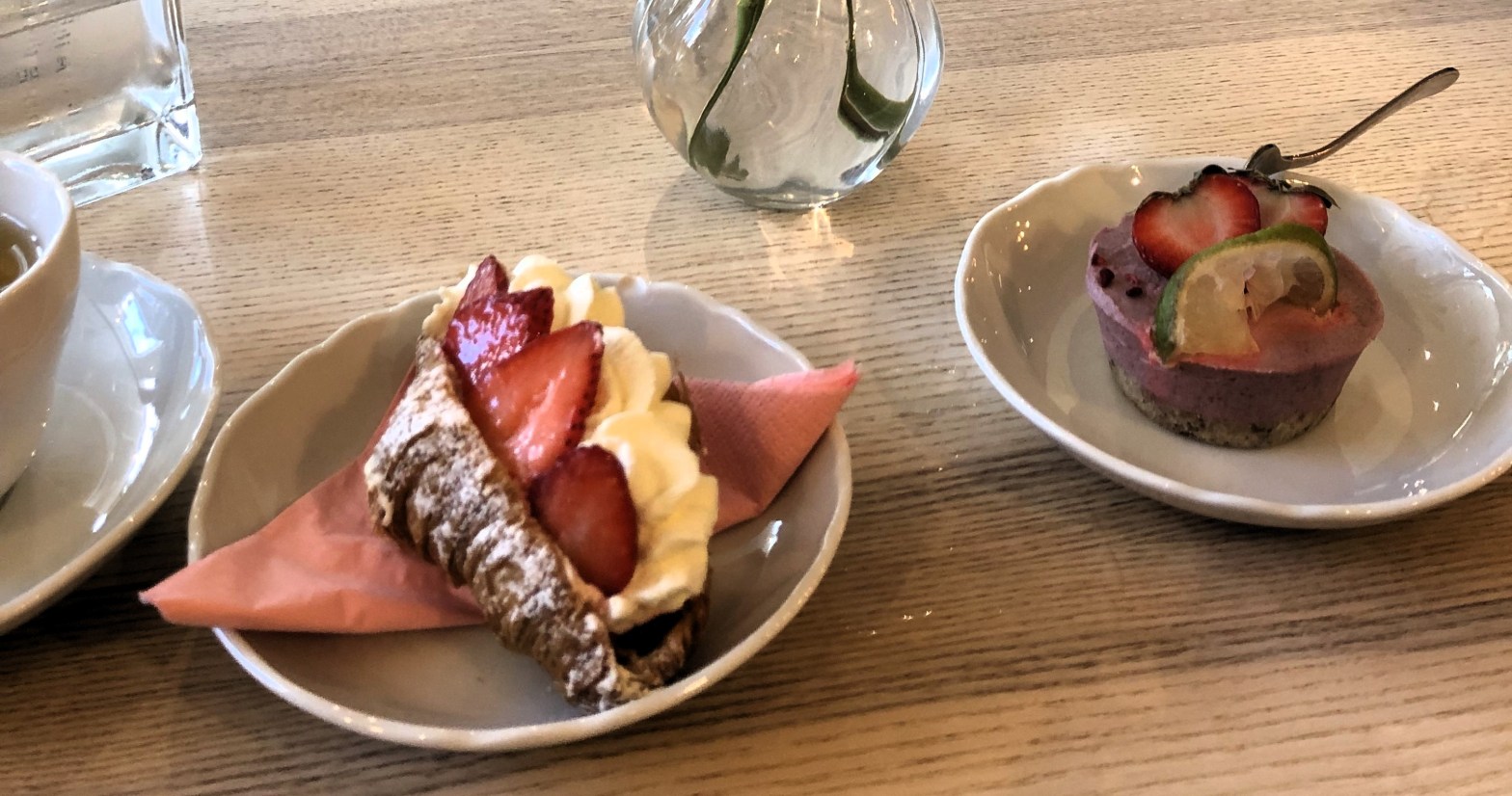
When those manuscripts come back, there’s always something that could be done differently. But remembering to talk and rest, and everything in between, makes the process better for everyone. Next time, I’ll have a different ten commandments. But when we meet in the same place (as pictured) there’ll still be cake. What works for you when you’re writing a book together?

new retreat dates – seuraavat retriitit

Featured

Human versus artificial writing: wheat and chaff

So I finally tried ChatGPT. And this is how it went.

I went through the hassle of setting up a new email address and played with the free version of OpenAI. I wanted it to get to do something it’s supposed to be good at. To digest what I had learned so far about large language models.

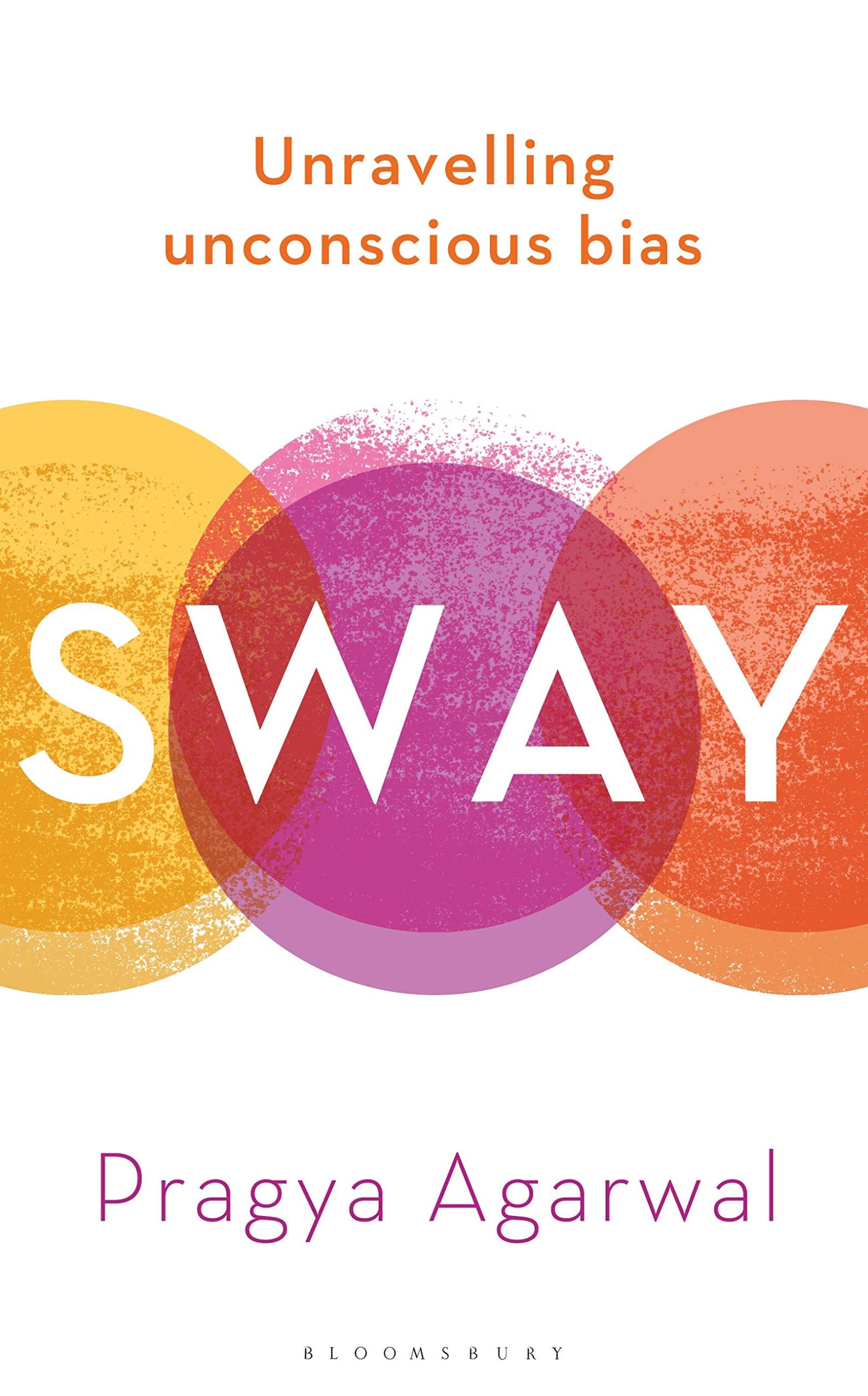
My biggest concerns are data privacy, bias, and hallucination. Large language models aren’t secure, aren’t neutral, and make stuff up. So unless it doesn’t matter whether what it says is true, you need to know where to check what ChatGPT tells you. And it will reinforce the biases in the data it has got (Sway is brilliant at explaining this). If you read one article about the issues involved, I’d recommend the UK Society of Authors advice to writers. If you want to use it in the drafting stage or to process information, other people can help you get started (the Thesis Whisperer and Nature for academics, the CIEP and APA for copy editors, and the ATA for translators).  The model is only as good as the data it gets, and it doesn’t cite its sources.  And it takes energy. The environmental impact is hard to calculate.

I knew all that without trying it for myself. But it was time to take the plunge.

At first, I was thrilled with how OpenAI handled a lot of information, fast. As soon as I asked it to summarize all the links and notes I’d collected about it, it could see how some didn’t relate to the question I was asking.

But the text it generated was pretty long too, and reading and regenerating it took real time. Its first output felt like a school essay. When I asked it to make it sound more like an academic article abstract, it just used higher-register words like “paramount,” and “imperative.” I was soon drowning in verbal diarrhoea. So I gave it word limits and got it to give me bullet points, which was better.

Then I asked it to rewrite its summary about itself like Chaucer, which was fun, but maybe less useful (tacking a letter “e” on the end of words doesn’t make it olde Englyshe). Regenerating the output made it worse: the text flowed more poorly, it got increasingly doggerel-like, and information got lost.

After one hour, I made myself stop and log out. This thing can save time but it can also be a colossal waste of time. I won’t inflict the whole “Chaucer” draft on you, but here are 10 unedited lines:

Whan thaten writers ande linguists han yspoken,
Of large language models, here be reasons token,
Concernes they han, of privacie and such,
Editinge limitations, biases as much…
To generate ideas, when blocke befall,
With prompts ande suggestions, to answer the call…
Yet caution be advised, to relye not alone,
On these models vast, bute to make truth known,
Verify information, fact-checke with care,
Retain one’s voice, unique ande rare…

I think the real Chaucer deserves a word here. He says that if we expect to find some useful truth in our writing, we need to separate the wheat from the chaff:

For Seint Paul seith that al that writen is,
 To oure doctrine it is ywrite, ywis;
Taketh the fruyt, and lat the chaf be stille.

(Canterbury Tales, The Nun’s Priest’s Tale, VII.3431 ff.)

And I found that quote by googling. When I asked ChatGPT to find me an image to go with this text, it told me to use a search engine (DALL.E is for another day). Without using ChatGPT, I  summarized my ideas faster, and sounded more like me, in that same time. But if I need to process a lot of new information or find out how to use a term or tool, I’ll give it another whirl. I can see how it would be useful if you’re drafting something or entering uncharted territory.

Thank you to my colleagues in the ITI, NEaT, MET, SENSE, EASE, and Akavan erityisalat (the Finnish trade union for academic specialists, including linguists) for our conversations about using large language models over the last month or so. And thank you to the wonderful few of you who I spent a weekend retreat with, creating the space to write this. Half way through my draft, I stopped for lunch, yoga, and to talk about it. When I finish, we’ll heat the sauna. A chat tool can’t support my writing like that.

Organizing your thoughts takes more than feeding chunks of language into a model. Writing takes more than regenerating other people’s words without crediting them. I won’t stop learning about or using this tool, but I won’t stop doing a lot of other things that help me write.

Have you tried it? Is it useful? Does it help you write better? I’d like to know. We need each other to sift the wheat from the chaff.

Illustration from the Ellesmere Manuscript. Held by© MS EL 26 C 9, The Huntington Library, San Marino, California.

Featured

Write through summer

My writing wish list for summer 2023 is short (8 words):

1. Finish translating a book.

2. Take a month off.

Do you have grand plans for your summer writing? Now is a good time to think what’s realistic, how you’re going to write it, and most importantly, when you’re going to rest.

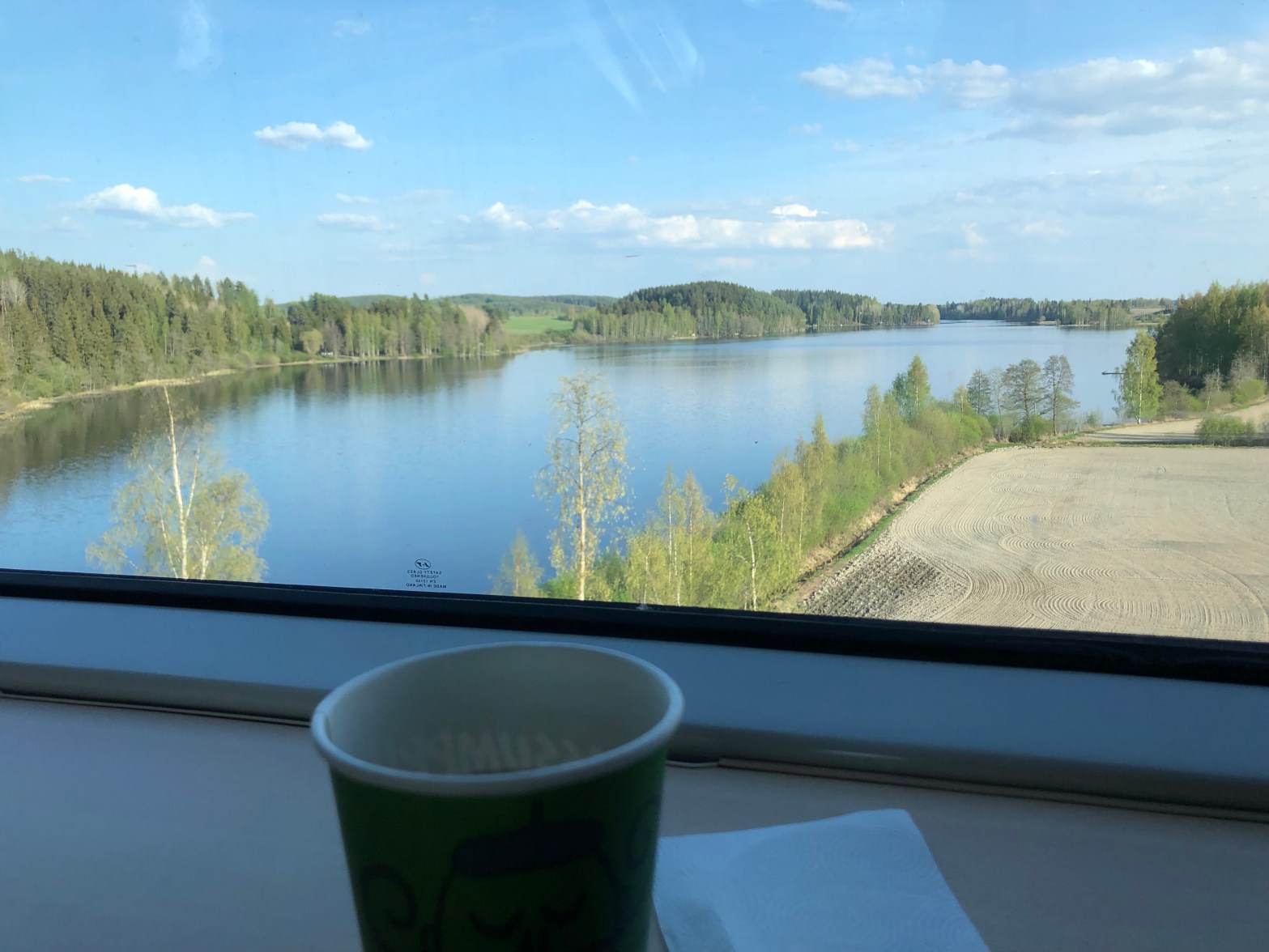
Out of the office routine, writing is both easier and harder. I’ve spent the last ten days on the road, travelling to two conferences and a choir concert, seeing family, and fitting in the work I have to. I started writing this on the train home (view from that train pictured above). Travelling reminded me of what I have to have to write. Here’s the first few letters of my writing ABC…

Airplane mode

On an actual plane you have to do this, but putting your laptop or phone into airplane mode will block onscreen distractions out of your text. And it makes your battery last a lot longer.

Backup

To do A without losing a three-hour flightsworth of work I resort to a good old fashioned USB stick. Feels unbelievably retro, but it works.

Calendar

Sit down and block out all the time off you need first (if you don’t take it in summer, you won’t make it to winter). Then look at what’s left for writing and divide your plan up into the time available. So if you have ten writing days and 10,000 words to write you have to do a thousand words a day. When they’re written, you can stop. This sounds obvious but is SO useful if you do it.

Dawn

When I am a guest or host, often the only way I can get writing done is to get up early, grab some fruit juice and write for an hour or more before anyone else is up. If you’re enough of a sometimes-morning person to do this, it’s brilliant. Impossible things can happen before breakfast!

Editing

Translators say you can translate drunk but you must edit sober. To catch slips, look at what you wrote in unusual circumstances again in a more stable environment. Don’t forget to factor this in to C.

Flexibility

Pausing something won’t make it go away but changing tasks or tack can indeed be as good as a rest.

Group

The other writers out there can help you stay on track and you can do the same for them. Even on the road, I’ve kept up my zoom hour to Write on Wednesdays. And after a long summer break, I know the group will catch me. We will get back into it together at our next writing retreat – at Valo Helsinki on 17–18 August.

How do you ensure you get your writing done so you can have a proper rest? What’s your writing ABC?

new retreat dates – seuraavat retriitit

Featured

Social writing – a guide in Finnish

I am delighted to see this book come into being.

Johanna Isosävi’s and Camilla Lindholm’s Yhteisöllisen kirjoittamisen opas (Art House 2023) came out last month. It’s the first guide to social writing in Finnish. The book is both practical and inspirational; it packs a lot into a handy paperback.

Lindholm and Isosävi run social writing groups at their universities of Tampere and Helsinki and online. They trained with Rowena Murray, and provide an up-to-date overview of the literature and practice on social writing, in Finnish.

Ten chapters cover everything you need to get started writing with others. When you finish reading it, you’ll be inspired to write together. You’ll have smashed some myths about writing to smithereens, and taken control of your time to write. You’ll know how to set writing goals and what the social, physical and cognitive dimensions of writing are. You’ll be able to choose between physical and virtual structured writing retreats and writing groups. Wellbeing aspects of social writing will be clearer. And how social writing helps at different stages, from undergrads to professors, will make more sense. Then you can get the basics of facilitating a social writing group and try some different writing techniques. Each chapter ends with some questions that tie the topic to your own writing. The book closes with a short guide for participants in an online retreat that you can adapt and use yourself.

Nine contributors tell you about an aspect of social writing that correlates with their own expertise. These range from Arto Pesola on ergonomics and getting up from sitting to Ildikó Vecsernyés on how social writing helps academic staff.

I wrote about the joys and challenges of physical, as opposed to virtual, retreats. Bodies in the same physical space write differently. I closed by saying that “presence to each other, ourselves and our text is too rare in our everyday lives, so a writing retreat can be a political act. It creates space and community in which we are able to think and be creative.” Isosävi and Camilla Lindholm are making that happen in their contexts. If you speak Finnish, get a copy and make it happen in your context, too.

new retreat dates – seuraavat retriitit


Featured

Bodies, writing

We’ve been online and on screen too long.

We need to get off, and get out.

We know this, but we don’t do this.

We need other people to help us do it, together.

It’s three years since Covid-19 hit. I wrote about how it affected our writing then. Now, many things are back to normal. But our bodies remember.

I’m writing this on a structured writing retreat. In person, in the room with a dozen others. (Mostly women, I’ll come back to that.)

After all this time on Zoom, writing in the same room can feel strange. It’s handy to be a click away, but it’s easy to click yourself out of an online meeting. And some days, I have a physical adverse reaction to that screen of little squares of faces. We are not talking (or muted) heads, after all. We have bodies.

And ignore it or not, our bodies are writing with us.

So far, this body has had breakfast at home, tea before writing as people arrive, coffee and a Danish pastry at the first break. Soon it will stop writing and walk for fifteen minutes to a hot cooked lunch by the lake where they do weddings. Then this body will walk back again, with the same dozen or so women (only one man for one day, I’ll get to that), and write a bit more. And decide to have tea instead of yet more coffee, and eat some fruit, and then go for a longer walk and pizza and beer and bed.

And do it all again tomorrow, with a dozen women. Who haven’t cooked or thought about immediate logistics at all for two days. Because they aren’t at home, and someone else is taking care of it for them. Tomorrow too, someone else will lead yoga. All we have to do is write, and look after ourselves and our bodies to do it.

One of us is very pregnant – an immovable physical deadline. One of us has teenagers with complicated lives. Several of us have been teaching for decades and are usually running any group they’re in. We’ve already had at least one conversation about supporting older parents. And others about moving countries, visas and racism and academic funding cuts. But we’re creating space to leave all that at the door. All we have to do is write.

What we leave at the door to the writing retreat can be a reason that push more women, non-binary and other people through it. And fewer men, because, still, men are less affected by those things.

Another reason is the structure. A structured writing retreat means set start and finish times. Someone else tells you when to write, and when to stop. You aren’t as free to do things your way. You’ve told everyone else to go away – for every retreat, I put an out-of-office email on. But this structure is a load-bearing wall with a door in it keeping all that other stuff out. The stuff can huff and puff but it won’t blow our house down. We need that.

I do online writing retreats still, too. Doctoral students in particular need them and they are more accessible. Whenever someone joins us for the first time, I’m struck by how hard they find it to concentrate. We get so distracted online that some people find an hour of writing too long. Ninety minutes, even with a stretch break half-way, is impossible. Even a Pomodoro (25 min plus 5 min break) is a challenge. If 90 minutes is three Pomodoros, it’s imaginable, but it can be terrifying. At home alone, distractions are myriad, especially when the internet sucks you in. Some days when I have too many Zoom meetings it’s like I’m back in lockdown. All those little squares keeping me from getting outside in the fresh air, to breathe, to move, to think. It’s easier to get off your laptop or phone when you have other bodies right beside you.

Bodies in the same space find it easier to write. You can hear the typers tapping, see the pencils scribbling, smell the breaktime coffee wafting down the corridor. And taste the cake without which no retreat is complete. You can get into the rhythm with others. And in the breaks, there are other writers to talk to. How is it going? What are you stuck on? You might have other people in your office or house, but they quite likely want something from you, even if it is to do with what you’re writing. In your office or house, it’s easier not to go away from your screen or eat properly or move enough. On a retreat, other writers help you take proper breaks, so it’s easier to start writing again.

On a retreat, the other bodies are writing in different directions. Where I’m writing this, we have philosophers, film students, linguists and policy analysts. Bodies based in different institutions and none. Bodies that walked here because they live around the corner. Bodies that flew here – on a plane, not wings, but next time, who knows?

On a writing retreat, our bodies are different. They might not fit into a gender binary or a sexuality script or the clothes they wore a few months ago. But we can all be, gently. It is different facilitating writing retreats five minutes from home – my body knows the space – and hours away by train. I write well in both kinds of space.

But in both cases, I write well because of that load-bearing wall that’s holding everything else out and up. The structure makes it happen. And other people make it happen, too. With me are other bodies, writing.

new retreat dates – seuraavat retriitit

Featured

The carrier bag theory of fiction

If you read one thing about writing this year, try this. It’s tiny – but transformative.

Ursula Le Guin’s own writing is beautiful and she writes about writing wisely, from Words are my Matter to Steering the Craft. But here she goes back to the first stories at the dawn of time and forward to the future of our planet(s). In a few pages.

Her main point is this: What if we stopped telling stories about heroes killing other living beings? Instead, we could tell stories to hold living beings. That’s The Carrier Bag Theory of Fiction.  Before we were ever hunters, we were gatherers. And while  gathering, you need “a leaf a gourd a shell a net a bag a sling a sack a bottle a box a container. A recipient. The first cultural device was probably a recipient.”

Since so many have tired of hearing the “killer story” that cannot end well for any of us, Le Guin, in 1988, proposed telling a “life story” instead.

“A book holds words. Words hold things. They bear meanings. A novel is a medicine bundle, holding things in a particular, powerful relation to one another and to us.”

Writing like this, in a novel, or in science fiction, is “trying to describe what is in fact going on, what people actually do and feel, how people relate to everything else… The story isn’t over. There are seeds to be gathered, and room in the bag for stars.”

Le Guin’s words dovetail with a lot of other people’s work I’ve been editing lately – from feminist vegan activism to culture, philosophy and utopias. In her introduction to this edition, Donna Haraway shares three bags she received on a research trip to Colombia. Using these bags, remembering who made them, commits her again to a shared struggle for “recomposing lives and making new sorts of kin in hard times”.

Of course, Le Guin got there much earlier. Reading this, it’s hard to bear that she won’t write anything new. But there’s so much to find in what she’s already written.

This delightful, diminutive book, with illustrations by Lee Bul, is published by Ignota. If you only read one thing about writing this year, read this! I, for one, will keep trying to make my writing more of a medicine bundle. And make sure there is room in it for stars.

new retreat dates – seuraavat retriitit

Featured

Write into 2023

Happy new year! Let’s write again, like we did last year… at two of your favourite venues and in a new social writing challenge. My new year’s writing resolutions are to write little and often, keeping Wednesday mornings for my own writing projects, and to write more in person with others in pairs as well as on retreat. What about you?

January

Start gently by writing for an hour: Write on Wednesdays online restarts today.

Flex your muscles with a bigger writing project, together. On Wednesday 18 January, we start writing our articles in 12 weeks. There is still time to join that challenge on the Ridge Writers Facebook Group (in English and Finnish, for anyone who writes on retreat with me) or with Tohtoriverkosto (the Finnish PhD network) in Finnish only. Contact me for more info.

February

Write in a winter wonderland on Thursday and Friday 16 and 17 February at Säynätsalo Town Hall (pictured) very close to my home. This is a gorgeous island venue where you really can get away from it all, and get creative in a unique Alvar Aalto building. At our retreat there this time last year, some of us stayed up late enough to see the Northern Lights. Can’t wait? Book here.

March

Keep going with the 12-week challenge. On Friday 31 March I’m facilitating a one-day online retreat for members of Tohtoriverkosto, in Finnish only.

April

Join us for a two-day retreat in Helsinki on Thursday and Friday 27 and 28 April. This will be our third writing retreat at at Valo Hotel and Work, the perfect place to write well and be well in the city. Book here.

Want to be the first to know about when and where we’re writing next? Join my monthly mailing list or find Ridge Writing Retreats on Eventbrite to book your next bit of time, space and community to write.

Featured

Writing your article in 12 weeks

Well, I finished reading it in that time, but I didn’t finish working through it.

Laura Belcher is brilliant – if you do most of what she says.

Why most? Because I have one reservation. Not that her book Writing your Journal Article in Twelve Weeks isn’t hugely helpful. It is. Anyone who thinks it’s “too self-helpy” would do well to read it. Belcher is very comprehensive and astute about what you need to do to get that languishing draft back to life. She breaks down every step, from your drawer to the editor’s desk, into tiny movements. She chivvies you along to make sure you get it done. And you can download forms from Belcher’s website if you want to use the book again and again, which many do.

My reservation is the US-centricity. My hackles raised when Belcher suggested changing to a more Anglo-sounding name to get published. Yes, there’s racism in publishing and it’s a violent phenomenon. But changing names to sway gatekeepers is not a solution. I was also surprised by her recommendation to always go for the best US journal, though a couple of European ones might be better. If you live and work elsewhere, or your name sounds like you do, you might want to take this US-centrism with a very large pinch of salt.

Belcher is at her best asking awkward questions to make sure you have your argument and structure right. She focuses on overall flow as well as fine detail. If you can’t get hold of her book, or lug it around when working through it, you’d do well to download her checklists. LINK

I worked through this book with the Kirjoitetaan… Facebook group and during my own Write on Wednesday Zoom sessions. It’s my fault that I got behind schedule – I didn’t use every Wednesday for this project for 12 weeks and had to catch up on my next writing retreats. But I made my own deadline at the end of November.

One terrifyingly prolific academic I know said she wrote her best ever article by following Belcher to the letter. I just submitted mine – but I can’t give my opinion on it till I know what the journal editors think. If they don’t like it all, luckily Belcher has a whole chapter on how to revise and resubmit.

I’m planning to facilitate another 12 weeks of working through Belcher’s book to get an article written in the new year, with Tohtoriverkosto. Hop on my mailing list if you want to join us!

new retreat dates – seuraavat retriitit

Featured

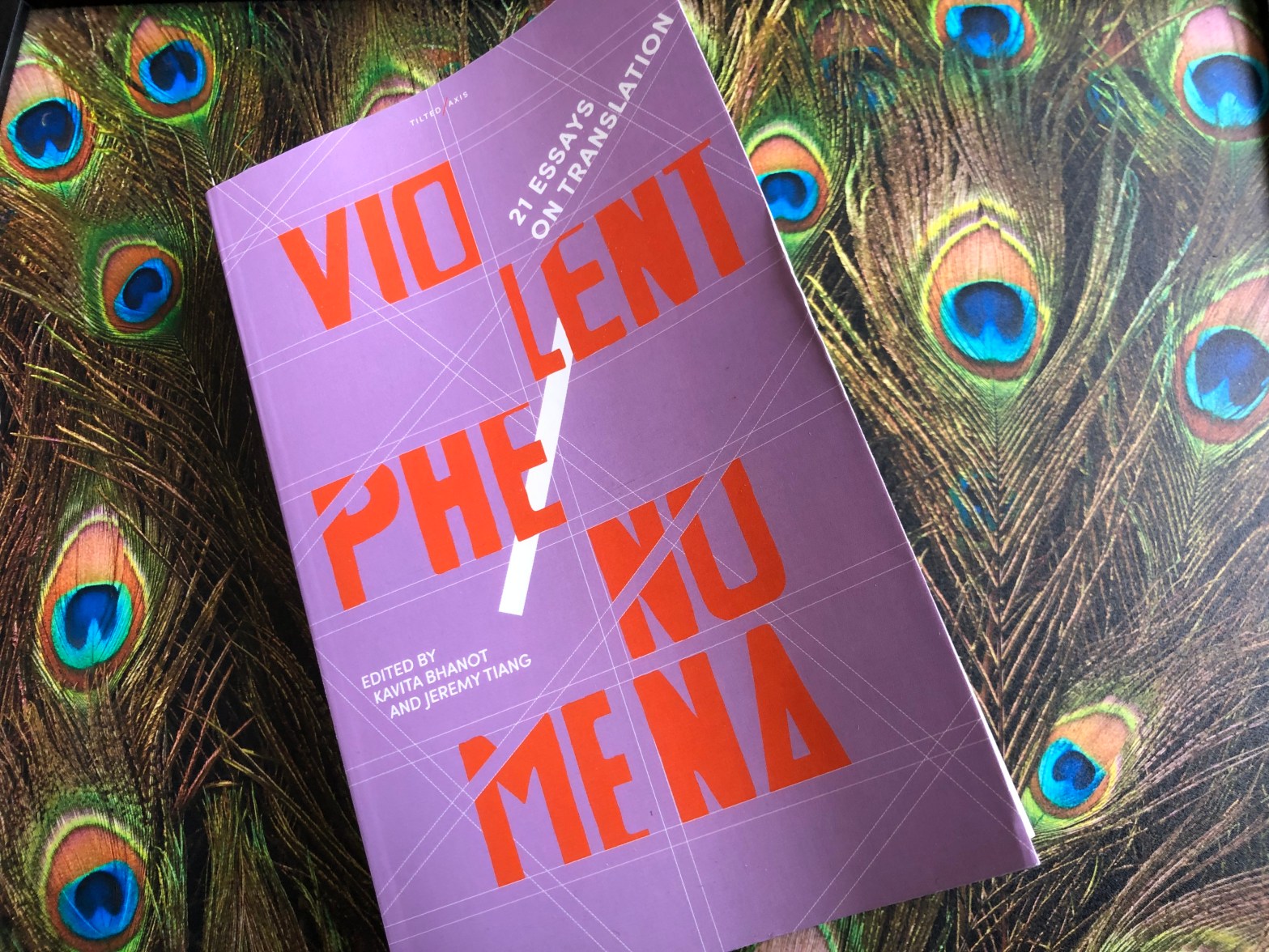
Violent Phenomena

Violent Phenomena (eds. Kavita Bhanot and Jeremy Tiang, Tilted Axis 2022) rolls the south and east of the globe to the top. 21 essays address racism in the publishing industry in general and literary translation in particular:

If you’re dual heritage, or mixed, or more, these essays will resonate. It’s time to get over monolingual nationalism and the naive idea that most people have just one “mother” tongue. Most people don’t. How can a translator build a bridge between two linguistic islands when she has several languages jostling in the city inside her? Gitanjali Patel and Nariman Youssef remind us that “our mother’s tongue may be different to our father’s and it’s possible that we know neither”. They continue, “I can’t imagine that many of the white translators I know feel the same debt to the source language, the same desire to do it justice… from my own experience of having my English(es) mocked, disparaged, invaded… I do not want to reenact that violence on another language.”

“Western poets building bridges to where they don’t belong”. Mona Kareem decries the practice of “co-translation” based on a “literal draft” for someone who doesn’t speak the source language. “World literature is no Lonely Planet” says Lúcia Collischonn in her essay. But translation can inform and expand the target language. It can decolonize.

The essayists expose structural racism in publishing. We need to get away from “the mythical English reader” who, as Anton Hur worked out his publishers meant, is white. Despite the risks, Kaiama L. Glover translated Depestre’s Hadriana for Afro-anglophone audiences. The “extravagant ludic register” of the Francophone Haitan poet was too much for many publishers. She is not alone. “When I began translating from Telugu, I ran into a major difficulty: a clash of literary cultures” says Madhu H. Kaza. US publishers kept saying the work was “not a good fit for us”. Sandra Tamele had to translate Ammaniti’s Io non ho paura into European (not Mozambican) Portuguese, so people could read her translation across Lusophone Africa.

Should a white translator even be writing this? I know I have more work to do. But I wanted to hug Eluned Gramich, the author of the Welsh chapter and yell, “yes!” She describes a violent phenomenon I grew up in. The Welsh language is on the margins of its own turf, but Welsh people were complicit in the expansion of empire. Did you know some Welsh speakers prefer to talk of Y Deyrnas Gyfunol, the combined kingdom (not “united”)? Gramich cites the immortal R. S. Thomas:

“Speak up is, of course

The command to speak English.”

In her amazing essay-as-snake, Ayesha Manazir Siddiqui shows that translator-intermediaries can be “part of the colonial project”. If the play was not about, but for, Birmingham Pakistani Muslims, her translation of it would be different. As she asks:

“Who is doing the translation, and for whom?” The author and the audience need their say.

Sometimes the best choice is not to translate, but to tell the story right within its community.

Or to choose a language closer to home. Translate a poetry performance on Bali into BISINDO (Indonesian sign language) for the locals, not Auslan (Australian sign language) for the tourists. Khairani Barokka is clear on the “right to access, right of refusal: translation of/as absence, sanctuary, weapon”.

Or to provincialize the “big” language by translating into it out of the “small” language. “I often ached to hear the sound of my life in this language” said Yogesh Maitreya on translating into English out of Marathi.

Or to find autonomy in orality, like Kashimiri translator Onaiza Drabui. When there’s no word for novel in your language, you could start with “verse, sung not written; dramatized folklore, performed not read.”

Or to decide to publish a bilingual translation that is “plainly a faithless act” because the poems don’t match. Hamid Roslan does this with Singlish and without paratexts in parsetreeforestfire.

M NourbeSe Philip knows that “those involved… believe that they can best bestow meaning, their meaning, on the work”. As she said on discovering that her Zong! Had been translated into Italian without her consent: “If you are lucky enough to pick a living poet to translate, write to him or her. Get to know the person; ask him or her questions.”

Yes, translators, publishers and writers do this often. But not often enough. We could all ask more before we start to bestow meaning.

new retreat dates – seuraavat retriitit

Featured

Where do you want to write next?

October is busy. If you do half term or have an autumn break, you are going to need it. Everybody you said you’d do something for wants it now. All the things you signed up for are suddenly happening. And those “by the end of the year” deadlines start looming on the horizon like little stormclouds. But they will get closer. You still need to write. And you can find the time, together.

I found writing that paragraph therapeutic. Here are some places to help you write.

Checking in online could be enough. The Facebook group “I’m writing though I don’t have time” (for Finnish academics) is fantastic. Every workday you can pop in and say what you’re writing.

You might want company online and you’ve got a few more hours, or even a day. Tohtoriverkosto’s next online writing retreat in Finnish is on 25 November. There’s still a couple of places left. This is the fourth time we are writing together, and the group is great. If you’re doing or have a PhD and speak Finnish, you should join the network!

If you’ve got a day, you might need to get offline and into a different space. One of the loveliest places to do that is Kirjailijatalo, the Writers’ House in Jyväskylä. And our next day retreat there is on 18 November. If you don’t live locally, come up the night before or stay the night after, we’d love to have you. Get a feel for previous writing retreats at Kirjailijatalo (pictured above) to help you decide.

When you need two whole days to get your teeth into a project you’ve been putting off. A bit of luxury can make that easier, and your favourite venue so far for that is Valo Hotel & Work Helsinki (where we wrote in August and we loved the spa!). We are back at Valo on 1 and 2 December. Come for one day or both.

All my writing retreats are bilingual, in Finnish and English (unless a group wants one language). But of course you can write in any language you like. At any retreat, people are usually writing in half a dozen. There are some scholarships so every writer can come; if you need one, or have any other questions let me know.

If you can’t make those dates, we are still writing every Wednesday morning on Zoom. And we are planning to write again at Säynätsalo Town Hall in the new year. Join our mailing list and you’ll be the first to hear about it…

new retreat dates – seuraavat retriitit

Featured

Writing round the table

Helsinki’s poetry moon festival, Runokuu, is in the last week of August. I spent it with a dozen colleagues, translating Finnish poems and listening to some of the poets. That was the perfect way to mark ten years of living in Finland. As I’d hoped, the poetry translation workshop made me think hard about a challenging kind of writing.

Words whirled through my head all week, so that by Sunday dinner I was even dissecting the restaurant name on the receipt. My stomach is still settling, so I can’t tell you everything I learned around the table last week, but I can tell you the menu.

Starters

Get the mezze.

Share. If there’s some strange shellfish in there, watch how others prise them open. If you’re not sure how to tackle those claws, ask. If you’ve made that sauce before, say what spices you used. Try a bit of everything.

Mains

Pick one.

Stop eyeing your neighbour’s plate, it’s probably no better than yours, even if it looks prettier. Even if it is tastier, they chose it, let them enjoy it. You don’t have to switch dishes or split the last fragment. Yours might be a bit boring, but stick with it. Eat it up.

Desserts

Choose your favourite.

See how this restaurant cooks that classic. You’ve eaten a thousand tiramisus and a million vanilla ice creams. The memories of them resurface on your tongue. Is this one the perfect balance – or bland? Does it look as weird as it sounded on the menu?

Coffee

Sit.

Sip that espresso.

Let that herbal tea infuse before you pour it into others’ cups.

Digest.

Back in your kitchen

Recreate the recipe.

Follow it to the letter and see what happens. If you forget the pepper, is it edible? If you haven’t got all the veg, what can you use instead? Make it again from memory. Ask a foodie friend to taste it. Invite a whole load of people over and make a vast vat of it.

A huge thank you to FILI – the Finnish Literature Exchange – for organising the poetry translation workshop and to Michal Švec for leading it. Thank you to the three poets who shared their work with us: Sinikka Vuola, Susinukke Kosola, and Vilja-Tuulia Huotarinen. Friends who workshopped with me, as we get back to our own kitchens, let’s keep swapping recipes.

new retreat dates – seuraavat retriitit

Featured

Same here

For Women in Translation Month, I’d like to remember a woman translator I missed by a whisker, and share her thoughts on writing.

Tarja Roinila was a prolific, much-loved, and much-awarded translator into Finnish. She died in 2020, aged just 56. She’d been translating prose, poetry and philosophy, from French, German and Spanish, for half her life. And teaching others to do the same. I loved her translations of Bernardo Atxaga and wish I’d met her – friends and colleagues still miss her deeply. One of them, Mika Kukkonen, has edited her collected essays, unpublished pieces, and translator’s notes. The book, Samat Sanat (Teos 2022) is so popular, I could only get it from the library on a short loan. Now I’ve read it, I’ve bought it, because I’ll want to come back to it.

Samat sanat means “the same words,” but it also is what you say when you wish someone the same – “you too” – or share their experience – “same here.” Those overlapping meanings fit this book. Roinila shows that translation is writing the same text again, here, in your language, for you too, where you are. It’s different and also the same, like pain and Brot taste different, look different, belong in their culture a bit differently, but are both bread. In French you’d think of a wheat baguette first, and in German, a slice of dark bread, like rye – but both make good sandwiches.

Still, even if you write exactly the same text again, it resonates in a different time and place (see Borges’ Pierre Menard, Author of the Quixote, which Roinila discusses at length). Translators write across that gap in time and place – and language. Here and there are not the same. But there are ways to bridge the gap.

Roinila could go through eleven revisions before she let her text go. She relaxed into her work only when she had a first draft and could start writing in Finnish, guided by its grammar and syntax, sounds and creativity. Her 2018 translation diary reminded me a lot of Daniel Hahn’s 2022 one, Catching Fire. But what I enjoyed most was her conversation with Coral Bracho, the Mexican poet who Roinila had translated 17 years before and then came back to. She pestered Bracho with questions about what this word means or how that phrase resonates, until Bracho despaired:

“Write it like it is!”

Same here.

I agree that’s the aim. And I can feel that frustration. You too? Of course it is not easy, but it is possible. Roinila shows you how. She emphasizes the affective and embodied way of writing it like it is, rather than the cognitive. She’s not trying to transfer a Platonic abstract idea, but like Sappho, to show how a text feels, sounds, works. I loved her hat-tip to Kristiina Drews’ translation of Ali Smith’s There but for the.

Roinila not so interested in the writer’s process or past or public profile, but in getting inside what they write. For her it’s playful, it’s a lot of fun. It’s also collegial – she talks about finding solutions together. If I was brave enough, I’d translate Samat Sanat into English. But I’ve given you a taste. Teos, can we write Roinila like she is in English, too?

Featured

Get back to writing

Summer stretches gloriously before us. If you’re in Finland, the holidays are well underway. You won’t expect to hear from your colleagues again for the rest of this month. And if you’re elsewhere in Europe, you still have time to get yourself to Helsinki for 18 and 19 August.

Why come to Helsinki?

To join us at Valo Hotel & Work Helsinki for two days writing.

Writers recommended this venue because the coworking space is flexible, light and spacious. And it has everything you want from a hotel: great food, green key sustainable status, and a fabulous rooftop spa. If you’re local, join us for the day, but stay over to immerse yourself in your project – and the pool.

Why an in-person writing retreat?

Online works great for many. I love the online writing retreats I do. But not everyone has a room of their own to write in undisturbed. Even if you have one, writing in companionable silence in the same room and chatting in the breaks can work wonders. Have someone else take care of all the logistics – meals, breaks, enough time for rest and exercise. For just 48 hours, let the people back home or in the office take care of the rest. In the last couple of years, we’ve missed this. We need it. It works.

Why 18 and 19 August?

Because by that point, if you’ve set any writing goals for the summer, I bet you will feel you’re running out of time. 1 September is that “back to school” date in a lot of places. Schools will be back by mid-August in Finland, but universities won’t – yet. We all need proper time off from our writing, and from reading anything related to it. We need to plan that rest in. But it might be easier to switch off if you know when you’re going to turn your writer’s lights back on. Being in a dedicated space with others who have made the same time commitment can help you get back to writing.

Why book this writing retreat now?

Having this date in my diary has already helped me clear the decks for summer. Insanely, I have three book chapters on the go. This is my own fault but I can cope, by writing together little and often. I host weekly online cowriting sessions for anyone who’s been on my retreats. They keep me – us – going. Members of our group have turned from faces on Zoom to close friends. But sometimes you need more than an hour at a time to check in and work through a tricky patch in a particular text. It helps to have two whole days in the diary well in advance. Two days only for writing. Nothing else.

It’d be a pleasure to write with you.

Book here.

All photos are my own, from my test run of Valo Hotel & Work this spring. You can see why I’m looking forward to going back!

Featured

Pitch your book

You have a great idea for a book, you’ve begun writing it, you’re sure your readers will appreciate it. You only have to convince a publisher.

Where on earth do you start?

I’m going to talk about non-fiction here, particularly about creative non-fiction. That means bringing ideas out of academia to a wider readership. I’ll mention fiction and the US, but focus on the UK, where I grew up, and Finland, where I live. That narrows it down a lot, but a big part of convincing a publisher to take your book is just that – narrowing things down.

Narrow it down

Big UK academic publishers get so many requests that they have a standard form to fill in. (here are the book proposal guidelines for Routledge, Palgrave, and Brill). They ask questions that will help you focus your book proposal. In a nutshell:

Who is writing it, and who is going to read it?

Where are the writer(s) and the readers?

When will you finish your manuscript?

How does your book fit with others?

Why do we need this book at all?

What is it about?

Recently one of those big publishers accepted our book proposal. With two co-editors we have our contract signed. Several authors have chapters drafted, and we have a realistic schedule. Now all we have to do is finish writing the book! I’ve edited and translated several proposals – and books – written by others, so I knew about that stage. But before going through it myself, I did not know how to contact a publisher, get them to consider your proposal, and negotiate a contract. It’s a lot more work than you think.

We were negotiating our contract when I attended two very different sessions on how to pitch a book. One was with academic author and editor Laura Portwood-Stacer in the US – if you don’t get her Manuscript Works newsletter already, you should! The other was a two-parter with the PhD network in Finland, Tohtoriverkosto. First we met a successful author, Tiina Raevaara, and then Ville Rauvola from a big publisher, Atena. At these events, I realized how much I know already about getting published – and how much more there is to learn.

Find where you fit in

One of the first things you need to do is see what’s out there already, and where you fit in. Read a lot, and well beyond your comfort zone. Read in other languages too, Rauvola suggests – you might get a great idea that would work in your first language. Go to book fairs. Seeing all those books and their authors in one place is exciting. Behind the scenes, there’s a lot of hard bargaining. You need to explain how your book stands out from all the others, to some very busy people – that elevator pitch.

The Helsinki Book Fair, where I’ve been twice with the FILI programme for translators, opened my eyes to how people buy and sell books. We had meetings with literary agents who handle the rights. This made me see the commercial side of publishing. Who is going to pay for your book? How are they going to market it to readers? I translate samples for literary agents I’ve met through FILI, and write readers’ reports for New Books in German. NBG’s advice on how to write a good readers’ report tells you what publishers are looking for.

Book fairs are where publishers literally set out their stalls, so you can get a good feel for what they like. The Finnish Publishers Association lists its members online. The UK Publishers Association has a searchable directory. Of course in a specialist niche, whoever publishes your literature might publish you.

Approach a publisher

In Finland things are much less formalized than in the UK. People tend to know of each other, at least. Rather than six degrees of separation, it’s more like two or three. But in the US, Portwood-Stacer also says to start with informal chats and use your connections if you have them. You need to check out the publishers too before you make a formal submission. Not everyone can fire off a two-line email saying “I’ve had an idea for another book, what do you think?” Raevaara does this for her narrative non-fiction books, but she’s a respected scientist and creative writer.

If you don’t have quite that star status yet, you might need to say a little more. To get a publisher interested you need to know your likely readership. The consensus seems to be that email is best, but only to the right person. This can mean digging round publisher websites to find out who handles that genre and field. You don’t need to send the whole manuscript – you should contact them long before it’s ready. A page (no more than two) answering those wh- questions will narrow down why they should care about your book now.

Smaller publishers have a more personal touch and may respond faster. Even if they like your idea, an academic book proposal will go through peer review, so it can take a while.

Make your proposal

Different parts of your book proposal are important for different people, says Portwood-Stacer. The working title shows the editor the key point you want to make. The project description shows how you write. The intended audiences and comparable books are important for sales and marketing staff. The synopsis and chapter summaries are important for peer reviewers. Both these groups want to know who the authors are so they can place you. The specifications (length, images, etc.) are important for production planning.

Get beta readers to offer you constructive feedback. If you’re popularizing a thesis, you need to explain concepts in language that more general readers can follow. Revise is the book to help you do that. Raevaara herself is fantastic at turning hard science into thrillers. With Urpu Strellman, she’s written the Tietokirjailijan kirja, the book for non-fiction writers in Finnish. She cited Johanna Laitinen from another big publisher, Gummerus: “I always want a book proposal to surprise me.”

Publishers like to see that you are active on social media and can promote your work. You can do this in different ways, to suit you (it doesn’t have to be Twitter!), but they will want to know how you share your ideas.

Negotiate a contract

Getting a contract is fantastic – but scrutinize it before you sign. Authors’ associations can help you make sure that the terms are fair. In the UK, the Society of Authors offers a fantastic contract vetting service. They were extremely helpful for our book, identifying in every clause what was usual, realistic, and acceptable (not the same thing!). The US Authors’ Guild offers an excellent model contract for literary translation. The Finnish Union of Writers and the non-fiction writers’ association publish model contracts. In Finland, Sanasto makes sure your get your royalties and defends your copyright. In the UK, ACLS does the same.

Get it written

When our book proposal became a book contract, the first thing we did was pencil in writing retreats. This could be informal cowriting hours online with a couple of colleagues, or days offline, away from everything else. If you want to stick to your schedule, write little and often.

new retreat dates – seuraavat retriitit

Featured

Revise!

“Revise and resubmit” are three words that fill academic writers with dread. My own PhD wasn’t ready when I submitted it first. Second time round, it was, because what was on the page more closely matched what was in my head. Two decades later, I remember how that process of reworking feels. Now, editing and translating, I reshape other people’s academic texts for a living. Revising your own is always harder.

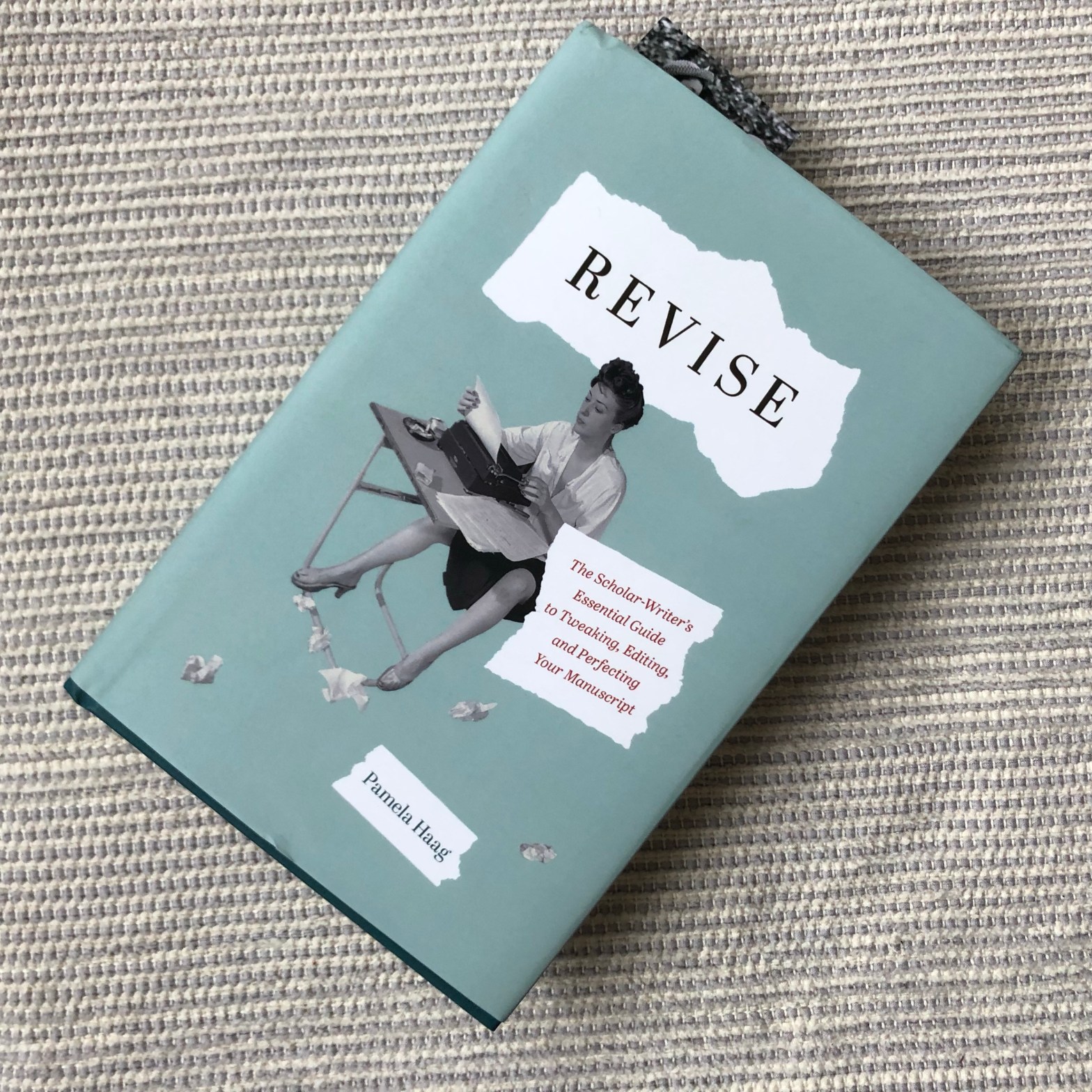
This book helps. Reading Pamela Haag’s Revise: The Scholar-Writer’s Essential Guide to Tweaking, Editing, and Perfecting your Manuscript (Yale UP 2021), I found myself crowing in delighted recognition. Like mine, her mantra is “who is doing what to whom?” If a passage is in the passive, it might not be clear in the reader’s mind – or even the writer’s head. A developmental editor like Haag can help you restructure. But you can do a lot to your manuscript yourself by asking the same questions.

You can use this book to turn the vague writing feedback into concrete action. What does it actually mean to “smooth over” or “tighten up” a text for better “flow”? Turn lists into linked text, take out subheadings, shorten chapter titles (stop before that colon!), or cut examples and block quotes. Check your verb, subject, and object are clear. Humans do things to other people or things. Who or what are they? “Policymakers” or “citizens” are still large categories that you need to define. You can make a watchlist of words you overuse (“interesting” and “clearly” are on mine).

Moving through the text is another huge issue. Ideally, “your manuscript’s inner logic makes its explicit articulation unnecessary.” Haag spends a lot of time on making segues, or transitions, effective. She gets her red pen out for “traffic direction” or “hand-holding” (“As I said in section 1, I will next…”) and “emcee words” (“its devastating impact shocked us”). She advises against restating your argument too often and for techniques more used in narrative. Tell the reader what they need to know, in the order they need it. Right down to the sentence level.

Haag makes all this easier by defining terms. She is precise – do you need rhetorical questions? No. And figurative – is your manuscript a “sleek jaguar with no bones”? If it sounds good but has no skeleton to hold it together, you need to choose one, based on your main point. Then you can “walk down the vertebra” of the book to check they’re in place. “Tofu syndrome” means you’re writing like your sources, as tofu absorbs any flavour. I see this often in writing about the European Union, in fluent EU-speak. Like “asparagus” you can feel the point where a section should snap off so you don’t have to eat the long woody stalk. Scare quotes are an “eye roll” on the page, so it is more effective to tell us what is wrong with “that term.”

Blocks in your writing might have underlying “psycho-editorial” causes, which Haag lays out. If claims don’t sound confident you may not be feeling confident. You might use jargon to avoid making your own argument, or put conclusions first because you’re tired. Did you only put that long literature review in because someone else said you had to? If you know why, you can do something about it. “Force yourself to put the theory into your own words.”

Haag illustrates every point with real text she’s revised, and ends with a comprehensive checklist. Have you read your text aloud, checked that figurative language obeys the laws of nature (begone, actors mapping interwoven frameworks!), and made your antecedents clear (shown what “it” is)?

A colleague recommended Revise to me. Now I am recommending it to you. In the days after reading it, I found myself remembering Haag’s prompts, as if she was revising my writing alongside me. I made better decisions. It was easier to untangle those knotty sentences. Next time I have a big, shapeless text that needs trimming, I will start from her checklist.

new retreat dates – seuraavat retriitit

Featured

101 ways to write

Sometimes imposing restrictions on your writing can be freeing. Translators know about this. We turn other people’s words into new ones in a different language that doesn’t work the same way. To quote Ginger Rogers, we do everything Fred Astaire did, but backwards, in heels.

If you want to ginger up your writing, get your hands on this book. But since 101 tapaa tappaa aviomies is in Finnish, I’ll focus here on the contents and how you might like to use them.

Laura Lindstedt and Sinikka Vuola take a violent story and retell it, 101 ways. It’s not long, so here’s my 20-word tweet-length version:

Anja, after years of abuse by her husband, kills him. The court concludes she’s served her sentence already. She’s free.

You could take that, and turn it into a haiku, a blurb, or an academic abstract. You’d be getting the idea. But what if you turned it into a libretto, a list of pharmacy prescriptions, or retold it from the point of view of the gun? It could be far more interesting to read.

What if you didn’t use the letter “e” at all, or replaced all the nouns with the ones three lines below them in the dictionary? Some people will enjoy these experiments with form more than others. You could try a tanka, limerick, or sonnet. I particularly enjoyed the traditional Finnish forms that echoed the Kantaletar.

What if Fibonacci, Kafka, or Getrude Stein got their teeth into it? Can you make your writing count/sound like theirs? Often, we have to write within some formal constraints – those abstracts and tweets – but applying all kinds of others is delightful.

Yes, some seem daft. But I did squeal with delight on several pages. It’s not a little up itself, sometimes. But grand old wordsmiths say, “if you’re stuck, try changing the person or tense.” What if you changed a lot more, playing with your text to see where it takes you?

Three new words for forms of writing I learned from this book were:

  1. Rapukäännös = crabwise turn = retroversio. In this context, telling the story backwards.
  2. Flarf = deliberately “bad” poetry made by scavenging odd search terms and bits of text online.
  3. Tautogram = a text where all the words start with the same letter.

Writing backwards in heels like that for a bit could make it easier for you to write forwards, barefoot. When your tired text hits snooze again, give it an extra blanket, a dreamcatcher – or a triple espresso. And see what happens.

new retreat dates – seuraavat retriitit

Featured

Spring into Writing 2022: join us on retreat!

The days are getting longer. The clocks will soon change. Our Wednesday writing group finds the sun rising earlier means we’re waking up earlier. Does that give us more time to write?

Finally being back on campus or in the office has been brilliant for meeting in person again. But that means more time getting from A to B. A good thing, but the working day can feel longer.

If you’re struggling to fit it all in, carve out some writing time with us. Put your out-of-office on, get back into some good writing habits to start your summer project – and finish in time to take a proper holiday!

We’ve retreats to suit everyone: in person and online, in English and Finnish bilingual, and Finnish only, in April, May, and June. Come and try it for a day, or book yourself in for all five…

Online in April

Join us in April for two online retreat days, on Thursday 21 and Friday 22 (book here). While these are on Zoom, I’m taking the opportunity to test a new potential venue in Helsinki, Valo Work. So let me know if you want to meet up there.

On an island in May

In May, two days in person on Thursday 5 and Friday 6 (sign up here). After our successful retreat in February, we are returning to Säynätsalo Town Hall. This unique Alvar Aalto building is the perfect fit for us, quiet, spacious, and creative. The island is a bus ride from Jyväskylä city centre, in a beautiful setting on Päijänne, the second-biggest lake in Finland. Last time we saw the Northern Lights and tramped through the snow – this time, spring will be in the air! Book accommodation here now, as spaces are limited.

Suomeksi kesäkuussa

Our fourth online retreat in Finnish with Tohtoriverkosto is on Friday 17 June. Sign up here, it’s free to the PhD network members so do join if you haven’t yet. This is the week before midsummer, when Finns disappear into the forests and onto the lakes. But we will keep writing on Wednesdays for some of that time. Wednesday morning online sessions are free and open to every writer who has been on a retreat.

Scholarships

Every retreat has a free space for a student or person on a low income. Thanks again to the individuals and university departments who have sponsored this before. Email me for the scholarship code, or if you want to sponsor a scholar. Looking forward to writing with you!

Writers in community

One of the best things about writing together is how much you can learn from others. Here are some tips from writers on recent retreats:

1. Try writing the first sentence of each paragraph – fill in the detail later

2. Put your phone behind your computer screen out of sight – or turn it off!

3. Stick to one way of writing for one hour: brainstorming, free writing, revising…

4. If killing your darlings feels too brutal, send them to kindergarten/boarding school. (Instead of deleting text, move it to a separate document)

5. Change position – move to a different chair, sit then stand

6. To counteract hunching, lie on a cushion or foam roller so your chest is out

7. Measure yourself – how many words did you write in the last hour? Use that figure to schedule writing the whole piece

8. Let your text rest so it feels new when you come back to it

9. When you revise, try doing it in a different format, font, programme, or place

10. End with something physical, offline – walk, swim, meet to eat or for coffee

Every retreat, I’m amazed at how much we learn from each other, how much we get done, and how much fun we have. Come and write with us.

Thank you to Zama Ferin for her gorgeous photos from our February retreat in Säynätsalo.

Featured

Rhetoric for Writers

Facilitating writing retreats is a bit like being a yoga teacher. I was remembered this at my last retreat. At the end of our first day, one participant said “I feel tired, but in a good way, like after a great yoga class.” Which is all you could hope for. But Like yoga teachers, writing retreat facilitators need energy from someone more experienced. You need to keep learning.

Luckily, I was half way through Rowena Murray’s rhetoric course.

Rhetoric is a triangle

What is rhetoric? It is “the art of making the best possible case” (Fahnestock, 2011: 158), or writing with “a sense of audience and purpose” (Flower & Hayes, 1980: 21–32). Rhetoric links all three sides of a triangle: writer, audience, and purpose. When the triangle aligns, the audience sees your point – whether they agree or not!

On this two-day course, we tested rhetorical techniques and used them to make a case in writing:

  • Audience analysis
  • Rhetorical modes of exposition and argument
  • Structuring and writing styles

As we started, I remembered what my A level history teacher used to write on the side of my essays: “Why are you telling me this?”

Modes of exposition

On day one, we examined all seven rhetorical modes of exposition:

  1. Description
  2. Narration
  3. Process
  4. Comparison & contrast
  5. Analysis
  6. Classification
  7. Definition

Once we had the theory, we got straight into drafting texts to use in practice. We had questions to keep us on track, and feedback criteria to see if we hit that target. I realised, yet again, that I can happily write a thousand words in less than an hour – talking to my audience. But then I need to restructure to boil it down to my main point. I have to remember the purpose side of that triangle.

Rowena Murray shows you all these modes of exposition in the Journal of Academic Development and Education, in her editorial on Snack and Binge Writing. I tried using them all here – but I didn’t use them in order, or label them. Can you spot all seven? Would a different order have worked better?

Modes of argument

On day two of the course, we tested the rhetorical modes of argument:

  1. Evaluation
  2. Causal analysis
  3. Refutation
  4. Proposal

Even after one day, I noticed a big change in how I used my writing time. The second time we had an hour to practice one mode, I wrote 500 words instead of a thousand. But it was much better structured. I was much more focused on proving my point.

Some modes of argument and writing styles felt like old friends but on the course, I thought about them in a new way. For instance:

When you write a proposal, it should have an hourglass shape, that begins with the issue up for debate, definitions, and causes.

The proposal statement is the middle

The proposal ends with the supporting arguments and solutions. Not many people use hourglasses these days, but you might still use an egg-timer (for snack writing), which is the same shape. You could look at how George Herbert does it in his beloved poem and call this a proposal with wings.

Structuring your argument

My key takeaway from this course was: spend more time planning than writing. Were you taught to spend the first 10 minutes planning your answer to an exam question, and use the rest of the hour to write it? I was. But what if you turned that on its head? Liane Reif-Lehrer suggests you spend 60% of your writing time outlining, 10% turning it into prose, and 30% revising. Or even 90% planning, so you need very little time to write and revise.

You can plan an article down to 100-word blocks, by dividing it into sections, subsections, and sub-subsections. Then you know exactly how much space you have for every stage in your argument. Which is especially useful if you are co-authoring. Once you have your outline, you only have to write a hundred words at a time. That should be easy to fit in – with an egg-timer, an hourglass, or wings – however busy you are.

Rhetoric on writing retreat

Rowena’s course moved the theory of rhetoric into writing practices that you can remember and use. I found it useful to adapt the rhetorical modes to writing retreat contexts. You, the writer, can focus before you start by filling the other two sides of the rhetoric triangle:

For purpose, one easy technique is to think of a verb. What am I doing in this section or session? Is my aim to argue, claim, analyse, confirm, dispute, reveal?

For audience, build up a mini reader avatar using wh-questions. Who is going to read this? When? What do they know about my topic? Where will they agree – and disagree? Why? How can I make them see it in a new way?

And the key, as ever, is to set specific goals. How long have you got? In that time, how many words can you write?

Zooming ahead

We did this over Zoom, using breakout rooms to share our practice texts. We met on two successive Tuesdays from ten till two. Four hours at a stretch online sounds like a lot, but we moved between big group and small groups, listening and talking, reading and writing. With proper breaks. So the time flew past, but we covered a huge amount. Just like on a writing retreat.

Of course, in person we could have had more social time and focus. But online was more accessible. Besides me in Finland, writers came from all over the UK, at all stages of their academic careers. Some even attended while in covid isolation. Sharing your writing on-screen is scary, but in a breakout room with two or three others, it is doable. It helps. A lot.

Take this course!

Rowena Murray’s retreats and training always bring you back to the writing. Even though this was a taught course, I got a lot written. I restarted an article that I’d left to sit, because I was stuck on the analysis. Now I know how to tackle it. And I learned some new criteria to focus my writing on my audience and purpose.

Have I convinced you to take the course yourself? You tell me!

new retreat dates – seuraavat retriitit

Featured

Writing in a Winter Wonderland 2022

In January 2020, we wrote together in a winter wonderland and it was wonderful. At the Writers’ House in Jyväskylä, the snow started falling just as we finished writing. I knew we’d do it again soon…

Two years on, we have come to value our time together in person even more. It is precious, when we have had to do without it for so long. But we’ve still found ways to write, and online, too, the collective energy makes it work.

Writing together keeps your work on track and from it, friendships grow. I hope it can do the same for you. Why not give it a try?

Join us in February if you need to get something written and want good company for it. Come for one day, or five!

Our online retreat on Friday 18 February (in Finnish) is free to Tohtoriverkosto members. The deeper into academia you go, the less easy it is to prioritise your writing, as Hanna Tervanotko and Helen Dixon explain. Join the Finnish network for PhDs and PhD candidates to make it easier. This will be our third retreat.

Before that, we are writing together online on Thursday 3 and 4 February. Like all my other retreats, this will be in English and Finnish – people who come speak and write in other languages too. We will start a bit later to include people further west in Europe.

And on Thursday 10 and Friday 11 February, we will meet in person in a unique setting, Alvar Aalto’s Town Hall in Säynätsalo. Some of you will know I have been living there short-term myself – now you can too, for a day or two. The island is a short bus ride from Jyväskylä city centre, but in the middle of Päijänne, Finland’s second biggest lake. In February the ice should be perfect for skiing, skating, or snowshoeing. Aalto Bakery is right next door, and there’s a lovely lakeside eatery nearby. If walking is more your thing, you can rest and refuel at Table en Bois on the next island. Come on Wednesday night to start right with a sauna. Or stay on for the weekend to relax afterwards. Even if you’re with us for one day, you’ll have room for those conversations that work so much better in person.

Whichever you choose, we will have time, space and community to write together.

Hope you can join us. Book here.

Featured

Memory Speaks

Writing in your own language is not as easy as you might think. What if you have more than one language? What if your first language is so deeply buried within you, you have real trouble digging it out? What does that do to your brain, your heart, and the society you live in?

In Memory Speaks Julie Sedivy addresses all these questions. Her reflection on losing and reclaiming language and self is searing. I pre-ordered it as an e-book from Harvard University Press as soon as I heard about it, and devoured it in a couple of days.

Sedivy came to Canada from Czechoslovakia, as it was then, as a young child. She identifies with Nabokov’s experience of “language being yoked to memory.” Although he wrote in English (his “stepmother tongue”), his memoir had to be in Russian, the language of his childhood.

Sedivy has a linguist’s passion for endangered languages, not least to defend the indigenous ones in the land of her new home. She weaves her academic expertise into her personal story.

And she can write. Her book brims with vivid metaphors.

“Languages can co-exist, but they tussle, as do siblings, over mental resources and attention. Like a household that welcomes a new child, a mind can’t introduce a new language without having some impact on the languages already living there.” The effect of this is a lot more nuanced than the newspaper headlines would have us believe. I could recognise myself in Sedivy’s descriptions of compartmentalising (healthcare happens in the language of the state you live in, Christmas cooking in the language of your maternal grandmother). I can understand how the desire to reconcile complex differences comes from having your brain firing on all cylinders in several linguistic directions.

“All speakers of minority languages, whether they realize it or not, carry within themselves a tally of their language’s value, a sense of the price they would be willing to pay to keep it.” This is a political issue. My job is to translate into English and edit in English for academics, so they can get published in the most valued language of the moment, but I live in a small multilingual country that’s been independent for just over a century. So I am hyperaware of the politics of language. Sedivy addresses this deftly, looking at the impact of policy, language nests, and migration on how languages thrive (or not).

“A grammar usually describes a language as if it were an object that can be dissociated from its speakers, like an image of a dress laid out on a bed ready for someone to put on. But native speakers also know what their language looks like when it’s worn—how the language drapes and flows…” Sedivy lost much of her Czech once she and her siblings switched to English at school, but relearned it by spending time there once she could, as an adult in the 1990s. Researchers have found that babies tune in to the sounds of the language around them even in the womb. Her preschool Czech did return when she returned there.

“Children learn language the way they learn to ride a bike—without the benefit of diagrams about muscle physiology or the physics of motion, but relying on raw intuition and repeated trial and error.” So (re)learning a heritage language is very different from being an adult student who is new to it. Classes should reflect this. Even language nests are not enough – the more people around you speaking the language, the stronger it grows. And language is a question of biodiversity as real as it is in the plant and animal world. It takes interventions to preserve that diversity.

“Many bilingual people think of language as a portal into alternative ways of being.” What this means for you personally, or for all of us as writers, is that we need to write in our other languages. Not just in English. Different kinds of writing. One person like this said:

“I am like a Swiss army knife. Multiple tools, and you can pretty much deal with anything, if I need a screwdriver, it’s in there. So if I need to be American, I’m in there.”

You choose whether you want to write academically or creatively in a language other than English. It is important for the language itself that you do. And it might make you a better academic, more creative. It might make your English, and your voice in the other languages, more interesting. You might make new connections and see things that, monolingually, you wouldn’t. Sedivy says it best:

“I’m drawn, like a moth flinging its body against a light bulb, to in-between spaces and intersections, to hyphenations, to situations in which there will always be two sides. This is, for me, where all the heat and light can be found.”

new retreat dates – seuraavat retriitit

Featured

King On Writing

I resisted reading King’s On Writing for a while. A friend doing a clearout passed it on. A colleague who’s committed to writing well reviewed it. And then my brother gave it to me as a late birthday present. “It’s good,” he said.

So I read it, in a day.

Here are ten things from the book that are worth repeating:

1. If you write bestsellers, “no one ever asks about the language” (Amy Tan) – but you must be doing something right.

I’ve not read any of King’s fiction; horror isn’t my thing. But I share his love of a good story, and after reading his “memoir of the craft,” I know he knows how to tell one. He begins with his own story, the one around the ones he writes. And he soon had me hooked.

2. Writing means rewriting – “to write is human, to edit is divine.”

It is always nice when writers appreciate copyeditors and King does. He recalls learning from the sports reporter who handed back his first copy and “only took out the bad parts, most of it is pretty good…”

King stresses that “when you rewrite, you are taking out everything that is not the story.” Or, in the words of my A-level history teacher in the margins of my essays, “why are you telling me this?”

3. If you don’t take your writing seriously, who will?

“You must not come lightly to the blank page.” If you want to do a good job, you need to have your toolbox in order and the knowledge to use everything in it. This includes finding out enough about the basics of grammar and style, and taking time to correct mistakes. King doesn’t have time for complex plot mapping or gimmicky tricks. His gut feeling is that writing workshops and courses distract from the core business of getting your words on the page. He wants you to get on with it.

4.“If you want to be a writer, you must do two things above all others: read a lot and write a lot.”

King is far from the first to say this, but reading is essential to writing. It was easy to identify with his own description of always reading, on the treadmill, on transport, everywhere. Seeing how others do it will help you do it. But then you do have to put the hours in.

5. Stick to a system.

2k per day, every day, in the mornings until it’s done, is King’s system. Alone and without distraction, behind a “door you are willing to shut.” Everyone will have their own routine, and not everyone is a morning person. Like sleep, however, regular habits help create the space to dream things up, and to write them down.

6. The story comes first: “stories are found things, like fossils in the ground.”

Like translation, there are a thousand and one metaphors for writing. This is King’s. The story is there, buried, waiting to be unearthed with care, without shattering them. I warmed to his explanation that he doesn’t know what will happen next either: if it’s too obvious to him, why would a reader care? His drive to write more is the desire to find out. The “fossil” could be a situation — “what if…?” Finish that sentence and you’ve started your story.

7. Create critical distance

At this point, King lays down the law. Don’t let anyone at all see your first draft till it’s done. And then only show one person – but don’t let them talk to you about it till you are ready. At best, let it sit for at least six weeks, start the next thing, move on. And reread in one sitting if possible. While rereading, King says, “I’m looking for what I meant” – the big themes. Then a handful of friends get to look at it, and the editing is in full swing. Five friends might have six opinions. So to decide who is right, consider what your ideal reader would think.

8. Cut, cut, cut: 2nd draft = 1st draft -10%

I warmed to this formula too, as everything I edit comes out shorter. You need to do your research, to have a back story in mind, but don’t put too much of that detail in. King shows how he does this with before and after versions of a long extract from one of his own drafts. Again, the story drives him. “As a reader, I’m a lot more interested in what’s going to happen than what already did.”

9. You can help readers find you.

King was very successful very quickly but he quoted an author who had to work harder to find an agent. “You can’t make them like your story, but you can at least make it easy for them to try to like it.” This author had their pick of agents from one carefully worded letter of enquiry. You can show what you’ve achieved but be approachable.

10. Remember why you’re doing it.

“Writing is about enriching the lives of those who will read your work, and enriching your own life, as well.”

King is honest about the times in his life when he was not living to write, but writing to live. Do you recognise this feeling? I do. I won’t rush out and read Carrie (though that’s the one I’d go for, after hearing about the characters that inspired her). But I will keep his top ten pinned up somewhere. And if you’ve also been meaning to read On Writing, go for it. My brother was right: it’s good!

Featured

How easy is your language?

Imagine that…

everywhere in Europe, it is easy to find information

it doesn’t matter how well you can read

writers make their message easy for everyone to understand.

The Handbook of Easy Languages in Europe imagines just that. It shows what works and what still needs doing to make language easy for everyone. Camilla Lindholm (University of Tampere) and Ulla Vanhatalo (University of Helsinki) edited it, and Alice Lehtinen (another fantastic Finn) is the copy editor. I was delighted when Frank & Timme sent me a review copy. (It’s volume 8 in their series on easy, plain, and accessible language.) So I was feeling favourable towards this tome before I even opened it.

At 658 pages, this is not for the faint-hearted. To read it, I had to break it down. So I started with my working languages. I’ve trained in Plain English (with the CIEP) and Polish (a workshop with Tomasz Piekot and the ITI Polish Network). I’m doing a course on accessible Finnish (at the University of Tampere). I want to learn more about how Germans use easy language to inform people about elections. And I know how useful easy language can be. Learning Finnish in Finland, some of the first books I read were easy reads. I started consuming easy news (Selkouutiset) long before I could cope with the “real thing.”

Except easy is the “real thing.” It is not dumbed down. It is for all sorts of people who find reading difficult. This includes language learners,  people with learning difficulties, and older or ill people. Easy language is for adults. I would suggest that if plain language is at about CEFR level B1, easy language is at level A1 to A2. But each country has a different classification system. One of the problems with this is that what is easy for one person is difficult for another.

The variety in this book is startling. “Europe” here doesn’t only mean the EU. After a few chapters, if you know a bit about a country, you can guess about how they handle easy language. Ex-empires Russia and the UK have made government communication clearer. Multilingual Switzerland has a patchwork of initiatives that don’t integrate. The Germans are big on theoretical research, but less good on user-led practice.

But the stereotypes don’t hold. Austria has produced some excellent practical resources in German. Bilingual Finland has learned from Sweden to join forces to promote easy language. Countries that take pride in their literary tradition can relax the rules. Easy Spanish guidelines recommend ditching the subjunctive. You can write literature in easy language – it works best if readers help you do it.

This book is worth it for the bibliographies alone. Each chapter includes a list of the latest theoretical literature and practical guidelines. This offers a great way in to easy writing in a particular language. Dipping into countries you do not know much about can give you ideas about what could work in your country.

The authors show that context matters. Socioeconomic and postcolonial factors influence how people learn to read. Reading and writing well mean different things in different languages. If you find reading difficult, you might find accessing the internet difficult too.

Yet there are some surprising omissions. No chapter on France – is easy language not used there? I’d like to know more. The editors give a brilliant overview in the introduction. But they did not collate recommendations from across the continent in a conclusion. In such a big book, was there no space?

Important questions for future research and practice come up in different chapters. Does easy language create an “information ghetto” or do easy reads meet real needs? Is giving people access to audio-visual information in apps or online more important?  Do readers with learning difficulties and reading difficulties need  different texts? Who should  make the rules for easy language? Researchers, translators, teachers, social workers… or service users and readers? How can countries honour international commitments to accessibility in practice?

On the principle of “nothing about us, without us,” some authors recommend writing abstracts on the topic in easy language. So I did that for this book here:

The Handbook of Easy Languages in Europe is a big book.

50 writers wrote it.

They say that easy language for everyone.

It is easy to read and understand.

It started 50 years ago in Sweden.

Now people use it in many countries.

This book has chapters about 21 countries.

It answers 5 questions about each country:

1. What is the language like?

2. Are there rules about easy language?

3. Who uses easy language?

4. Can people learn about easy language?

5. How can we make language easier for everyone?

If you want answers to these questions, (get your library to) buy the Handbook of Easy Languages in Europe. It will inspire you to make language easier for more people, wherever you are.

new retreat dates – seuraavat retriitit

Featured

How plain is your English?

Clear writing has clear results. And I love helping writers say exactly what they mean so readers can understand. But I was sure I could write better myself. Then I started mentoring someone who specialized in plain English and I wanted to learn more.

If you’re interested in it, too, do the CIEP Plain English for Editors course. It costs about £200 (less for CIEP members) and takes about 30 hours depending on what you know already. It’s worth it for the reading list alone. I learned a lot in a very short time:

Did you know that technology can help make your English plainer? You can customize Word grammar checks, use macros, and make PerfectIt style sheets. I also tried some software. StyleWriter highlights words that “bog” a text down and “pep” a text up, making it harder or easier to read. Online, you can use the Hemingway Editor for free. But all these tools have their limits.

You can calculate how plain a document is by measuring it in different ways:

  • The Flesch Reading Ease score should be about 65/100 for plain English.
  • The Flesch-Kincaid Grade Level should not be higher than 9 (a reading age of 15) for plain English. In the UK, the average reading age is 13.
  • Both these measures count word length and sentence length. A plain English sentence should be shorter than 20 words.

But long words and sentences are only one problem. Sometimes, a short statement can be complex, e.g. “I think, therefore I am.” Sometimes, you need to use more difficult language, but you can explain what you mean.

You can use some excellent online guides to help you write in plain English:

But you won’t absorb everything by visiting the websites. On the course, you do exercises and can talk to your tutor or other students. The best way to write in plain English is to try it and see what real readers think. They will tell you whether they understand or not.

It’s most important to plan before you start writing. Wh-questions are a clear, easy way to organize a text – who is doing what, where, when, and why?

The CIEP Plain English course taught me 10 things:

1.        Plain English is flexible

You just need to ask: “what do I want to say?” and “who am I writing for?”

2.        Plain English is interesting

You can vary it. Complicated, official language can be much more boring!

3.        Plain English is for sharing complex ideas

What you say is not simple, but the way you say it is clear.

4.        Plain English is for formal writing

A clear message sounds strong. Trying to sound clever might not work.

5.        Plain English is for taking readers seriously

How often do people say “that’s too easy to read”?

6.        Plain English is for university

Researchers can reach more people if they explain their ideas well.

7.        Plain English is for law

People find it easier to keep and enforce clear laws.

8.        Plain English is useful for reaching readers

You can use it give many people large amounts of information briefly.

9.        Plain English is hard work

You need to check words and sentence length, plan, and test.

10.      Plain English is faster and cheaper

It takes time, but it can save time – and money. If your text is clear, you don’t need to explain it.

I tried to write this in plain English, using all the tools and links I learned about. Can you see where I could have made it plainer?

new retreat dates – seuraavat retriitit

Featured

A Room of Our Own

Virginia Woolf was clear: £500 a year and a room of one’s own is what one needs to write. More than a century later, more than a year in, we are still mostly stuck in our rooms, but whether those rooms are solely our own is another question.

Unlike many, for me the move to homeworking made my workspace much more noisy and crowded. I’d had a home office for years, with a standing desk and even a mini trampoline. It’s off the living room and doubles as a guest room, but – apart from the private income – I was living Virginia Woolf’s dream. Until everyone else started working from home, including my musician partner, and the internet got a lot louder. Now, if there’s a book launch in Poland, a new collaborator on the East Coast of the US, or a group to give a talk to in Germany, they’re a click away. Yesterday I was using all four of my working languages in different meetings and barely had time to write. Or get up and move. I should say “no” more – but BC (before covid) I would have done a lot of this anyway, travelling there and back to warm up and wind down, with more walking, more thinking time. I do some of my best writing on public transport, often in the notes on my phone. That’s gone now and won’t be back in the same way.

While writing together online has kept us sane, I’m still hearing from other writers, especially women with caring responsibilities, that logging on from home is not enough. It’s not just the internet pouring noisily in. It’s the domestic space invading. Other people in the house want to eat, talk, be cared for –you can’t shut them out. And when you log off, there is no transition time.

“you know the little tug – the sudden conglomeration of an idea at the end of one’s line: and then the cautious hauling of it in, and the careful laying of it out?”*

That’s the thread women lose all the time. It happens to a man once, he writes about that, and everyone remembers it – the Person from Porlock. It happens to women numerous times a day.

Jane Austen wrote all her novels like this, in the shared sitting room, taking the manuscript out when she had a moment and tucking it away to be brightly social (and searingly observant) or dutifully domestic as the need demanded. But she, the Brontës, Eliot and Gaskell did not have children (nor do I, but plenty of women who write do, and yes, not all men, but it mostly affects women).

What those women writing before Woolf did have, though, was the money to write. And when Woolf’s aunt left her £500 a year – about £30k these days, the average UK schoolteacher salary – she could do the same. “Before that I had made my living by cadging odd jobs from newspapers, by reporting a donkey show here or a wedding there; I had earned a few pounds by addressing envelopes, reading to old ladies, making artificial flowers, teaching the alphabet to small children in a kindergarten. Such were the chief occupations that were open to women before 1918.”*

Woolf is clear that material conditions make writing possible. As she notes, almost all the men who had done well from writing in her day were rich. Her comparison of the Oxbridge colleges with money (for men) and without (for women) is biting. Literally. The difference is in the dinner they get served, which makes for a different postprandial mood. “One cannot think well, love well, sleep well, if one has not dined well.”* I had that on a postcard on my student bedroom wall once – I didn’t think how political it was.

What the income gave Woolf was freedom:

“No force in the world can take from me my five hundred pounds. Food, house and clothing are mine forever. Therefore not merely do effort and labour cease, but also hatred and bitterness. I need not hate any man; he cannot hurt me. I need not flatter any man; he has nothing to give me.”*

She was aware of how rare that was. Shakespeare’s sister (not the band), she imagined, would not have even got to London as a woman alone, never mind got her plays on stage. But in two lectures at Newnham and Girton, Cambridge in 1928, Woolf asked her audience to remember that things were looking up for many Englishwomen:

“there have been at least two colleges for women in existence in England since the year 1866; that after the year 1880 a married woman was allowed by law to possess her own property; and that in 1919 – which is a whole nine years ago she was given a vote? May I also remind you that most of the professions have been open to you for close on ten years now?”*

This gave her and her listeners a responsibility to make it easier for the women who came after them to write, by working for it, and by writing themselves. A century later, Woolf predicted, things would look very different.

She was right. For the centenary of Woolf’s essay based on those lectures, the Royal Society of Literature asked its fellows to return to her theme. Some contributors did not even have a desk until their mid-twenties. Or books in the house at all. Or two coins to rub together – though one made the deliberate choice to teach full time, then part time, to have both time and money to write on. All these RSL Fellows say that waiting for the perfect conditions may well mean you never start writing. Their essays, collected in A Room of Our Own, are brilliant. In the closing one, Nadifa Mohamed gets to the point:

“But, what do feel you need to write? A room… privacy and silence… a trust fund, a mother with a PhD who read books to you in the womb… an aunt… who knows someone who knows someone in publishing… long dinners with intellectuals you don’t like very much…

But, what have you got? A shared room, no privacy, no silence… a dead-end job, an illiterate mother who recites long, ancient poems, an angry god… long bus rides that feel like free theatre… a best friend, a council house, city parks and library books, a childhood spent translating letters…

Do you need more? No.

And what is there to write? The world.”

But Mohammed was writing BC. What about now, when the public parks, libraries and transport have been largely off limits for so long? Shared spaces that could be rooms of our own have shut and may not reopen in the same way. We’re not as far from Jane Austen as we’d like to think.

Woolf and Mohammed were talking about fiction. But much of what they say applies to nonfiction and academic writing. “Being productive” in an academic context today often means “doing everything except writing, but still somehow also writing up your research to great acclaim in high-impact journals on top of a full teaching, admin and public engagement schedule – oh and do you have a personal life and family? How quaint.” The tyranny of Zoom meetings takes away your time to think, let alone write. Some Finnish universities declared a “summer peace” with no meetings for the last two months, but that didn’t cover what was deemed “essential.” It’s up to us to decide what’s essential and prioritise our writing. If all else fails, call your writing time a meeting, and meet to do just that.

Without people popping in from Porlock – except your best friend? – you’re more likely to get that writing done. With food and a house, ancient poems and a public library, you’re more likely to get that writing done. With the right people, perhaps a (Zoom?) room of our own, we can balance the writing and the rest (in both senses of the word). As Woolf said, it’s up to us. For me that means still going online, regularly, often in very short bursts, often inevitably interrupted, but more quietly. Muting all other notifications, and then the volume button, together, to write.

* All citations (except the last one) from “A Room of One’s Own,” Delphi Complete Works of Virginia Woolf (2012). Thanks to The Feminist Association Unioni (Naisasialiitto Unioni ry) for the opportunity to return to classics like these.

Featured

The Writer’s Map

Portolan of Granada by Ottoman Admiral Piri Reis, 1525, from The Writer’s Map (Thames and Hudson, 2018)

A beautiful illustrated book from Thames and Hudson is always a delight, but if that was all The Writers Map: An Atlas of Imaginary Lands was, I wouldn’t be writing about it here. It’s a map to, by, with, from, and for writers.

The maps themselves are truly glorious and transport you across space and time – from the Mappa Mundi to the moon landings. They lead you into other worlds – from Atlantis to Westeros. They chart lands we’ve loved since childhood – from Neverland to Narnia. They were written by colonizers and colonized peoples – from explorers plotting portolans to Shanawdithit, the last Beothuk woman in Newfoundland. I defy you not to get lost in this book for hours, if not days, exclaiming over old favourites and new ones.

Map by Shanawdithit telling the story of European violence against her Beothuk people in Newfoundland, 1915
from The Writer’s Map (Thames and Hudson, 2018)

The most important thing I took from all this is the connection between map and story. Joanne Harris reminds readers that a plot can be both the way the story goes, and the marking of the journey. Charting it, mapping it out, is the beginning of the telling. She quotes Joan Aiken: “Why do we want to have alternate worlds? It’s a way of making progress. You have to imagine something before you do it.”

Some writers need a map to work out how the story is going to happen and how to make sure it works. Can the heroine get over the mountains and down to the sea in two days on foot, for instance? As Tolkien put it, “if you’re going to have a complicated story, you must work to a map.” Stevenson started Treasure Island by drawing a map to cheer up his stepson on a rainy holiday. You don’t have to draw your own: Kiran Millwood Hargrave’s partner gave him Judith Schalansky’s Atlas of Remote Islands to get him writing again.

Part of Tolkien’s own sketch map of Middle Earth, from The Writer’s Map (Thames and Hudson, 2018)

The mapmakers faced the same distractions and trials that other writers do. Ursula le Guin, the navigator of the sea of story, mapped Earthsea “on butcher’s paper in a house full of children.” Miraphora Mina, who made the Marauder’s Map for the Harry Potter films, had to make multiple copies for different stages of filming; getting your props burned, dowsed, or otherwise destroyed was something she just had to accept.

And in mapmaking, as in storytelling, what you leave out is as important as what you put in. The art is in the selectivity. This doesn’t mean that all maps should be like the blank ocean chart in Lewis Carroll’s The Hunting of the Snark. It is more, as Isabel Greenberg puts it, that you need to leave room for the unexplored. Carroll (in Sylvia and Bruno Concluded) also who gave Borges the idea of one-to-one scale map that would cover the earth and block out the sun.

Yet in storytelling, as in mapmaking, what you put in is as important as what you leave out. As Sandi Toksvig reminds us, the women got left out too often. The indomitable “queen of the desert” Gertrude Bell wrote and mapped Arabia. Phyllis Pearsall wrote the London A to Z and self-published it when nobody else would.

Constellations of illustrators and writers fill these pages with ideas. Robert McFarlane, self-confessed “cartomaniac and islomaniac,” is one of them. He draws a distinction between grid-maps (modern cartography?) that gridlock, and story-maps (older cartography?) that chart memory and culture.

Ursula le Guin’s once asked “are Americans afraid of dragons?” since they seemed to be afraid of reading fiction. Editor Huw Lewis Jones takes up the “here be dragons” aspect of mapping to conclude:

“Maps remind us that there is so much more out there, and so much more at stake.”

What more could you hope to achieve your writing?

Featured

The Tender Narrator

Czuły narrator is the book Olga Tokarczuk finally had time to write in 2020. When the world slowed down, she could, too (her beautiful picture book The Lost Soul, also illustrated by Joanna Concejo, was ever so prescient about slowing down). Much of her writing in this collection premiered for a different audience, including political essays (in Polityka and Krytyka Polityczna) and lectures to students of philology at the University of Łodź. Yet Tokarczuk sees things so clearly and often so far ahead of most other people, that those pieces have become all the more relevant in 2021.

If you already a fan, you will enjoy this collection enormously, as it gives you insight into Tokarczuk’s ideas and experiences before, during, and after writing her novels. Even if you haven’t read a word of hers before, she has a lot of interesting things to say about the writing process itself, how it works, and why it matters: “Language is the knife and fork we use to consume reality.”

Reading shapes our writing, as Tokarczuk is well aware. I didn’t know – but wasn’t surprised – that her father was a librarian, and she learned to read sitting on the floor between the shelves of the library where he worked. Reading her book, I learned some splendid new words – “ognosia” (the opposite of agnosia) and metaxy ( “in-betweenness”). And she gets you thinking about some very interesting questions.

Do we change the books we read, and the characters in them? Do they learn from us, because we read them? Who are those characters and most interestingly, who is the narrator? If writing is making the word flesh,the act of creating a story, who is the “I” telling that story?

Culture, for Tokarczuk, is a delicate balancing act between personal and collective languages. Literature is so important because it shows us that shared language works differently in other times and places, giving us different visions of the world. And now, more than ever, we need not only shared stories, but stories to help us understand why others’ visions are different.

We’ll have to wait a little while for The Tender Narrator to be translated into English – her epic, extraordinary The Books of Jacob is coming first – but while you’re waiting, you could do a lot worse than return to Olga Tokarczuk’s Nobel Lecture, translated by Jennifer Croft and Antonia Lloyd-Jones. As Tokarczuk concludes in that lecture, also entitled The Tender Narrator: “I must tell stories as if the world were a living, single entity, constantly forming before our eyes, and as if we were a small and at the same time powerful part of it.”

Featured

The Writer at Work

A lot of writing about writing is about you, the writer. Which is understandable, and done well, incredibly useful, but can shift the focus away from the broader structures that keep you down and hold you up. Who helps you write, and who hinders you? What needs to change, what can you let be, and what are your sources for knowing the difference? bell hooks gives some answers in Remembered Rapture: The Writer at Work, as she looks back on her writing life.

Every time I facilitate a retreat, most of us are women and White people of different sexualities, different linguistic and class backgrounds, writing together. I’m aware that this is partly because of who is facilitating – me, a queer, middle-class, immigrant, White, multilingual woman. But it is also is because of the structures at work, in writing, in academia, in publishing, in society. And bell hooks has plenty to say about those structures.

She grew up knowing that stories are essential, and storytelling, powerful. But writing those stories down was not for everyone. Keeping a diary was ok, for a teenage girl: nobody was going to read it and she’d grow out of it. Elder members of her family could not read or write, because of structural racism. But using those skills to make a living was not realistic. Jobs came before careers and being a teacher would provide a secure income. Writing would not. Anyhow, who would want to read what she’d written? Publishers are not willing to sell a Black woman’s ideas, unless they fit into a narrow “marketable” category. She is scathing about the publishing industry, particularly how it commodifies writing. Writing at the end of the last millennium, bell hooks is wary of “inclusive tokenism” and asks a question that still needs an answer: how many Black women writers of nonfiction are there? Who publishes them? Who takes them seriously as authorities on any topic other than, perhaps, “being a Black woman”?

bell hooks revels in the form of the critical essay, a chance to “talk back” to the writer she’s been reading. She has harsh words for critical theory however; it is too “colonial”. We need to acknowledge our identities – to be conscious about our biases – as much as we need critical rigour. But for her, academia was a censor, forced careerism, and a hindrance. Her “day job” teaching at institutions like Yale encroached on her time and space to write, but also paid for it.

Writing, for bell hooks, is sacrament and vocation. She describes her process in terms of spiritual practice, encounter with the divine, and “remembered rapture” of that encounter, when the words go right. If male poets in the past could have their muses, she can have her spirit to sustain her on the hard road to publication. She believes we are called to love, but this call is not just personal: it is political and intellectual, and leads to action.

Public, free spaces where writers can meet readers and share ideas without cost were few and far between when bell hooks was writing Remembered Rapture (published 1999), and they are even rarer now. Libraries and bookshops need us more than ever, and we need them. Women still need rooms of their own to write in. Some of the women hooks writes about in this book shared solidarity through that solitude, from their own rooms, like Emily Dickinson. Others – like Ann Petry, Lorraine Hansberry, Toni Morrison, and Toni Cade Bambara – came out of their rooms to support other writers. We need to create and sustain more spaces for those conversations to happen.

Featured

Striving to better, oft we mar what’s well

Striving to better, oft we mar what’s well (King Lear, Act 1 scene 4)

Shakespeare said it first, but it’s worth saying again and it’s probably every editor’s or reviser’s biggest fear. If revisers are like doctors, aiming to make a text better, should they be bound by the Hippocratic oath – or at least “first, do no harm”?* If in doubt, don’t change it. If you do change something, be prepared to justify it. That is the main message of Brian Mossop’s revision course, hosted by the Institute of Translation and Interpreting (I did it this February, it’s rerunning this July but already sold out).

The key question we asked on the course was: what level of readability do we want? Quality is not absolute, but relative to needs. It is the “degree to which a set of inherent characteristics of an object fulfils requirements” (ISO 9000, 2015: 3.6.2). So what do you (or your client, author, and most importantly your reader) need? Do you want the text to be intelligible, informative, publishable, or polished? People like me, who mostly work with publishable and polished texts, can find it hard to accept that for some readers, intelligible is just fine. Readers often care more about the subject and content of a text than the language and style. Of course it makes a diffference whether you’re revising your own work or someone else’s. While it was wonderful to see colleagues on the course, to discuss these issues and compare our own revision techniques, I felt that we could have interacted even more (even on Zoom).

Which prompted me to return to the book.

Brian Mossop’s Revising for Editors and Translators (4th edition Routledge 2020) is an essential handbook for any translator editing monolingual texts or revising bilingually to compare a source to its translation. For students and early-career translators, it is a map of everything you need to know, with plenty of examples and an exhaustive reading list. For experienced translators and teachers, it updates you, shows you how to turn the content into a course, and reminds you not to be overconfident in your own trusted solutions and habits. For everyone, it offers useful parameters and procedures – what are you actually doing when you revise or edit, and how do you measure that?

Two new chapters have been added to the fourth edition, one on post-editing machine translation (much discussed elsewhere) and the other on trans-editing. Trans-editors are journalists who transform news in one language into stories relevant for readers in another language. This involves prioritising, maybe adding information for the new audience, and taking a lot out. While the techniques mentioned are interesting, in Finland at least, translators have been very concerned about how journalists actually do this. Recently the biggest Finnish daily literally translated then Speaker of the House of Commons, John Bercow,** telling Mr Stewart that he “didn’t give a flying flamingo” about something (let’s face it, it could have been anything). In another lanaguage, without the alliteration or connotations to an idiom and a swearword, airborne pink birds make NO sense. A reviser’s or editor’s job is to notice things like this before they get to print.

Two new appendices have been added to the book, too. One is on grading revisions. Are the changes Good, making the text Worse, Retranslation, Unnecessary, Inadequate, or didn’t the reviser Notice something that should be changed? (good, worse, or ruining it, GWRUIN, is the best acronym I could get, let me know if you can do better). Once you have a number of these types of changes for a sample text, you can grade it.

The other new appendix is about research. Bilingual revision is not a natural reading process – reading two texts at once makes it doubly hard to stay focused and spot problems. Empirical research on this process falls into four types – think-aloud, keystroke-logging, video-recording and eye-tracking studies. I have participated in research like this – the researcher videoed me revising and talking about my choices. Because of the volume of data they generate, these studies usually have less than ten participants, and not repeated. This makes it difficult to draw conclusions about procedures that work on a larger scale. Mossop suggests investigating why revisers miss and introduce errors, what leads them to make unneeded changes, how they relate to others, how much revision costs, and how useful it is. He has done some of this work himself in a brand new book he co-edited with Maarit Koponen, Translation Revision and Post-editing: Industry Practices and Cognitive Processes (Routledge 2021).

In practice, a good reviser’s rule of thumb is that if you need to read a sentence twice to understand it, something needs to change. If you don’t have time for the book, or the course, you could ask yourself three questions and try three things.

Three questions to ask when revising or editing others’ work:

  • Can I justify 9 out of 10 of the changes I made?
  • Can I make a small change that is less invasive than a big one?
  • Have I imposed my own preferences?

Three things to try on your own and others’ work:

  • Save a draft separately, and revise the same draft six months later; did you make changes in the same places? If not, you might not be very systematic and may need to change your procedures (I am definitely going to try this).
  • Change the font to make the text look different so you can spot errors (I’ve not tried that one, but I have tried plenty more: start reading from the bottom, or get Word to read it to you, or print it out, or open it in a different programme, or leave it to ‘sit’ overnight; anything that will make the text feel new to you).
  • If you don’t do it already, read the translation first (before the source).

After all, a reviser or editor is a reader looking for things that might need changing, to make it easier for all the other readers that come after them.

* And what about “first, do no harm?” Turns out it isn’t in the Hippocratic oath at all, although Hippocrates said it in his (newly-apposite) Epidemics. You could translate part of the oath a bit like that, but that is not exactly what it said. As Robert Schmerling MD reminds us, doing no harm might mean doing nothing at all, and that won’t make anything better. You need to know why you’re intervening: assess the risks and benefits before you act.

** updated on 14 June 2021 with thanks to Isabelle Weiss, who spotted that Bercow said this, not Johnson.

Featured

Air and Light and Time and Space

A sort of wood between the worlds,* Helen Sword’s book helps you jump in and out of academic writers’ minds, to see if their way of doing things could be yours, and why (not). Sometimes it’s like looking in a mirror – I recognized my own processes and enthusiasms in theirs. Sometimes it’s like browsing a library – this book undoubtedly leads to more books, and I ordered a few while I was still reading it. Sometimes it’s like a attending a conference – you’re meeting lots of people, buzzing with ideas, but it’s only after its all over that you’ll know what’s worth remembering.

Air and Light and Time and Space (Harvard UP, 2017) is already a classic. Sword surveyed a thousand people who attended her writing workshops and interviewed a hundred “successful academics.” Yes, many have published prolifically, but Sword also measures success as taking the field in new directions, representing underrepresented groups, helping others to write, and balancing writing with the rest of life. She’s as interested in creativity as productivity, in the pleasures of writing as much as the pain.

Sword’s ideas are not just beautifully expressed, but clearly structured, which makes her easy to read. In four sections, she covers the behaviours, artisanship, social side and emotions of writing (the obligatory acronym: BASE). The behaviours (time, space, and ritual), come first: when, where, and how do academics write? The artisanship (learning and honing your craft), come next, with a chapter on what everyone can learn from academics writing in English as a lingua franca. The social section asks who you are writing for, with, and among (which writing retreatants will know a lot about). And the emotional end is about pleasures, pains, and metaphors to write by. Each chapter is broken up by one-page portraits of individuals, ending with further reading and practical things to try.

Things to try: write at the “wrong” time for you; write where you read; discipline yourself with writeordie.com or 750words.com; leave Word a while for Scrivener; write as a letter, not a diary; find – and be – a critical friend; restory your metaphors; dance as you write. Taken out of context, this is random list of tips; taken in context, they can turn your reading about other writers into strategies for your own writing.

The voices of people I edit, translate, and facilitate retreats for resonated through the pages of this book. I especially enjoyed their metaphors. Academics writing in English as a second, fourth, or fifth language describe the process as “like making pizza for Italians.” Writing a PhD is like “trying to peel an onion layer by layer while it’s rolling around on the floor and then reconstructing it layer by layer and then offering it to people and saying, ‘here, take a bite.’” A co-authored book can also be a party, with “a variety of people,” sharing “incredibly good food,” and everyone feeling “welcome and at ease.”

If you are looking for new ways of writing and would like some company, this book is for you. There’s no need to read it straight through (though I got caught up in it, and did). You can dip in and out of it, diving into the writers’ different worlds. For sure, you’ll want to come back to it at a different time in your writing life, to see whose voices speak to you. It’s a rich book: as rich as plum cake.*

* Image from my 1981 edition of The Magician’s Nephew by C. S. Lewis.

new retreat dates – seuraavat retriitit

Featured

New year, new skill: copywriting

In a “normal” year – remember those? – I would go to Helsinki about once a month and abroad about every other month to meet colleagues and authors. Not doing this has been an enormous loss, professionally but above all personally. But it’s been good for my carbon footprint, and in 2020 I had time to try new kinds of writing, from fiction to poetry.

Including copywriting.

Six months ago, I joined an accountability group with six colleagues doing the College of Media and Publishing Copywriting Course. Since I mostly work with academics, I wasn’t sure how useful it would be. Even researchers have to write short snappy texts to “sell” their findings though, so I thought this might help.

If you have never done any copywriting, the CMP course is a good introduction to the basics. In 20 lessons, you cover everything from industry codes of practice to SEO to finding work as a copywriter. You write a wide range of copy from headings and tweets to press releases and brochures. Some I’d never tried before and may never use, like pay-per-click ads. Others were directly relevant, like newsletters, as I’d recently begun editing the ITI Polish Network newsletter. You can only start the next lesson when you’ve passed the previous one, so you can’t skim or rush.

The course materials point you to some useful resources but you get out what you put in. Our group felt that it’s up to you to write to your own standards. We found some of the course materials could have been more clearly related to the end task and that all of them were pitched at people with less writing experience than we had. As Andrea put it, you might not need an accredited copywriting qualification, but if you do, the CMP course is for you.

What I enjoyed most about the process was the accountability group. Every week without fail, Jane posted on our forum asking, “what did you do this week?” If I hadn’t had to account for my (lack of) progress on Fridays, I wouldn’t have finished. We learned from and helped each other.

The greatest strength of the CMP course is the tutor support. Within three working days, someone will read what you’ve written and give you graded, constructive feedback. Nobody has done this for me since I was at school. The sheer discipline of writing a few hundred words (or, even harder, a few hundred characters!) on wildly varying topics every week for half a year and knowing someone will cast a critical eye over it is worth the investment. Justine Holman was extremely responsive and able to show me what was missing (or perhaps shouldn’t be there) in my own copy.

If you’d like to try that for yourself in 2021, you can sign up to the CMP course here.

Featured

How to grow your own poem

Don’t run away from that title – stay and see what Kate Clanchy has to say. She absolutely knows her stuff. She’s spent decades teaching people how to get their poems into and out of their imaginations, up to standard and down onto paper. And just because she teaches in high school, which is quite likely the last time most adults including myself even attempted to write anything one might dare to call poetry, that doesn’t mean she hasn’t got something to say to you.

A lot of Clanchy’s writing advice is as good or better than many abstract academic analyses of approaches to articulation. She won the 2020 Orwell Prize for Political Writing for her book about teaching, Some Kids I Taught and What They Taught Me. This book tells you some of what they taught her – and what she taught them.

Read work by people you admire, people you’ve never heard of whose experience is very different from your own, people who are acknowledged stars of their craft. And join the conversation about what you’ve read. It’ll help you get ready to start a conversation about what you’ve written.

Don’t hang around with the gerunds (the title of just one splendid practical section sprinkled throughout which is useful for many kinds of writing).

Give your work time to rise like bread, come back and see what’s happened to it while you were away.

How to Grow Your Own Poem shows you how to do this and more by sharing brilliant poems that world-famous, not as well-known as they should be, and written by Clanchy’s students, many of whom were learning to write in English. She shows how particular poems work and how you can make them work for you. Not by too much analysis of literary terminology, but by getting you to try the forms and patterns and strategies. Following each poem is another poem or two modelled on it, some pointers as to how it works, and then a “your turn” section. The pairings are startling and effective:

This is a book to get on paper and work with on paper. I know I still draw like a twelve-year-old, because that’s about when I stopped believing that I could draw anything that was “any good”. I’m sure I’m not the only one who believes the same about poems. But these holidays, I’m going to try more of Clanchy’s exercises in a notebook, with a pencil, in my own time. Even if they never see the light of day, it will help my other writing.

Clanchy stresses what has become something of a mantra for me: you need to fiercely protect the space and time to do your own writing. How and where you do that is up to you, but with this book, you can do it, and take some steps to opening up that space to share what you’ve written.

Featured

Writing in a Winter Wonderland

Oh, the weather outside is frightful, but writing is so delightful… in good company, that is. This time last year, I facilitated my first in-person retreat and since then, a lot has changed. We had no idea then that if we wanted to meet to write, we would have to do so online. But now we’ve realised that our collective energy makes it work.

A small group of writers has been meeting online every Wednesday morning since the beginning of March. We wrote through the first lockdown together. In the summer and autumn, others joined us to write together all day. Some writers came for just one day, others wrote a four-day marathon over two weeks. This year, writers in the group have performed plays, given conference presentations, edited books and defended PhDs they wrote with us – and much more.

Writers who came to my all-day retreats this autumn said:

This works really well for me. Knowing that other people are writing “with” me, and disciplining myself to sit and write. Kate you are an excellent facilitator – just the right mix of chatty and firm. Anyone who writes should join your retreats!

It was really good, I’m glad I didn’t get that “zoom fatigue” that I do in lessons and things. I was quite exhausted at the end of the day but it felt like I had got a lot done.

The facilitation was great. The material that was shared with us was fantastic. I really love the list of writing tips we all came up with during the retreat that was emailed to the participants at the end. It’s so great I am thinking about printing it out and keep it on my desk for emergencies!

A wonderful experience where I can truly say I got something done! Having others there to share your goals with really helps you to achieve them.

We will be writing together again on Thursday and Friday 26&27 November and 3&4 December. All-day writing retreats run from 10 am to 530 pm EET.

A facilitated day retreat includes four hours of writing with plenty of breaks to talk to other writers, share strategies, and take time away from the screen to exercise and re-energise. Writers who come to an all-day retreat can join our online community Facebook group and Wednesday writing sessions. And I’ll send you a resource pack to support your writing.

Numbers are limited to 12 writers. Not sure yet? Sign up here to find out more. Looking forward to writing with you!

Featured

Pitch perfect

Writing is a long, hard process; but even if you craft the perfect manuscript, you still need to persuade people to read it! That’s a very different skill, and the opportunities come and go suddenly: in a hallway, over tea or coffee, even in an elevator.

Can you sum up months or years of work in a moment? To do so, you need a pitch. It has to sound natural; these situations are conversations, not speeches. Take some time to write what you want to say, test it on someone to see how it works, and tweak your message as needed. Finding the time and space to do all that isn’t easy.

A few weeks ago in the co-working space at Crazy Town Jyväskylä, we got pitch perfect. In collaboration with Dave Sayers, a Senior Lecturer at the University of Jyväskylä, we are developing an independent training service to help organizations refine their communication skills. Our launch event was a short training session on persuasion in practice, called “Pitch Perfect: 30 seconds in 30 minutes.” Dave started by showing everyone how to use voice, pace, and gesture to deliver a message effectively. Then I got people to write, practice, and hone their elevator pitch.

It was constructive, productive, and fun as you can see.

How did everyone write and deliver a 30-second elevator pitch in just 30 minutes?

We did snack writing. This is Professor Rowena Murray’s term for writing in short sharp bursts. In this case, everyone “snack wrote” in two slots of just five minutes: first to brainstorm ideas; then to home in on the key message. I set the alarm on my phone, and when it rang, the time was up! You can do this for yourself at home, but it might work better in a group of people racing against the clock.

Once everyone had honed what they wanted to say, they tested it in pairs or threes. After just half an hour, everyone had a crafted, tried-and-tested message to deliver.

Participants said:

“This clarified my thoughts about pitching, that it’s not just about you but what the other person needs and why they would be interested in you. Very enjoyable short course.”

“We had a short time but it was very effective.”

“I think the session was really informative and engaging, and gave one the opportunity to use the language and to learn performing.”

“It was good to get out of my comfort zone and try to create an interesting elevator pitch in a short time. For me it worked and gave confidence. Useful training! I’m now more aware of my speech tempo and I’ve learned to make an interesting pitch in a reeeeally short time. Thank you!”

One group got into the actual elevator to practice. But you might need to seize the moment in any situation, including online meetings. A Zoom breakout room is actually quite similar to a lift – close quarters, limited time. And probably for some time to come, many of us will be meeting more new people online than off. So, right now Dave and I are working on ways to deliver this training both in person and through the internet. If you’d like to try either one, let us know.

Featured

Unravelling Unconscious Bias

Check your privilege is easy to say, but are you doing it?

When you’re a queer immigrant woman like me you can get complacent, until you – I – remember that you’re a white, middle class “native speaker” of the language everyone feels they have to communicate in, which gives you power. To put it another way, if history is written by the winners, the “winner” at any meeting is the minute-taker, and believe me, I’ve taken a lot of minutes.

It’s time to think hard about how to use the power you have, including in your writing.

You could look for a style guide. Many groups have their own, like the US Trans Journalists Association. Following the killing of George Floyd, the big US style guides (APA, then Chicago, then AMA) woke up to Black Lives Matter, but the wordsmiths are still wrangling about the rights and wrongs of capitalizing not only Black, but White. Or about how to say People of Colour in Finnish without an English acronym (“poc-ihmiset” won’t make sense to most). The UK equivalents, like the Oxford Style Guide, change much more slowly, but will get there.

You could get some training. Sarah Grey has been offering inclusive editing courses for years but seen a surge of interest. She frames the case for inclusive language impeccably, in terms of ethics, etiquette, and customer service: who could possibly object? Her ACES webinar series, while US-focused, pointed me to some great resources. The one I’ve used most often is the Conscious Style Guide. And I took her advice in writing about her here; if you aren’t sure how to describe someone, ask them.

You could read a book. Because it’s the English I write in, I make a point of looking for British resources like Nikesh Shukla’s The Good Immigrant. You can see why half a million people want to make it a set text (sign their petition). Reading it, I learned from Reni Eddo-Lodge that there was a bus boycott in Bristol, UK, as well as Montgomery, USA, and from Darren Chetty that the catch-all Black Asian and Minority Ethnic could be replaced by better terms like racially minoritized or – my favourite – global majority.

There’s an awful lot of books to choose from, but if you read one, read this. Sway: Unravelling Unconscious Bias by Pragaya Agarwal. What I loved about this book is that it breaks down big biases around gender, race, and sexuality but doesn’t stop there.

Using her expertise as a behavioural and data scientist, Pragaya Agarwal attacks the algorithms and calls their programmers to account. Did you know that when YouTube started letting users upload videos, a tenth of them were upside down? It took them a while to realize that left-handed people were holding their devices the “other” way round. Did you know that in 2017, when iPhone introduced facial recognition, it couldn’t tell Chinese faces apart? In the country with the world’s largest population, everyone could unlock everyone else’s phones. You can see why using this technology in policing could cause problems, and it does.

You might think that ageism, colourism, dialectism, or heightism are less important, but are they? “Paradoxically, people who value their objectivity and fairness are particularly likely to fall prey to biases, mostly because they are not on guard against subtle bias” (Sway, p. 239). Pragaya Agarwal tackles this from all angles.

Take names. When I, a Wilson, married a Vuorinen, we both had highly ethnonormative names for our contexts, but wanted to take our mothers’ maiden names. Our maternal grandfathers gave us Szczepanik-Sotejeff. Try saying that without sneezing. Try spelling that on the phone. So we compromised, and Sotejeff-Wilson it is. None of it is easy for everyone, but bits of it are easy for some. And part of me hopes that the social and health care reform deal in Finland (sote-uudistus) never gets sealed, because it’s a lot easier to say “Sotejeff as in sote reform” in Finnish. It usually raises a smile, at least. It shows the person you’re spelling for that you’re one of them, you know what’s going on, you can speak the language. And it makes it easier for people. They have to do less work.

I don’t have to do this sort of thing much, but too many people do, every day.

So unravel some biases – you could go to Harvard first and test your unconscious biases in an online implicit association test. Your results might surprise you. As Pragaya Agarwal says (Sway, p. 349), “there are biases that we can control once we are aware of the way they influence our decisions.” With that awareness, we’ll all write better.

new retreat dates – seuraavat retriitit

Featured

Steering the Craft

Lockdown is the time to write your first novel, they say, but I missed the boat. I spent the beginning of it finishing the CIEP Medical Editing Course – and then needed cheering up because I missed the crew I did it with, and though we weren’t locked down anymore, by that point EVERYTHING was cancelled. So I did the CIEP Fiction Editing Course, just for fun.

What fun it was. Tinkering with texts to see how they work and how you could make them work better is like being a ship’s engineer. After decades of working with academic style guides, it was terrifying and liberating to be out on the sea of story with the maps ripped up. A bit like starting out as a freelancer. Until I discovered a whole new set of conventions that not everyone agreed on, but were certainly entrenched in a lot of places (a bit like… you get the point).

I’d absolutely recommend CIEP courses if editing is your thing, and this one gave me the tools to become a ship’s engineer for fiction. But what I needed next was a treasure map.

Steering the Craft: A 21st-Century Guide to Sailing the Sea of Story by Ursula le Guin was that map. It is very short, beautifully written and reinforced a lot (but not all!) of the fiction editing course material. The advice is very clear and backed up with solid evidence, part of which you create yourself.

Each chapter ends with exercises. You launch by writing one paragraph and navigate towards drafting a whole story. Then you go back into ship’s engineer mode to block leaks, to correct list and trim.

Le Guin gives examples from her own work and that of a host of other greats from Neale Hurston to Woolf, via Twain and Tolkien. She shows you how to work through this book in a writers’ group (you could write together online or offline) but stresses that if you’d rather go it alone, that’s fine. Even if you’re sailing through it in splendid isolation, her clear voice accompanies you throughout, asking difficult questions, reassuring, giving glimpses of how you could approach things from a completely different angle if you ran aground or got caught up in a storm.

I set out to work through this book to get a new feel for storytelling from the inside, to help me in my own work with writers. I ended up with a dozen story stubs that, if I kept at it, could expand into a whole novel.

If you normally do a very different kind of writing (copywriting, technical translation, academic research?) this book would be an investment. Not just because narrative nonfiction is becoming such a big thing, but because it will get you right down to the nuts and bolts of how you write, and how you could write.

If you’re starting to write fiction, or work with fiction authors, get hold of a copy. I found Steering the Craft difficult to put down because I wanted to find out what happened next – in the new stories I was starting to write.

new retreat dates – seuraavat retriitit

Featured

The collective energy makes it work

“The collective energy makes it work”

“You are responsible to the others during that time – even if you don’t feel like writing, you will”

“It gave me the needed spark to get back into the writing mode after a long break”

“An excellent way to actually get myself to sit down and write, something I keep pushing further and further ahead in my diary because of ‘real’ work”

(feedback from writers on our online retreat, 4 and 5 June 2020)

Times are [insert hyperbolic adjective of your choice], and that’s changing how we write

In the last three months, some people have more time to write than ever, but some have a lot less, especially women (see Nature), and early career researchers (see Vitae). How can we help each other through this? We can make time and space to write together online. And we did.

As soon as lockdown started in Finland (16 March) all teaching, from primary to postgraduate, moved online. That week I moved my weekly writing meeting from the library to Zoom. Gradually, a few more people joined us. Later, it was clear the writing retreat I wanted to run in June would have to go online. I don’t like to call this “virtual” because in the process, real things happen.

Online, every writer has to create the retreat in the space where they are. The lovely setting and uninterrupted quiet of an offline retreat are not a given. It might mean ordering food in or preparing meals in advance. It might mean writing out the programme for people you live with and putting it on your kitchen table. It might mean working harder not to “just go and check” on other things which are most definitely NOT writing but are within much easier reach. The boundary between dedicated time and working as normal is blurred.

You won’t get “Zoom fatigue” if you structure things carefully

Despite the challenges of being online, I wanted other writers to see what they could achieve on a good day. This meant starting punctually, together, to respect other people’s time. We wrote in four hour-long slots, two before and two after a 90-minute lunch break, with two half-hour coffee breaks morning and afternoon, and two half-hours at the beginning and end of the day to discuss our plans and progress. I do weekly drop-in writing sessions on Wednesday mornings which are more flexible; the schedule depends on who’s there that day. And we have a closed Facebook group to stay connected. But this retreat group wanted two whole days to get their teeth into big projects (a novel, a PhD, a new blog). It was tiring, but with a sense of achievement, like after long or intensive exercise.

If the group is small enough, online is still in person: you can have a conversation on one screen. The smaller the group, the more likely everyone is to speak. At the beginning of breaks, everyone has to get up and move, but we can come back to talk about anything and everything. When it’s time to home in on what to write next, we do.

Think hard about when you need to use video, audio, and chat

This group decided to write with our audio and video switched off. We only turned our cameras and mikes on when we were speaking to each other. The chat was open if people wanted to message the facilitator privately at any time, but not for group conversations while we were writing. We created a quiet and focused space with very clear boundaries. Respecting each other’s energy levels is important. This way, when it was time to, we were ready to see and hear each other, to talk and listen.

Writing online can make goal setting easier

We put our goals for each session in the chat, so everyone could see – ourselves included. At the end, we wrote an assessment to “close off” that block of writing. Formulating what you want to write for the next hour – or what you wrote in the last one – in one sentence is challenging, but focuses the mind wonderfully.

Does it work? Yes

You can create a retreat atmosphere, even on a platform famed for fatigue, if you set it up well and respect people’s time, space, and energy.

In the last few months, I’ve found that you can get to know people you’ve never met on video link; it’s not the same, but it’s possible, if you’re engaged in a common endeavour. You can create an online writing community. We’re still working out how to do that best, but putting writing first together works online.

Ask people how they write, and you’ll have a goldmine of writing strategies

Here are our top ten from our June retreat:

  1. If you have to cut, but can’t bear to throw your words away, put them in a “cut file”: you might never use it, but it hurts less than deleting.
  2. Or move what you have to cut into comments, so they are connected to the relevant part of your writing.
  3. Or use an ideas file – even ten years later you can combine ideas you didn’t use then, to write something new.
  4. Use prompts and plan carefully, so you don’t generate text you will need to cut later.
  5. If you’re stuck, step back and think – how much do you want to write, can you break it down into mini goals, subsections, or questions to answer?
  6. Try the comment technique in reverse – if you add something but aren’t sure how to fit it in or don’t have the reference to hand, put a comment where you think it should go.
  7. Try having one session (e.g. the last-but-one) when you do something other than your main project, so you can finally return to it fresh.
  8. Stay offline during breaks and your brain will rest – you might have an idea you wouldn’t otherwise have had headspace for.
  9. Think about who you are writing for – who is going to read it?
  10. Aim for the sky and you might hit the top of a tree!

If you want to join us next time we’re doing a writing retreat online, sign up here. I can’t promise rainbows every time, but this was the view from my office window in the evening after our June retreat. Who knows what we’ll discover next time we meet to write…

Featured

Write No Matter What

Now seemed like a good time to read this book, which a colleague recommended. And it was. It’s a very easy read. The style is anecdotal, the argument clear, and the evidence is there, but worn lightly – just as well, as the author says this is how academics should write nonfiction for a wider audience.

So Joli Jensen practises what she preaches. This makes Write No Matter What different from many self-help books, and I confess that I felt I was reading in that genre at first, which I didn’t much like. This is a key reason why academics are so reluctant to seek help with their writing – we’re supposed to know how to do it, we’ve done so well, come so far, jumped through all the hoops with apparent ease. What do you mean, we can’t write? Who on earth can we ask about it, without losing face?

Peers. I found Jensen’s chapter on peer review one of the most useful. She emphasized that peer reviewers are “an increasingly rare remnant of the gift economy” – reading your writing for free, and responding to it in detail. They are not attacking you personally: they are people too. Editors struggle to find them, and can overrule their choices. Knowing this, it’s easier to respond to their feedback, and Jensen makes concrete suggestions about how to. She stresses the need for a community of peers, not to critique your content, but to support your writing process. I was very lucky to have this from the first, starting my PhD in a house share with other doctoral students from different disciplines. Jensen didn’t have a peer community then, so she created it when she reached the tenured faculty stage of her career. Now she is helping her entire university – and her readers – to do the same.

One thing is clear: you will never suddenly have time, space, and energy to write. The demands are always there, always heavy, and won’t go away. So you have to fit writing into your life as it is now.

This means writing for 15 minutes a day, every workday. You can do that. Once you do, other things start falling into place. The first half of Jensen’s book covered familiar ground for me about focusing on your writing: techniques she calls brief daily contact (the 15 minutes), a project box, and a ventilation file. In the second half, Jensen outlines recovery strategies for when writing goes wrong. This means looking critically at the stories we tell ourselves about how we should be writing and why we aren’t – she calls it inviting our demons in for tea.

It also means using your energy efficiently. ABC energy isn’t a new idea – A is when you do your best thinking (like working out concepts); B is when you can focus, but not brilliantly (like preparing for a session you’ve taught before) and C is when routine is all you can manage (like whittling down your inbox). My A time is first thing in the morning, and my C time is after lunch if I haven’t had a proper break. To rephrase “translate drunk but edit sober,” I can translate in B if I must, but I have to revise the translation in A.

A reverse calendar imposes order when things are feeling out of control. This means writing down what you actually do all day for at least a week, so you know what can change. I’ve used this, but hadn’t thought of doing it at intervals throughout a long project or sabbatical to keep on track.

A buddy log is the smaller log that keeps the main log on a fire going. It fuels it and sparks energy, but it’s not the heart of the blaze. When you get very excited about a new project that is not related to your key task (which happens to me almost daily) you can do it, but it’s the buddy log. You can use B or C time for it, but keep your A time for the main event. When you have multiple projects on the go, they can move between the A, B, and C slots, depending on what stage they – and you – are at.

Sometimes you try absolutely everything, and the project – even a book you’ve got an advance for – is still not worth writing, or you shouldn’t be writing it, at least not now. This can be the “cracks of doom” moment when Gollum had to bite Frodo’s finger off for him to let go of the Ring. Hopefully it won’t go that far, and letting go of what Jensen calls a “toxic” project will make space for something better. But what? And how do you find it?

Find the lilt. For this you need someone to listen to your voice. I hope I do this as an editor and facilitator; we all need it. When you’re not sure why your writing isn’t working, or where you want to take it, another person can hear when your voice rises and warms because you’re interested in what you’re talking about. This is what you want to work on. This is worth finding out about. This is what you should be doing.

Jensen is realistic to the end, but not pessimistic: “There will always be too many demands, not enough resources, unfair practices, and distressing departmental politics. There will always be reasons to feel that our academic ideals have been betrayed. But whenever we work with each other to recognize writing obstacles and celebrate writing progress, we enact a version of the academic utopia I sought for so long. The suggestions in this book are designed to help you write, but they can also help you embody the most honourable elements of academic life, no matter what.”


Featured

Here comes the science bit – concentrate!

Even if the content of your work hasn’t changed that much lately, everything else has, so your concentration might be less than perfect. These ideas aren’t rocket science, but recently they helped me focus on writing (and editing and translating), so I hope they help you concentrate on your work too. And if you don’t recognise that headline, or even if you do, here’s the story behind it.

Stop before you start

Try doing something creative and nonverbal before starting to write – thank you Kalpana Shankar for this idea. Play music, exercise, stretch or sketch, get a different part of your brain working. Whatever suits you.

Snack first

How much of your time is really spent working when you’re “working”? Some people use time trackers to measure this and split their day into chunks – the Pomodoro method. If you find getting offline and into your work very hard, try it. Writing in short bursts of as little as five minutes is called “snack writing”. It’s a good place to start.

If you can’t write it, write about it

You can approach writing in three ways: 1) write it (the project), 2) write about it, or 3) write how you feel about it. So you are always writing something relevant to your work – thank you Jo Garrick for this approach. It can help to a separate document for writing about your project, or a diary to record and reflect on your whole situation. Some people keep a distraction diary. Notice what’s stopping you getting started and you’ll find ways of dealing with it. If you speak Finnish, try these suggestions from Finnish authors.

Protect your ears

If possible, get yourself some decent headphones for talking online and to muffle the noise of other people nearby. Thanks to Thomas Nyberg for this advice:

If more people put on headphones, it might reduce the feedback on conference calls.

Any headphones without a microphone make things better for you, without making things worse for others, though they might hurt after hours of wear. You might need to turn down the volume – in your Windows sound settings you might even have an audio equalizer or tone control. On a Mac, you can buy tools for this, like SoundSource.

Smartphone earbuds may be safest and cheapest. Apple’s EarPods (the ones with cords that came out before the wireless AirPods) are comfortable for long periods for some people, depending on your ear shape. If your laptop has a TTRS connector, you could pick up the microphone on the earbud cord and it can be surprisingly good.

The best way to get decent audio is a made-for-teleconferencing headset, like the Jabra Evolve 40 Ms. USB headsets for gaming are often better value for money, show up as a standalone audio device on your computer, and usually have mute buttons.

Top-range noise-cancelling headphones like the Bose QuietComfort 35s are wireless and comfortable for long periods, but don’t often have mute buttons, so you have to mute them in your software. Even cheap Bluetooth headsets like the JBL Tune 500BT can work with microphones, but are not as comfortable for several hours.

Choose your sounds

Some people like to listen to brain.fm and others like YouTube channels like Study Music Alpha Waves. I like classical music e.g. BBC Radio 3; I will pick a concert to listen to and write until it’s over (my favourite is the Early Music Show but that’s quite niche). Try the BBC’s special culture in quarantine programming, including Max Richter’s Sleep. (Thank you Susannah Goss for recommending writing to Max Richter!) Unlike the TV, you should be able to get BBC radio online wherever you are.

Lots of editors and translators love MyNoise; it is a fantastic app which allows you to enter a soundscape anywhere from an Amazon rainforest to the Irish sea coast. I have a few favourite channels and if I really can’t settle, I use this.

Enjoy the sound of silence

Increase silence offline when it’s noisy online: walk or open the window and listen to the birds and the wind. If you can’t get out of the house, take a break and go birdwatching in Scotland or Finland. Some people like to use meditation apps like Headspace.

Get moving

Make sure you move every hour. Don’t sit still for longer than that.

If you find yourself drifting online and into social media, it’s probably time to get up and move. I’ve noticed since lockdown that I need to move more and for longer during breaks, so I’m more likely to work for five one-hour slots than three to four 90-minute slots. In editor speak, “stet” means “leave it as it stands” and so a “StetWalk” is a walk when you get away from your text and leave it be. If you can’t get out for a StetWalk or want to save yours for the end of the day, try a StetDance. One song might be enough – or make a whole playlist, or go to your favourite radio station for a break. I use a mini trampoline and a hula hoop, too. Or go and do some housework for a bit and suddenly work looks more attractive again…

Stop in time

You can’t do more than about five hours of really concentrated work like writing in one day. If you do more, you’ll end up having to do less the next day, or the quality you’re producing will plummet pretty fast. Most importantly, now is not the time to push yourself too far, too soon, as Aisha Ahmad so brilliantly explains. If you quit while you’re ahead, you’ll be ready to start again tomorrow. Go easy on yourself.

Find your community

Thank you to the members of the Rowena Murray Writing Group, Wendy Baldwin and the MET Humanities and Social Sciences virtual co-writers, and the Ridge Writers Group, especially Chloe Wells, for your ideas and your friendship during my working day, and beyond. If you don’t want to write alone, why not set a time to talk about it with someone and write together?

Featured

Retreat into Summer

Summer still seems a long way away, but it will be here before we know it, and you might be looking to carve out some more writing time when other commitments such as classes end. Kick-start your summer writing with Ridge Writing Retreats at our two-day writing retreats on Thursday and Friday 7&8 May and 4&5 June. I will be writing on those dates and hope you can join me.

Numbers are limited to 12 writers. Not sure yet? Read more about how writing retreats work in English or in Finnish and find out what people thought of our last retreat.

We are based in the Writers’ House, Kirjailijatalo in Jyväskylä and this summer we have planned a new catering partner: lovely local cafe and restaurant, Toivolan Vanha Piha, who now do home delivery. Since we cannot meet in person right now, we will meet online using Zoom.

Join us as and when you are able for just one or all four days. The cost of the facilitated online writing retreat is €30 per day +VAT and includes a resource pack to support your writing alone and with others in online community. Let me know if a whole day is difficult for you and we will work something out, whether it is a matter of time scheduling or cost: some student scholarships are available. When I receive your confirmation, I will invite you to join the community Facebook group and meet the other writers.

In-person retreats will resume as soon as we have the health advice that it is safe to do so.

Hope you can join us!

Sign up now to reserve a place or contact Kate, the facilitator, to find out more.

Happy new writing! Join us in 2026

Happy new writing year!

How far in advance do you block out writing time? I plan my retreats for the whole next year at the end of the one before. There might be more to come, as I am testing a new venue in January, but every couple of months, we have a couple of days to write together in person.

All retreats are bilingual, in English and Finnish, except Tohtoriverkosto retreats which are in Finnish only. You can write in any language. When I asked, you wanted a mix of locations, online and around Finland, and these dates were the most popular. If you want a retreat tailored to your group or department on a particular date, please contact me well in advance, as I tend to book up quite far ahead.

Tohtoriverkoston verkkoretriitit helmi-maaliskuussa ja syksyllä

Nämä ovat verkossa ja vain Tohtoriverkoston jäsenille mutta jäsennys ehdottomasti kannattaa! Lisätietoa tästä. Ilmoitauttuminen Tohtoriverkoston kautta lähempänä.

22&23 January, Säynätsalo ­­Town Hall

Write in a unique Aalto venue on an island in a winter wonderland. If you really want to get away from it all and focus, Säynätsalo Town Hall is the place for you to write. Just a couple of spaces left, book by 14 January here.

23 & 24 April, Helsinki, Valo Hotel and Work

Valo is our most popular venue, and after Easter, we are back here to eat well, be well and write well. Book here.

21 & 22 May, Säynätsalo ­­Town Hall

Write in a unique Aalto venue on an island in the middle of Finland’s second biggest lake. If you really want to get away from it all and focus, Säynätsalo Town Hall is the place for you to write. Book here.

Finnish archipelago in summer, July 2024

20 & 21 August, Ruissalo Spa Hotel

Another island venue, on Ruissalo just outside Turku in the Finnish archipelago national park. Ruissalo Spa Hotel is a new venue for us, added now as we tested it this January! Join us for some summer writing by the sea. Book here.

3 & 4 October, Tampere, Unity

Unity is breathtaking with the autumn colours. Just ten minutes by bus from the railway station, on the ridge by the lake in forested Pyynikki, this is a beautiful place to write. Book here.

3 & 4 December, Helsinki, Valo Hotel and Work

Valo is a firm favourite, and before Christmas, we are back in this award-winning venue to clear the decks so we can deck the halls. Finnish Independence Day is on the following weekend. Book here.

If none of those dates are good for you, help me choose more by joining our mailing list. We write for an hour on Zoom on Wednesdays too, which is also bilingual and free. Sign up to get the link.

Sign me up for monthly news

Your application, your human reader

Recently I learned that a university had proposed using an AI chatbot to write research funding applications. The writers would have to check whether the bot had hallucinated the guidelines. This led to flurry on social media. Some scholars saw it as a cynical cost-cutting, productivity-boosting exercise. What I don’t know is whether the bots are yet reading the grant proposals. Elsewhere I have heard the advice to “write like AI” so “AI will approve your application.”

Rather than falling into a slough of despond – or slop – about this, I’d like to share a few things I’ve noticed when reading these applications myself. I copyedit a lot of them, for both national and EU research funding, for academics at different institutions. This means I notice what support scholars are getting to write these texts. And what support they are not getting. Many institutions shower prospective applicants with the attention of a good antenatal unit. Some get initial appointments, follow-up appointments, scans… others do not.

The stakes are high. Researchers who have funding might have better access to all sorts of other resources. (As one example, the Jyväskylä branch of the national archives says one ground for accessing their self-service is doing funded research.) For a high-stakes application, here are five relatively low-stakes things you can do. I spot these in almost all applications I edit.*

Give yourself time. It takes longer than you think. When I edit, I always include a round of feedback. Some researchers pay extra for more rounds. That takes time. Of course you can click “accept all” and upload. But if you want to check my suggestions, respond to comments, and wait for me to hone the text once more, you need to factor that in. So start early. (I’m sure you tell your students this. The longer the gaps between revision rounds, the better the text.)

Speak freely. When you respond to a comment, the language is often more natural. It sounds like you talking. You get to the point faster. Often, you’ll be commenting in another language we share and I can translate that into English. Very often, I will suggest moving your reply to my comment into the main text. You’ve made your point better there, as you sound like you. ( I’ve seen this called rubber duck debugging, but I’m not sure about being the duck!)

Get the specs right. Some questions on grant application forms are always similar. Where do you meet UN sustainable development goals? How do you handle data protection? What about risk assessment and ethical approval? If you have a good, concise, base text, you can tweak, reuse, and repeat. Some universities help you write these, but you need to make them your own. (I’ve edited so many I could write them with my eyes shut – but you don’t want sleepy readers.)

Remember your readers. Yes, it’s hell to write these, but it’s not heaven to read them. I can still picture my lecturer father in his armchair marking undergraduate essays, peanuts and whisky to hand. I may misremember the whisky, but now I can imagine he needed it. That helps me try to at least entertain a little in texts that are going to be assessed. You’re interested, are they? (Not all-dancing distraction, but you can include fun aspects to reach a wider audience.)

Look in the mirror before you go out. I don’t always remember to do this and can cultivate the English eccentric look. But for your application doesn’t need a holey jumper or messy hair. Smooth it over. Break up wall-to-wall text with white space, bullet points, and graphics. Bold key questions, minimize acronyms, explain terms people outside your niche won’t know. And it’s ok to restate key points, so your reader feels like you, and they, know what you’re doing. (Your reader will thank you for it. If it’s easier to read, it’s easier to believe in, and to approve.)

It can be existentially stressful to write funding applications. And I’m here to help! But writing for a reader can make it less stressful. Maybe the next one will be a bit easier for you to write.

* photo from my desk, where I edit and write, taken on my last online writing retreat.

new retreat dates – seuraavat retriitit

When and where do you write best?

I’m choosing dates for my retreats in 2026. This will be the seventh year for Ridge Writing Retreats! So far, I’ve facilitated about 70 retreat days online and in person in Helsinki, Jyväskylä, Tampere and Säynätsalo, and a few hundred hours of Write on Wednesdays.

I write well at all our venues, and that is down to the people, because your fellow writers are what makes a good retreat. Still, each place has a character of its own.

Best to get started – Wivi Lönn’s library. Sadly, after my first retreat when it was the Local Culture Hostel, the building that she designed for the city library is now owned by a private company. But libraries everywhere remain one of my favourite places to write.

Best of both worlds – Unity Tampere. Pyynikinharju/ridge and the lake below provide a gorgeous setting but it is ten minutes by bus into town. Besides a sauna and brewery bar, Unity has coworking spaces that Finnish researchers can access.

Best for that creative, bohemian atmosphere – Kirjalijatalo/The Writers’ House Jyväskylä. This old wooden house is another of Wivi Lönn’s, and there’s a writers’ residence upstairs. I used to have a desk here. Come for your own mini-residence.

Best in the city – Valo Helsinki. The rooftop spa definitely helps, but so does the excellent food, and above all the fact that we have been here so often, the staff know exactly what we need.

Best getaway – Säynätsalo* Kunnantalo/Town Hall. If you long for the retreat part of a writing retreat, this is the one, it is on an island (with a bridge) and the Alvar Aalto building is designed around a quadrangle like a cloister. And I live around the corner…

Best to keep going – little and often online. If there’s some thing I really don’t want to work on, I save it for a Write on Wednesday. Our conversations after our writing hour are essential to my writing practice. And the company is excellent.

So when and where do you write best?

Help me choose our writing retreat dates for next year.

* Northern Lights over Säynätsalo, March 2022, photo by Zama Ferin

new retreat dates – seuraavat retriitit

From Dissertation to Book

When I finally got my PhD, I thought I could relax and rest on my laurels for a moment. My grandfather thought otherwise. The first thing he said after congratulating me was: when are you going to publish the book? Sad to say, twenty years later, I never quite got round to turning that monograph into a gripping nonfiction narrative. Or even a serious tome. Other books, yes, but not that one. Even for sixteenth-century history, perspectives have shifted, and I feel it might be too late.

A regular on my writing retreats has not left it that long, but a few years later, she is far more critical of her own PhD and wants to rewrite the lot. Laura Portwood-Stacer does a free webinar on publishing a book from your dissertation, so I pointed her there first. But I have no doubt this writer’s dissertation book will happen.

Will yours?

Maybe what you need to get started is the Dissertation-to-Book Workbook. This is all about the writing, not reading. It’s full of exercises for developing your book manuscript. Besides offering their own workshops, the authors have printable worksheets on their website. As I get in to another round of writing our articles in 12 weeks, I am reminded how useful worksheets like this can be. They break a huge task down into questions that might not be easy to answer, but are at least manageable in scope.

Katelyn E. Knox and Allison Van Deventer do exactly that. Their workbook makes the mammoth task manageable. They help you to stop thinking about it and start doing it. To aim for progress not perfection. To notice your doubts and get more confident by asking the right questions. To get the most out of the exercises, they suggest you take a quarter of a year – 13 weeks – and put 50 to 75 hours in. As they say in the appendix, you can use the model to shape other books. If you have a lot of material that’s not a PhD, you can use their checklist to see if this book will still work for you, and try their strategies for drafting new work.

This book is one of the excellent Chicago Guides to Writing Editing and Publishing. That includes classics such as Write No Matter What, so my expectations were high. Knox and Van Deventer offer excellent advice, including not to spend too long writing too much. As they say, now is not the time to do extra research and reading, until the structure is clear. They give clear examples for you to practice with. They are also honest about what difficulties you might face. You might not want to pick a classic format because you’re worried publishers will think it’s too “thesis-like.” You might think your key question is too simple. Each chapter ends with troubleshooting tips. Sometimes a problem can be a solution, for instance if one chapter feels like it doesn’t fit, you might find it easier to stick to the word limit.

The exercises made me think in new ways about how a book is structured, for example homing in on the variables that change from chapter to chapter. These can strengthen or weaken your overall argument. Turning your chapter questions into one-line answers can feel reductive, but distilling is part of the process. You can expand later. Reverse outlining is a great way to check how the narrative arc or story is shaping up, and I was glad to see a whole chapter on that.

After Chapter 13, you should have a coherent two-page narrative of what your book is about, and solid first drafts of core sections of the chapters. You might not be ready to send a proposal off, but you are ready to start talking to editors. And Chapter 14 helps you get a chapter in shape, so you’re ready to turn that dissertation into a book. As the authors say at this point, if your old writing feels terrible here, it shows how far you’ve come as a writer.

If you fancy working through the exercises together, let me know and I’ll see what I can do!

new retreat dates – seuraavat retriitit

Reading to challenge your writing

This summer holiday, I finished the Helsinki libraries reading challenge for 2025 (Helmet means “Helsinki metropolitan area” by the way, not a biker’s or knight’s headgear). At new year, I had decided to face my chronic TBR problem and stop buying new books until I had read some I already have. So I pulled them off the waiting-to-read shelf and arranged them into the challenge categories: 1 is top left, 50 is bottom right, then just a library card as a librarian had to recommend it.

Where did they all come from? The only e-book, I had preordered, and since then I have stopped buying from Amazon. Some books I had bought myself, like clothes, thinking I’d fit into them someday or look good in them (if you read Finnish, see the brilliant Eleonoora Riihinen on this). Others were gifts from lovely people, but I had other lovely things to read and never quite got round to them. Some books came on subscription from And Other Stories or Fitzcarraldo. So I had chosen the publisher, but not the text. The blue “new title” (uutuus) stickers are from the library. You could say I hadn’t really chosen those, because I’d most likely read a review and decided to order them. One is my dad’s – with tiny marginal notes, he was a literature lecturer. A couple are book club reads.

Language wise, 18 books are in Finnish, including translations from the neighbours’ languages: Danish, Livonian, Russian, and Swedish. Only one in German, and one in French (it was very short and I did use a dictionary). Five in Polish. So 25, half, were in English (including translations from Spanish and Kannada). I think I read more in Polish and German than that, and more in translation, but those are the stats!

At this point, reasonably, you might be wondering what all this has to do with writing. Well, they say that to write, you have to read, and it’s true. Here are ten of those 50 challenge reads that made me want to write.

2. Fantasy book: Thomas More’s Utopia is the OG for this genre. Our dreams of the perfect world have changed in half a millennium, but to get a great idea across, it still works to tell a story.

3. The main character of the book is younger than you: In Valoa valoa valoa, Vilja-Tuulia Huotarinen plays with the writing advice given to aspiring novelists and talks directly to YOU, THE READER.

8. The main colour of the book cover is green: Hanna Videen’s The Deorhord, like the Wordhord before it, brims with knowledge of where Old English words come from, how they connect, and when they resonate.

13. The author has worked in the library: Ursula Le Guin did. I waited to read The Found and the Lost when I needed some comfort, but her worldbuilding is not cuddly – it’s inspiring and gives you strength.

22. The characters are on holiday: Women Writing About Walking takes you to some classic English holiday destinations. More importantly, it makes you want to observe everything around you and write it down.

26. The book includes a chosen family: Audre Lorde’s Your Silence Will Not Protect You brings her work to a new generation. It reminded me you cannot ignore the context where you are writing.

32. The book is related to Tove Jansson (80 years of Moomins 2025): her Reilua Pelia, or Fair Play, is about a writer’s life with an artist. It was the perfect antidote to The Love Story of the Century (read for no. 31) showing how a couple can live shared creative lives.

34. The book has a famous building in it (Year of Built Heritage 2025): Michał Rusinek’s Nic zwyczajnego has Stockholm City Hall. He was Wisława Szymborska’s secretary when she won the Nobel, and shows how a big award affects your writing.

40. In the book, time or a clock/watch plays an important role: in Solvej Balle’s On the Calculation of Volume, time messes with your head. As I wrote when I read it, not winning the Booker can only be good for her writing the rest of the series.

50. A book recommended by a library employee: I found Vinha – 120 vuotta kirjakauppaa Ruovedellä on the city librarians’ recommendation shelf. It shows how the bookselling industry has changed, and is an ode to a centenarian bookshop.

If you’re doing this or any other reading challenge, I’d love to hear which books made you think about writing, or made you want to write. Or what categories inspired you to read – and write – a little differently.

new retreat dates – seuraavat retriitit

Women writing about walking

Not that particular woman writing about walking who has been in the news recently. (I haven’t read that book, and now I don’t feel like it, though I enjoyed her two pages in this one.)

Women have been writing about walking for hundreds of years. Way Makers: An Anthology of Women’s Writing about Walking brings a subjective selection of them together. Kerri Andrews’ first book like this, Wanderers, included just ten writers. Way Makers includes more than fifty, from Dorothy Wordsworth via Virginia Woolf right up to Anita Sethi. Yes, these three women were all born in England, and English landscapes are the most present, here. The other nations and islands around get a look in, and a few step across the pond. But as Andrews says in her introduction, she hopes this anthology will inspire others to make their own.

Most of all, these women’s writing will inspire you to write. I loved the Wordsworth, the woman behind the host of golden daffodils. In her diaries she observes everything in detail, from people to plants, and she writes so well. There’s even an app for her – you can listen to her words from her journals and poems as you walk around the Lake District.

But it’s not all rural vistas – Katherine Mansfield writes about criss-crossing the city of Paris. Katherine May walks out to get away from the suffocating side of motherhood, and leaves her husband to host the other parent on a play date. Don’t tell her I’m walking, she says, you’ll have to say I’m working.

Because then as now, walking is not perceived as proper for women in every situation. It’s too wild, too independent. Not so different from writing, perhaps? Dive in or dip in to this book, head for the hills or pound the pavements, but after that, sit down and write!

new retreat dates – seuraavat retriitit

Reclaim your brain

Did you start your own cyber cleanse yet? A few months ago, I almost quit Google and Meta. Not completely, because some groups I can’t live without still use GoogleDrive folders to cowrite or WhatsApp to get organized. Everything I run and write myself is now elsewhere, but it’s still hard to get bigger groups to make the switch. Now, I’m offline more. I do use other social media, but I post less, and am less dependent on the dopamine hit. It’s a convoluted process, and I’m late to the party, but it’s great to see your digital footprint shrink.

Reclaiming your brain is what I called it. Less distraction. More time to connect and read and write in ways I choose, rather than in ways chosen for me by an algorithm. It sounds hermit-like, and it could be, but writers I admire show me see how they do it. Jeanette Winterson is one. Of course, no platform is perfect. It’s like mozzarella, once you pull at one bit the whole lot stretches and if you’re not careful, you’ll never be done. Very sporadically, I’m keeping a ship’s log of what I have stopped and started doing to be online in a way that’s hopefully more ethical. It’s not a to-do list, it’s a done list. So I can see how I’m navigating.

I’m writing this days before a monthlong shut down. In July, Finland is closed for business. Like August in Mediterranean countries. Here, the summer is so short, if you don’t grab it with both hands, it will slip through your fingers. Take your 24-hour sunlight now, get your vitamin D while stocks last – you’ll need it in winter. School holidays are ten weeks. Offices send emails that they’re open again in six weeks. In many places, even two weeks would be impossible. But should it be?

If you can’t stop, what little things can you do to slow down? Mute notifications. Audio calls instead of video. Take longer breaks, starting later, finishing earlier. Meet in person. Get outside. On Monday I inflated the paddle boards, a sure sign of summer. In the next few weeks, I’ll try to end the workday out on the water, or in it, swimming. While most folks around me are on holiday, but I’m not, yet, I try to get the balance that I’d have on a writing retreat. Long enough breaks, social connection, food, exercise, rest. That still leaves four hours a day to write.

Reclaiming your brain is hard. But so worth it.

new retreat dates – seuraavat retriitit

Writing, fast and slow

On Wednesdays since the beginning of January, I’ve been doing an exercise from a lovely little book, Creative Writing for Researchers. Taking five months to get through a 160-page book might seem extraordinarily slow. Some of the twenty-odd exercises took twenty minutes. Others took a lot longer. Sometimes I honed a haiku, other times I scrawled out pages and pages. But I often had time to draft redraft the same short bit of text, first on paper, and then if I thought it was worth saving, typed up on screen. That slow process made my writing a lot better, and I’ll use those exercises again, alone and with others.

On Wednesdays from the beginning of September, I’ll be doing an exercise from a useful big book, Writing Your Article in 12 Weeks. Taking three months to get your article submission-ready might seem extraordinarily fast. But we did it before, in 2023, and now we’re doing it again. To make it work, you need a first draft and the commitment to set aside a chunk of time each week to work on it. Accountability helps. If you can’t make the weekly meetup, you can post your goals and outcomes.

On Wednesdays, we need both the slow and the fast. Our hour a week on Zoom is where I move my writing forward on a conceptual, structural level. In that short time, over a long time, tectonic plates shift.

If you’d like to move your writing forward, but know you can’t do it alone, all you need is someone else to write with and a regular, brief slot to meet. If you want to join us to Write on Wednesdays, hop on our mailing list. If you speak Finnish, you can join us to write our articles in 12 weeks with Tohtoriverkosto. If you don’t, hope you can join us for a retreat soon. Keep writing, fast and slow, and feel those tectonic plates shift…

Languages, dislocations, reorientations

Moving between languages can dislocate you, but creatively reorient you. I’ve been thinking about this with a group of philosophers and artists. At the final event of the HARMAA project, Disclocations, Irina Poleshchuk moderated a panel on language, experience, and art. Comics artist Sasha_D, project artist Pauliina Mäkelä, joined me as their translator and editor. We looked at what it means to move between locations and languages, and whether this is a source of creativity.

One joy of the HARMAA project was collaboration in all directions. The artists were doing much more than illustrating the philosophers’ words. Pauliina explained that sometimes she had an idea for an image, and asked the philosophers to reflect on it. On our panel, Irina gave me two huge philosophy quotes to (dis)locate:

“Even the agony of translation is based on the fact that the original words seem to be inseparable from the intended content, so that in order to make a text understandable, one often has to rewrite it in a broad interpretation instead of translating it.” (Hans-Georg Gadamer)

I love Gadamer’s idea of perspectives merging and converging, which is usually translated as fusion of horizons.Horizontverschmelzung is a wonderful word, but for me fusion sounds too nuclear. Do our horizons melt into each other like streams of lava or the colours of a sunset?

Here, Gadamer seems to devalue translation as mechanical and interpretation as unfaithful. The reality is more complex. But he is interested in how to reach an understanding. Translators are on this quest for understanding, as a text’s first readers, or last readers before it changes language. With Gadamer, I agree we achieve shared understanding through dialogue. Communication ethics is important here, as in dialogic editing. When I work with someone on their text, we are in conversation.

In trying to translate philosophy, I have a strong sense of entering a tradition, a symposium that spans centuries. So it is not only about representing the author’s meaning, but aligning it with other meanings, in previous works and translations. Choosing a translation, or deciding to modify it, is a philosophical, political choice.

The medium makes a difference. And when you add images, you add another means of making meaning. If you aren’t sure about the intended content, you must ask, enter into dialogue, join the symposium.

In Sasha’s comics we had her images, her Belarusian (close to Polish, so for me it resonated), her English, and Erika Ruonakoski’s Finnish translation. In editing, I looked at all these. Each of us had different languages that were strongest, used in communication, and unfamiliar. And two of us in that constellation had a sense of what it means to immigrate somewhere you can’t speak the language. The process could be dizzying, but creative.
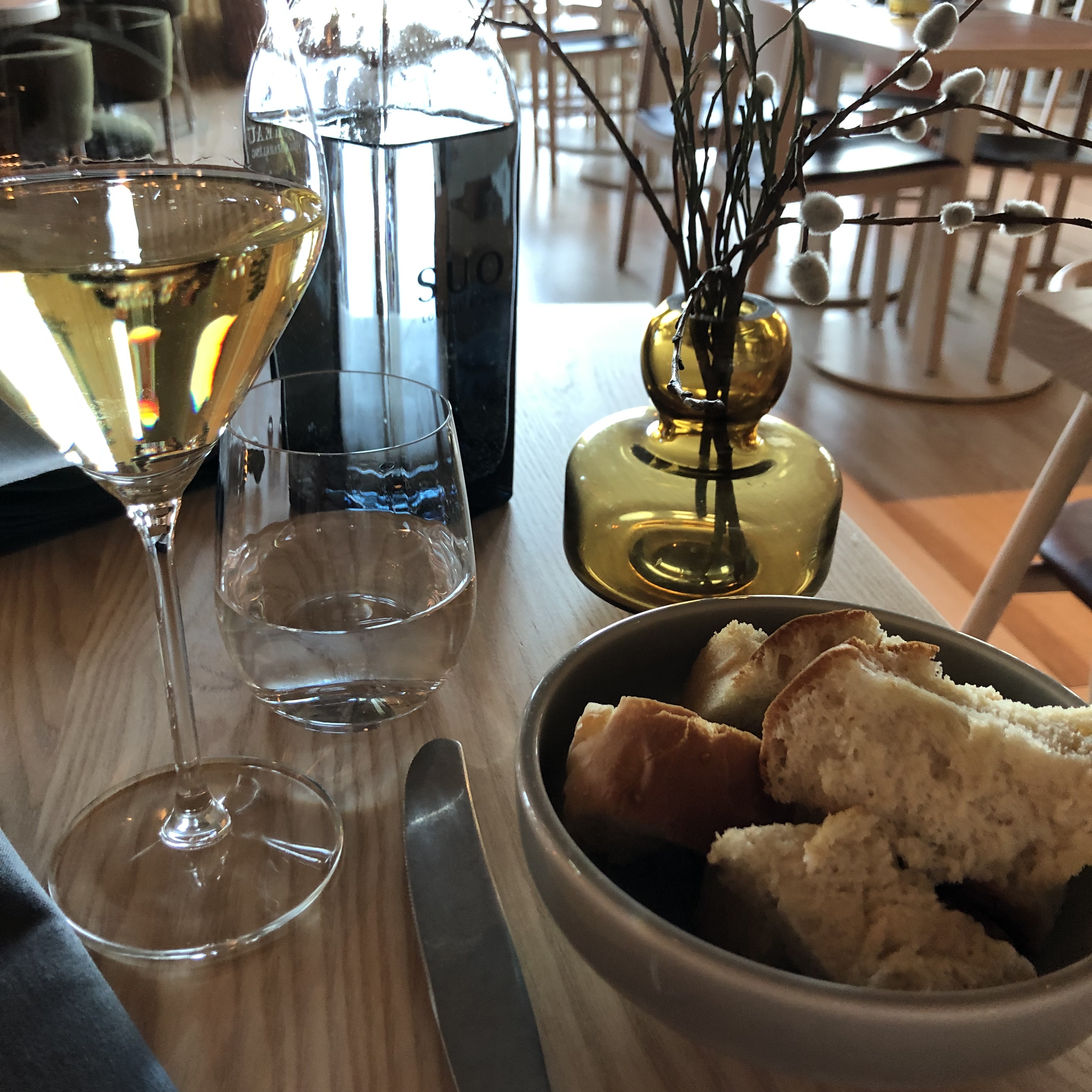
“Language is the house of being. In its home human being dwells. Those who think and those who create with words are the guardians of this home.” (Martin Heidegger)

To respond to Heidegger, I’ll start with Sara Ahmed. She says in her introduction to Queer Phenomenology: “This is not to say that one has to leave home for things to be disoriented or reoriented: homes too can be ‘giddy’ places where things are not always held in place, and homes can move, as we do.”

Heidegger seems to be saying that being dwells in understanding and language, that it is behind or before language. So being is the snail and language is its shell? That’s if, like Ahmed, or me, you have a mobile understanding of home. If our understanding of being is structured in time, it is not static, it moves, even if at a snail’s pace. Being at home in a world, you know how to think, how to create. But the idea of home-in-language could be “nationalized” too easily. I often say I’m happiest in the space between languages. This space is, for me, home. My identity is multilingual, so my home is where languages melt into each other. As a nonlocal born of nonlocals, I feel dislocated in a monolingual, homogeneous environment. And monolinguals are in a global minority.

Translators help people to think and create in their strongest languages, yet communicate with people in other homes. The space between homes may feel dislocating or disorienting, but you can recreate and reorient by venturing across it. People who are less fluent in a language notice things about that language; its problems, yes – and its possibilities.

The panel was easier for me to do in English, the language I learned first. That gives me power. It gives me a job – I translate into and edit in English, the lingua franca of academia and more. Because the English expanded their home by force. So thinking and creating with words is guardianship, but that is not only care, it is also control. It worries me that in a rush to write in my strongest language, people write less in their own strongest languages, or other languages. So in conversations around texts, I try to use as many languages as are useful. Welsh speakers invented the term for this: trawsieithu, translanguaging. Or transhorizoning?

To return to the dislocations. It worries me that in Finland, monolingualism frames the conversation around immigration. On forms, you have to state one “mother tongue”: speaking another (single) language defines you as other. One needs sisu – determination – to learn and preserve Finnish, but Finnish speakers need sisu to open their language up. They need to get used to hearing Finnish with an accent and creative grammar.

If you want to enter someone else’s home, part of joining their being is learning how they create with words. If you don’t help someone to learn your language, you are saying you do not expect that person to dwell in your house, but, for instance, to clean the toilets. You are not expecting them to be a guardian of your home. Rather than keeping people out with a flaming sword, I hope we can reorient towards a shared horizon.

London Book Fair 2025: the people behind the books

At the Helsinki Book Fair, I have one rule. If it doesn’t fit into a single canvas bag, I can’t take it home. Local libraries are fantastic here, but so is the book fair discount, and some titles I want to buy, lend, and keep. While this is the place to meet other translators, literary agents, and authors, Helsinki is all about the readers. What do they want to read, right now?

At the London Book Fair, I didn’t buy a single book. I got given some, and may have accidentally sold one.* London is much bigger than Helsinki, noisier, with few places to sit and even fewer readers. In London, it’s all about the trade, or who gets the books to you. What do they do to make books happen?

If you couldn’t make LBF25, here are ten things the people behind the books said. They are literary agents, publishers, editors, translators, and authors. Whatever your role in birthing a book, you’ll have heard some of this before, but not all. And it bears repeating:

  1. Are you writing for yourself, or for your reader? A great book is not a monologue, but a dialogue. (Nelle Andrew, literary agent)
  2. Behind the book, we are on the same team. As a literary agent, my fate is directly tied to yours, the author’s. (Nelle Andrew again!)
  3. Judge a book by its cover? Visuals tell a story about the story. While the black-and-white cover photo is unique, its colourful frame lets you know you’re holding a Daunt Books classic. (Marigold Atkey)
  4. If you can’t meet your deadline, say so asap. From developmental editor to printer, if the people taking the next steps know early, they can help shift the schedule. (Katharina Bielenberg)
  5. It takes a year between submitting your final manuscript and publication day. How will you use that year? To write your next book? (Alexa von Hirschberg)
  6. Translators have lots of questions about your text. If the author does not want to answer, they’ll ask translators of the same book into another language. Collegiality is key. (Michele Hutchinson)
  7. Authors might need their space to create. Respect that, just as they trust your role in the creative process. (Christina Sandu)
  8. The last thing we want is for publishers to be seen as sausage factories. Quality has to come before quantity. (Fabienne Michaud)
  9. Working with an editor has its own a special alchemy. It is an important relationship. (Soreeta Domingo)
  10. Put your magic cloak of confidence on to speak to new audiences at the fair – other bookish types know it’s not easy! (Harriet Evans)

If you’ve got this far, you’ll see I’ve only cited women. There is one man I want to thank: Ian Giles, for organizing the excellent Assembly of Literary Translators the day before LBF25. From the assembly, we entered the fair together as friends. Because of you all, I needed my magic cloak a bit less often.

*What about the free books? Some sellers can’t transport their display copies home. If you’re around at the end of the fair, they’re glad for you to take them. True to form, my bag closed (just!).

What about the accidental sale? At one of my favourite publisher’s stands, a buyer from another country was looking at a book I’d love to translate. I was so enthusiastic about it that she set off to contact the rights agent. Serendipity like this is the joy of in-person events. Let’s see what happens next…

new retreat dates – seuraavat retriitit