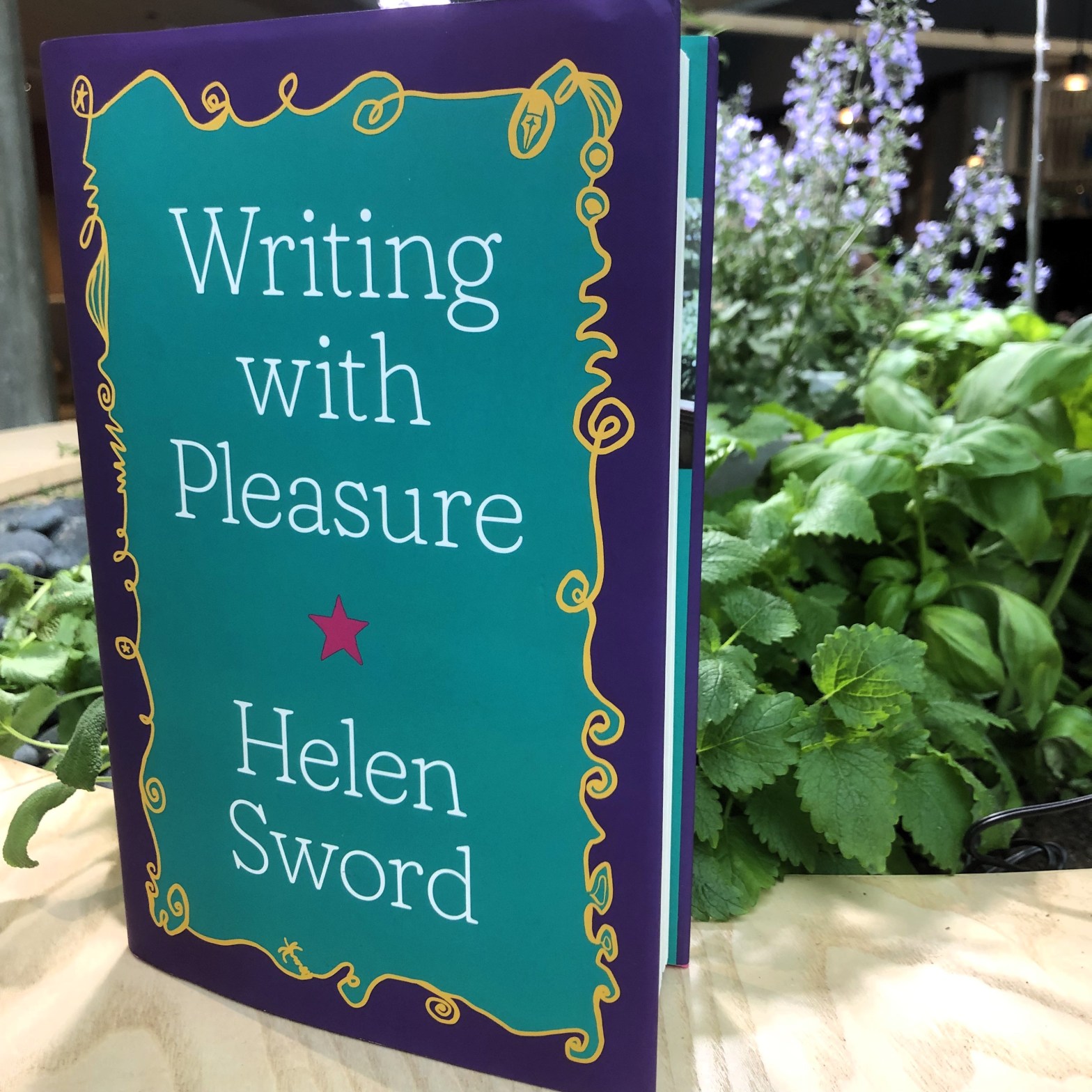
Little and often

I’d love to have vast swathes of time to do nothing but write, but I haven’t got it. So little and often works for me. What about you?

For three years now, pretty much every Wednesday, I’ve been writing with others on Zoom. We started in spring 2020 (no prizes for guessing why, but here’s some context), and I can’t imagine stopping. Except for holidays, of course. We started doing half-day mini writing retreats, because that’s what I had been doing offline. With a colleague in the library once a week, ending with a long lunch. Now, we meet online on Wednesdays at 9:30 am Helsinki time. We share our goals for a few minutes (camera on), write for an hour (cameras and mikes off), then take a few more minutes to plan our next steps. For me, mid-week works well, as even with a six-day weekend, I should be writing then. And if there are other deadlines, I can fit them in later that day. It’s a popular time for team meetings, but that’s what this is, too.

It’s a writing meeting. As Rowena Murray and Morag Thow say, if you can’t make time for writing that other people will respect, call it a meeting. Then they won’t bother you. Your diary is full, you’ve booked your room. You can work undisturbed.

While a writing session like this has a clear structure, it’s more flexible than a retreat. On a writing retreat, I expect people to commit to the whole day or all the days, with no distractions. There are costs involved. The online writing sessions are free. And so long as you don’t disturb other writers, you can be freer with the structure. If you have to be somewhere else, pop a message in the chat and leave early. If you come in late, you keep your mike and camera off and join the flow. If you can’t make it for months because you’re teaching, or have a dance class, or have been ill, or are too busy, that’s fine. If you only come when you’ve got a massive deadline, you can start writing without some friendly faces round you. If you write with me every single week, I’ll be delighted. Because that’s what I aim to do. And I’m happy to see you when you can make it.

During these Wednesday sessions, we write all sorts of things from blogposts to books. In early summer one of us joined from a different country every week, as they moved around doing research. In the new year we used it to write an article in 12 weeks. You use it for what you want to write, when you need to write it. And you can write in any language. We speak a mix of Finnish and English, and most weeks, people are writing in more languages than that.

Perhaps a huge project is looming over you like a storm cloud. Or there’s that one tiny task that you can’t find time for. Or you need a bit of a push to get back into something you’ve been putting off. For some, the hardest part of writing is starting, for others, it’s finishing. But an hour isn’t so bad. Having some other people to write with, just for an hour, is doable. Little and often adds up to a lot.

If you want to join us, help me choose where and when we’re writing next, and I can send you our regular Wednesday link. See you on Wednesday?

PS For Finnish speakers: 1.9. Camilla Lindholmin kanssa puhutaan yhteisöllistä kirjoittamista Tohtoriverkoston kirjakahveilla. Tervetuloa mukaan!

We wrote a book

This week, with two colleagues, I sent a book we had edited off to the publisher for peer review. This same week, I finished the first draft translation of another book. I’m working on that one with the author and a master’s student on placement with me. So in both cases, we were a team of three getting ready to send the manuscript to the publisher. These aren’t the first books I’ve worked on, and they won’t be the last, but some of the same things struck me in both processes. Here are my ten commandments for writing a book together.

1. Talk to each other

Face-to-face conversation creates responsibility and community – and gets things done. My co-translators are in the same country, but different cities, so we met offline, but not often. My co-editors are at the other end of Europe, and the writers of the chapters are on three continents. Start with group video chats, and whenever things got sticky, talk.

2. Read the questions

Like in an exam, reading the questions closely can save you time later. For the book I co-edited, we checked some guidelines quite late and had to tweak things at the last minute. For both books, I wrote a style sheet before we started, which the other two people in the team checked and used. Check or make your style guide early, and use it.

3. Set up systems

Use email only when you have to. We worked a lot in shared online drives. One of my co-editors was amazing at setting up checklists and steps so we knew what to do and when. One of my co-translators was fantastic at catching things to make sure we were consistent. In a team, you can take take on roles in your system that suit your strengths.

4. Share the good news

A whole book is a long slog, so short positive updates help you keep going. When a team member got good feedback from an author, I told her straight away. When someone wrote a lovely foreword, it boosted us to write a better introduction. When we submitted our edited book, the contributors started planning the launch… It’s never too early to celebrate!

5. Be flexible

If there are twenty of you, you can’t always have things your way. During the co-editing process, people had babies, moved continents, and faced serious illness. During the translation, I had to share my drafts early enough that two other people could work with them. Systems fail, circumstances change, things come up. You can adapt, and the person who has less going on can take more on.

6. Stet

Sometimes making no changes (stet, in editor speak) is the best change. People have very different ways of working, and writing. Some like to plan to the sentence level months in advance; others do their best writing as the clock ticks down to a deadline. Working outside your natural rhythm isn’t easy, but sometimes you have to leave things as they are and wait.

7. Give yourself time

If you want your editors to give you constructive feedback, you need to give them time to do it. So you need to give yourself enough time to write. You need to give people enough notice that a bit of text is coming their way. This has the advantage of letting the text rest, from your point of view, which makes it better.

8. Challenge kindly

Reviewing others’ work is an art. I try to do this kindly but don’t always succeed. Seeing how the other people on my book teams did it helped. I learned a lot. Giving constructive feedback makes the other person’s work stronger, and is a way of honouring them. When they do the same for you, your work gets better.

9. Let go

Good enough is good enough. Sometimes, when texts need input from many different writers, there isn’t time to revise as much as you’d like. It’s going to peer review, let the reviewers do their job. If something did not go to plan, but you found a solution, let go.

10. Rest

Like dough rising, a book needs to rest. And so do its bakers. Now our co-edited book is with the peer reviewers, there is absolutely nothing we can do about it. When my translation is with the author, I can’t touch it. When your text comes back, you can knead it with renewed enthusiasm.

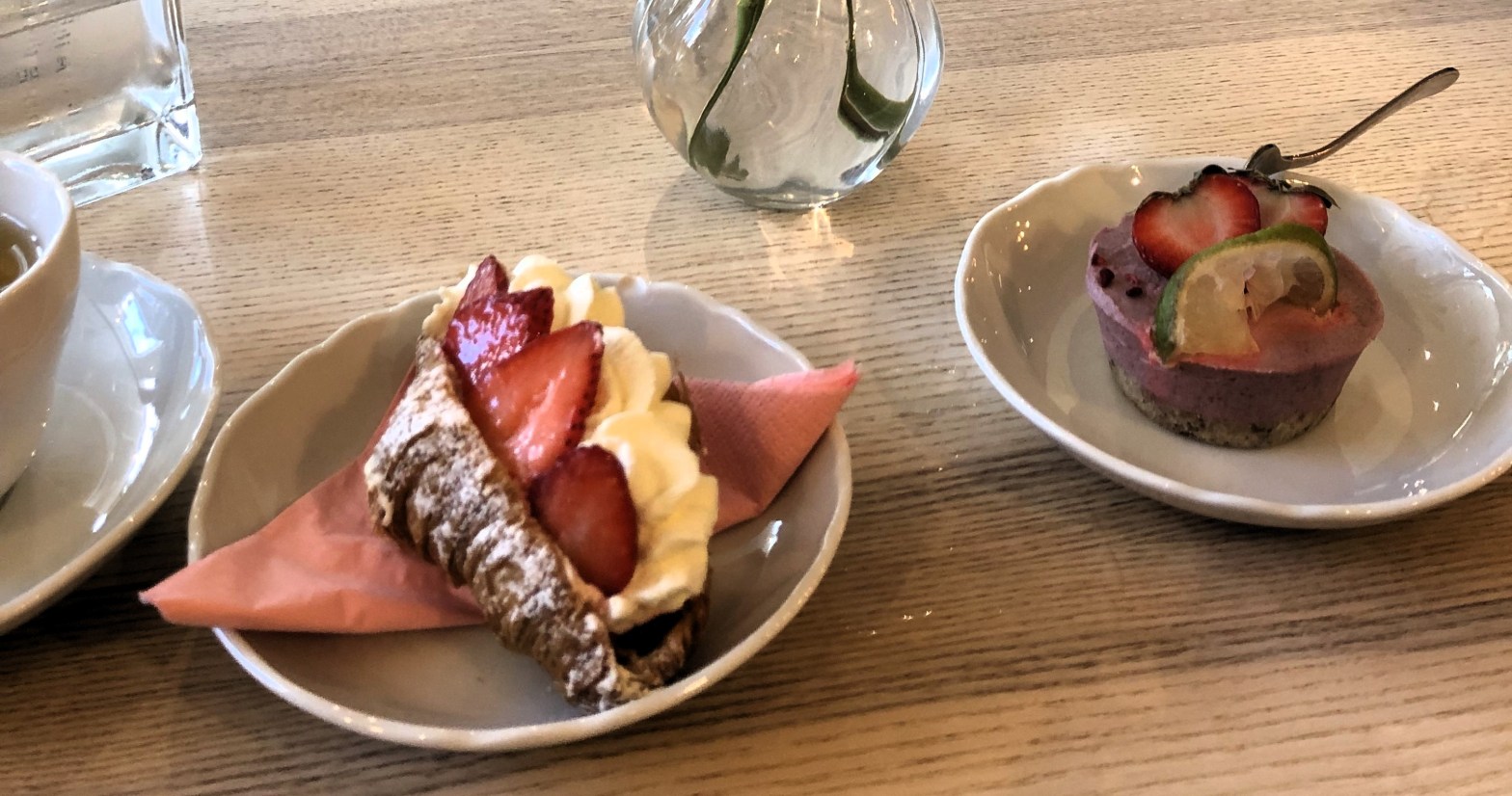
When those manuscripts come back, there’s always something that could be done differently. But remembering to talk and rest, and everything in between, makes the process better for everyone. Next time, I’ll have a different ten commandments. But when we meet in the same place (as pictured) there’ll still be cake. What works for you when you’re writing a book together?

new retreat dates – seuraavat retriitit

Human versus artificial writing: wheat and chaff

So I finally tried ChatGPT. And this is how it went.

I went through the hassle of setting up a new email address and played with the free version of OpenAI. I wanted it to get to do something it’s supposed to be good at. To digest what I had learned so far about large language models.

My biggest concerns are data privacy, bias, and hallucination. Large language models aren’t secure, aren’t neutral, and make stuff up. So unless it doesn’t matter whether what it says is true, you need to know where to check what ChatGPT tells you. And it will reinforce the biases in the data it has got (Sway is brilliant at explaining this). If you read one article about the issues involved, I’d recommend the UK Society of Authors advice to writers. If you want to use it in the drafting stage or to process information, other people can help you get started (the Thesis Whisperer and Nature for academics, the CIEP and APA for copy editors, and the ATA for translators).  The model is only as good as the data it gets, and it doesn’t cite its sources.  And it takes energy. The environmental impact is hard to calculate.

I knew all that without trying it for myself. But it was time to take the plunge.

At first, I was thrilled with how OpenAI handled a lot of information, fast. As soon as I asked it to summarize all the links and notes I’d collected about it, it could see how some didn’t relate to the question I was asking.

But the text it generated was pretty long too, and reading and regenerating it took real time. Its first output felt like a school essay. When I asked it to make it sound more like an academic article abstract, it just used higher-register words like “paramount,” and “imperative.” I was soon drowning in verbal diarrhoea. So I gave it word limits and got it to give me bullet points, which was better.

Then I asked it to rewrite its summary about itself like Chaucer, which was fun, but maybe less useful (tacking a letter “e” on the end of words doesn’t make it olde Englyshe). Regenerating the output made it worse: the text flowed more poorly, it got increasingly doggerel-like, and information got lost.

After one hour, I made myself stop and log out. This thing can save time but it can also be a colossal waste of time. I won’t inflict the whole “Chaucer” draft on you, but here are 10 unedited lines:

Whan thaten writers ande linguists han yspoken,
Of large language models, here be reasons token,
Concernes they han, of privacie and such,
Editinge limitations, biases as much…
To generate ideas, when blocke befall,
With prompts ande suggestions, to answer the call…
Yet caution be advised, to relye not alone,
On these models vast, bute to make truth known,
Verify information, fact-checke with care,
Retain one’s voice, unique ande rare…

I think the real Chaucer deserves a word here. He says that if we expect to find some useful truth in our writing, we need to separate the wheat from the chaff:

For Seint Paul seith that al that writen is,
 To oure doctrine it is ywrite, ywis;
Taketh the fruyt, and lat the chaf be stille.

(Canterbury Tales, The Nun’s Priest’s Tale, VII.3431 ff.)

And I found that quote by googling. When I asked ChatGPT to find me an image to go with this text, it told me to use a search engine (DALL.E is for another day). Without using ChatGPT, I  summarized my ideas faster, and sounded more like me, in that same time. But if I need to process a lot of new information or find out how to use a term or tool, I’ll give it another whirl. I can see how it would be useful if you’re drafting something or entering uncharted territory.

Thank you to my colleagues in the ITI, NEaT, MET, SENSE, EASE, and Akavan erityisalat (the Finnish trade union for academic specialists, including linguists) for our conversations about using large language models over the last month or so. And thank you to the wonderful few of you who I spent a weekend retreat with, creating the space to write this. Half way through my draft, I stopped for lunch, yoga, and to talk about it. When I finish, we’ll heat the sauna. A chat tool can’t support my writing like that.

Organizing your thoughts takes more than feeding chunks of language into a model. Writing takes more than regenerating other people’s words without crediting them. I won’t stop learning about or using this tool, but I won’t stop doing a lot of other things that help me write.

Have you tried it? Is it useful? Does it help you write better? I’d like to know. We need each other to sift the wheat from the chaff.

Illustration from the Ellesmere Manuscript. Held by© MS EL 26 C 9, The Huntington Library, San Marino, California.

Write through summer

My writing wish list for summer 2023 is short (8 words):

1. Finish translating a book.

2. Take a month off.

Do you have grand plans for your summer writing? Now is a good time to think what’s realistic, how you’re going to write it, and most importantly, when you’re going to rest.

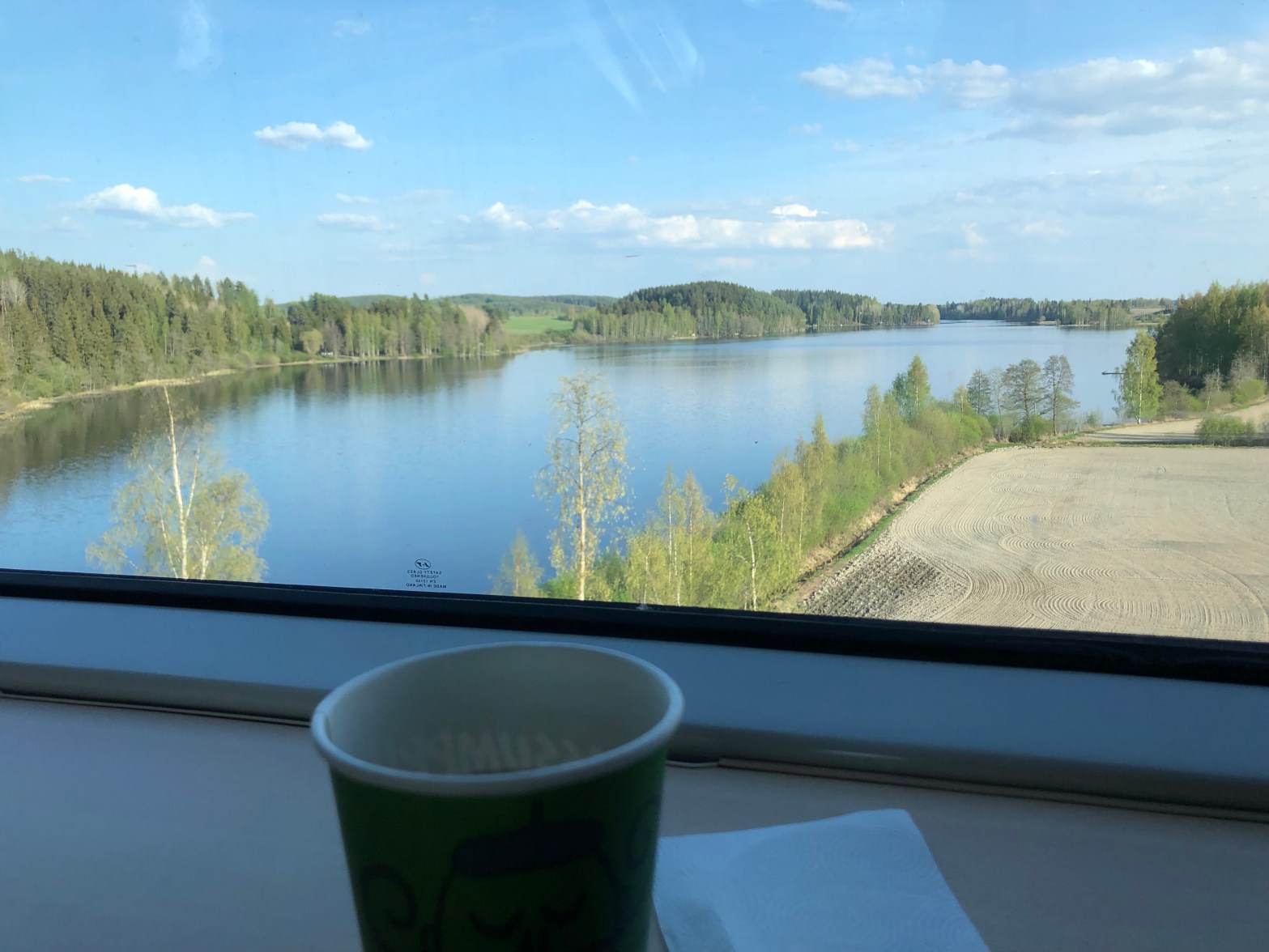
Out of the office routine, writing is both easier and harder. I’ve spent the last ten days on the road, travelling to two conferences and a choir concert, seeing family, and fitting in the work I have to. I started writing this on the train home (view from that train pictured above). Travelling reminded me of what I have to have to write. Here’s the first few letters of my writing ABC…

Airplane mode

On an actual plane you have to do this, but putting your laptop or phone into airplane mode will block onscreen distractions out of your text. And it makes your battery last a lot longer.

Backup

To do A without losing a three-hour flightsworth of work I resort to a good old fashioned USB stick. Feels unbelievably retro, but it works.

Calendar

Sit down and block out all the time off you need first (if you don’t take it in summer, you won’t make it to winter). Then look at what’s left for writing and divide your plan up into the time available. So if you have ten writing days and 10,000 words to write you have to do a thousand words a day. When they’re written, you can stop. This sounds obvious but is SO useful if you do it.

Dawn

When I am a guest or host, often the only way I can get writing done is to get up early, grab some fruit juice and write for an hour or more before anyone else is up. If you’re enough of a sometimes-morning person to do this, it’s brilliant. Impossible things can happen before breakfast!

Editing

Translators say you can translate drunk but you must edit sober. To catch slips, look at what you wrote in unusual circumstances again in a more stable environment. Don’t forget to factor this in to C.

Flexibility

Pausing something won’t make it go away but changing tasks or tack can indeed be as good as a rest.

Group

The other writers out there can help you stay on track and you can do the same for them. Even on the road, I’ve kept up my zoom hour to Write on Wednesdays. And after a long summer break, I know the group will catch me. We will get back into it together at our next writing retreat – at Valo Helsinki on 17–18 August.

How do you ensure you get your writing done so you can have a proper rest? What’s your writing ABC?

new retreat dates – seuraavat retriitit

Social writing – a guide in Finnish

I am delighted to see this book come into being.

Johanna Isosävi’s and Camilla Lindholm’s Yhteisöllisen kirjoittamisen opas (Art House 2023) came out last month. It’s the first guide to social writing in Finnish. The book is both practical and inspirational; it packs a lot into a handy paperback.

Lindholm and Isosävi run social writing groups at their universities of Tampere and Helsinki and online. They trained with Rowena Murray, and provide an up-to-date overview of the literature and practice on social writing, in Finnish.

Ten chapters cover everything you need to get started writing with others. When you finish reading it, you’ll be inspired to write together. You’ll have smashed some myths about writing to smithereens, and taken control of your time to write. You’ll know how to set writing goals and what the social, physical and cognitive dimensions of writing are. You’ll be able to choose between physical and virtual structured writing retreats and writing groups. Wellbeing aspects of social writing will be clearer. And how social writing helps at different stages, from undergrads to professors, will make more sense. Then you can get the basics of facilitating a social writing group and try some different writing techniques. Each chapter ends with some questions that tie the topic to your own writing. The book closes with a short guide for participants in an online retreat that you can adapt and use yourself.

Nine contributors tell you about an aspect of social writing that correlates with their own expertise. These range from Arto Pesola on ergonomics and getting up from sitting to Ildikó Vecsernyés on how social writing helps academic staff.

I wrote about the joys and challenges of physical, as opposed to virtual, retreats. Bodies in the same physical space write differently. I closed by saying that “presence to each other, ourselves and our text is too rare in our everyday lives, so a writing retreat can be a political act. It creates space and community in which we are able to think and be creative.” Isosävi and Camilla Lindholm are making that happen in their contexts. If you speak Finnish, get a copy and make it happen in your context, too.

new retreat dates – seuraavat retriitit


Bodies, writing

We’ve been online and on screen too long.

We need to get off, and get out.

We know this, but we don’t do this.

We need other people to help us do it, together.

It’s three years since Covid-19 hit. I wrote about how it affected our writing then. Now, many things are back to normal. But our bodies remember.

I’m writing this on a structured writing retreat. In person, in the room with a dozen others. (Mostly women, I’ll come back to that.)

After all this time on Zoom, writing in the same room can feel strange. It’s handy to be a click away, but it’s easy to click yourself out of an online meeting. And some days, I have a physical adverse reaction to that screen of little squares of faces. We are not talking (or muted) heads, after all. We have bodies.

And ignore it or not, our bodies are writing with us.

So far, this body has had breakfast at home, tea before writing as people arrive, coffee and a Danish pastry at the first break. Soon it will stop writing and walk for fifteen minutes to a hot cooked lunch by the lake where they do weddings. Then this body will walk back again, with the same dozen or so women (only one man for one day, I’ll get to that), and write a bit more. And decide to have tea instead of yet more coffee, and eat some fruit, and then go for a longer walk and pizza and beer and bed.

And do it all again tomorrow, with a dozen women. Who haven’t cooked or thought about immediate logistics at all for two days. Because they aren’t at home, and someone else is taking care of it for them. Tomorrow too, someone else will lead yoga. All we have to do is write, and look after ourselves and our bodies to do it.

One of us is very pregnant – an immovable physical deadline. One of us has teenagers with complicated lives. Several of us have been teaching for decades and are usually running any group they’re in. We’ve already had at least one conversation about supporting older parents. And others about moving countries, visas and racism and academic funding cuts. But we’re creating space to leave all that at the door. All we have to do is write.

What we leave at the door to the writing retreat can be a reason that push more women, non-binary and other people through it. And fewer men, because, still, men are less affected by those things.

Another reason is the structure. A structured writing retreat means set start and finish times. Someone else tells you when to write, and when to stop. You aren’t as free to do things your way. You’ve told everyone else to go away – for every retreat, I put an out-of-office email on. But this structure is a load-bearing wall with a door in it keeping all that other stuff out. The stuff can huff and puff but it won’t blow our house down. We need that.

I do online writing retreats still, too. Doctoral students in particular need them and they are more accessible. Whenever someone joins us for the first time, I’m struck by how hard they find it to concentrate. We get so distracted online that some people find an hour of writing too long. Ninety minutes, even with a stretch break half-way, is impossible. Even a Pomodoro (25 min plus 5 min break) is a challenge. If 90 minutes is three Pomodoros, it’s imaginable, but it can be terrifying. At home alone, distractions are myriad, especially when the internet sucks you in. Some days when I have too many Zoom meetings it’s like I’m back in lockdown. All those little squares keeping me from getting outside in the fresh air, to breathe, to move, to think. It’s easier to get off your laptop or phone when you have other bodies right beside you.

Bodies in the same space find it easier to write. You can hear the typers tapping, see the pencils scribbling, smell the breaktime coffee wafting down the corridor. And taste the cake without which no retreat is complete. You can get into the rhythm with others. And in the breaks, there are other writers to talk to. How is it going? What are you stuck on? You might have other people in your office or house, but they quite likely want something from you, even if it is to do with what you’re writing. In your office or house, it’s easier not to go away from your screen or eat properly or move enough. On a retreat, other writers help you take proper breaks, so it’s easier to start writing again.

On a retreat, the other bodies are writing in different directions. Where I’m writing this, we have philosophers, film students, linguists and policy analysts. Bodies based in different institutions and none. Bodies that walked here because they live around the corner. Bodies that flew here – on a plane, not wings, but next time, who knows?

On a writing retreat, our bodies are different. They might not fit into a gender binary or a sexuality script or the clothes they wore a few months ago. But we can all be, gently. It is different facilitating writing retreats five minutes from home – my body knows the space – and hours away by train. I write well in both kinds of space.

But in both cases, I write well because of that load-bearing wall that’s holding everything else out and up. The structure makes it happen. And other people make it happen, too. With me are other bodies, writing.

new retreat dates – seuraavat retriitit

The carrier bag theory of fiction

If you read one thing about writing this year, try this. It’s tiny – but transformative.

Ursula Le Guin’s own writing is beautiful and she writes about writing wisely, from Words are my Matter to Steering the Craft. But here she goes back to the first stories at the dawn of time and forward to the future of our planet(s). In a few pages.

Her main point is this: What if we stopped telling stories about heroes killing other living beings? Instead, we could tell stories to hold living beings. That’s The Carrier Bag Theory of Fiction.  Before we were ever hunters, we were gatherers. And while  gathering, you need “a leaf a gourd a shell a net a bag a sling a sack a bottle a box a container. A recipient. The first cultural device was probably a recipient.”

Since so many have tired of hearing the “killer story” that cannot end well for any of us, Le Guin, in 1988, proposed telling a “life story” instead.

“A book holds words. Words hold things. They bear meanings. A novel is a medicine bundle, holding things in a particular, powerful relation to one another and to us.”

Writing like this, in a novel, or in science fiction, is “trying to describe what is in fact going on, what people actually do and feel, how people relate to everything else… The story isn’t over. There are seeds to be gathered, and room in the bag for stars.”

Le Guin’s words dovetail with a lot of other people’s work I’ve been editing lately – from feminist vegan activism to culture, philosophy and utopias. In her introduction to this edition, Donna Haraway shares three bags she received on a research trip to Colombia. Using these bags, remembering who made them, commits her again to a shared struggle for “recomposing lives and making new sorts of kin in hard times”.

Of course, Le Guin got there much earlier. Reading this, it’s hard to bear that she won’t write anything new. But there’s so much to find in what she’s already written.

This delightful, diminutive book, with illustrations by Lee Bul, is published by Ignota. If you only read one thing about writing this year, read this! I, for one, will keep trying to make my writing more of a medicine bundle. And make sure there is room in it for stars.

new retreat dates – seuraavat retriitit

Write into 2023

Happy new year! Let’s write again, like we did last year… at two of your favourite venues and in a new social writing challenge. My new year’s writing resolutions are to write little and often, keeping Wednesday mornings for my own writing projects, and to write more in person with others in pairs as well as on retreat. What about you?

January

Start gently by writing for an hour: Write on Wednesdays online restarts today.

Flex your muscles with a bigger writing project, together. On Wednesday 18 January, we start writing our articles in 12 weeks. There is still time to join that challenge on the Ridge Writers Facebook Group (in English and Finnish, for anyone who writes on retreat with me) or with Tohtoriverkosto (the Finnish PhD network) in Finnish only. Contact me for more info.

February

Write in a winter wonderland on Thursday and Friday 16 and 17 February at Säynätsalo Town Hall (pictured) very close to my home. This is a gorgeous island venue where you really can get away from it all, and get creative in a unique Alvar Aalto building. At our retreat there this time last year, some of us stayed up late enough to see the Northern Lights. Can’t wait? Book here.

March

Keep going with the 12-week challenge. On Friday 31 March I’m facilitating a one-day online retreat for members of Tohtoriverkosto, in Finnish only.

April

Join us for a two-day retreat in Helsinki on Thursday and Friday 27 and 28 April. This will be our third writing retreat at at Valo Hotel and Work, the perfect place to write well and be well in the city. Book here.

Want to be the first to know about when and where we’re writing next? Join my monthly mailing list or find Ridge Writing Retreats on Eventbrite to book your next bit of time, space and community to write.

Writing your article in 12 weeks

Well, I finished reading it in that time, but I didn’t finish working through it.

Laura Belcher is brilliant – if you do most of what she says.

Why most? Because I have one reservation. Not that her book Writing your Journal Article in Twelve Weeks isn’t hugely helpful. It is. Anyone who thinks it’s “too self-helpy” would do well to read it. Belcher is very comprehensive and astute about what you need to do to get that languishing draft back to life. She breaks down every step, from your drawer to the editor’s desk, into tiny movements. She chivvies you along to make sure you get it done. And you can download forms from Belcher’s website if you want to use the book again and again, which many do.

My reservation is the US-centricity. My hackles raised when Belcher suggested changing to a more Anglo-sounding name to get published. Yes, there’s racism in publishing and it’s a violent phenomenon. But changing names to sway gatekeepers is not a solution. I was also surprised by her recommendation to always go for the best US journal, though a couple of European ones might be better. If you live and work elsewhere, or your name sounds like you do, you might want to take this US-centrism with a very large pinch of salt.

Belcher is at her best asking awkward questions to make sure you have your argument and structure right. She focuses on overall flow as well as fine detail. If you can’t get hold of her book, or lug it around when working through it, you’d do well to download her checklists. LINK

I worked through this book with the Kirjoitetaan… Facebook group and during my own Write on Wednesday Zoom sessions. It’s my fault that I got behind schedule – I didn’t use every Wednesday for this project for 12 weeks and had to catch up on my next writing retreats. But I made my own deadline at the end of November.

One terrifyingly prolific academic I know said she wrote her best ever article by following Belcher to the letter. I just submitted mine – but I can’t give my opinion on it till I know what the journal editors think. If they don’t like it all, luckily Belcher has a whole chapter on how to revise and resubmit.

I’m planning to facilitate another 12 weeks of working through Belcher’s book to get an article written in the new year, with Tohtoriverkosto. Hop on my mailing list if you want to join us!

new retreat dates – seuraavat retriitit

Violent Phenomena

Violent Phenomena (eds. Kavita Bhanot and Jeremy Tiang, Tilted Axis 2022) rolls the south and east of the globe to the top. 21 essays address racism in the publishing industry in general and literary translation in particular:

If you’re dual heritage, or mixed, or more, these essays will resonate. It’s time to get over monolingual nationalism and the naive idea that most people have just one “mother” tongue. Most people don’t. How can a translator build a bridge between two linguistic islands when she has several languages jostling in the city inside her? Gitanjali Patel and Nariman Youssef remind us that “our mother’s tongue may be different to our father’s and it’s possible that we know neither”. They continue, “I can’t imagine that many of the white translators I know feel the same debt to the source language, the same desire to do it justice… from my own experience of having my English(es) mocked, disparaged, invaded… I do not want to reenact that violence on another language.”

“Western poets building bridges to where they don’t belong”. Mona Kareem decries the practice of “co-translation” based on a “literal draft” for someone who doesn’t speak the source language. “World literature is no Lonely Planet” says Lúcia Collischonn in her essay. But translation can inform and expand the target language. It can decolonize.

The essayists expose structural racism in publishing. We need to get away from “the mythical English reader” who, as Anton Hur worked out his publishers meant, is white. Despite the risks, Kaiama L. Glover translated Depestre’s Hadriana for Afro-anglophone audiences. The “extravagant ludic register” of the Francophone Haitan poet was too much for many publishers. She is not alone. “When I began translating from Telugu, I ran into a major difficulty: a clash of literary cultures” says Madhu H. Kaza. US publishers kept saying the work was “not a good fit for us”. Sandra Tamele had to translate Ammaniti’s Io non ho paura into European (not Mozambican) Portuguese, so people could read her translation across Lusophone Africa.

Should a white translator even be writing this? I know I have more work to do. But I wanted to hug Eluned Gramich, the author of the Welsh chapter and yell, “yes!” She describes a violent phenomenon I grew up in. The Welsh language is on the margins of its own turf, but Welsh people were complicit in the expansion of empire. Did you know some Welsh speakers prefer to talk of Y Deyrnas Gyfunol, the combined kingdom (not “united”)? Gramich cites the immortal R. S. Thomas:

“Speak up is, of course

The command to speak English.”

In her amazing essay-as-snake, Ayesha Manazir Siddiqui shows that translator-intermediaries can be “part of the colonial project”. If the play was not about, but for, Birmingham Pakistani Muslims, her translation of it would be different. As she asks:

“Who is doing the translation, and for whom?” The author and the audience need their say.

Sometimes the best choice is not to translate, but to tell the story right within its community.

Or to choose a language closer to home. Translate a poetry performance on Bali into BISINDO (Indonesian sign language) for the locals, not Auslan (Australian sign language) for the tourists. Khairani Barokka is clear on the “right to access, right of refusal: translation of/as absence, sanctuary, weapon”.

Or to provincialize the “big” language by translating into it out of the “small” language. “I often ached to hear the sound of my life in this language” said Yogesh Maitreya on translating into English out of Marathi.

Or to find autonomy in orality, like Kashimiri translator Onaiza Drabui. When there’s no word for novel in your language, you could start with “verse, sung not written; dramatized folklore, performed not read.”

Or to decide to publish a bilingual translation that is “plainly a faithless act” because the poems don’t match. Hamid Roslan does this with Singlish and without paratexts in parsetreeforestfire.

M NourbeSe Philip knows that “those involved… believe that they can best bestow meaning, their meaning, on the work”. As she said on discovering that her Zong! Had been translated into Italian without her consent: “If you are lucky enough to pick a living poet to translate, write to him or her. Get to know the person; ask him or her questions.”

Yes, translators, publishers and writers do this often. But not often enough. We could all ask more before we start to bestow meaning.

new retreat dates – seuraavat retriitit