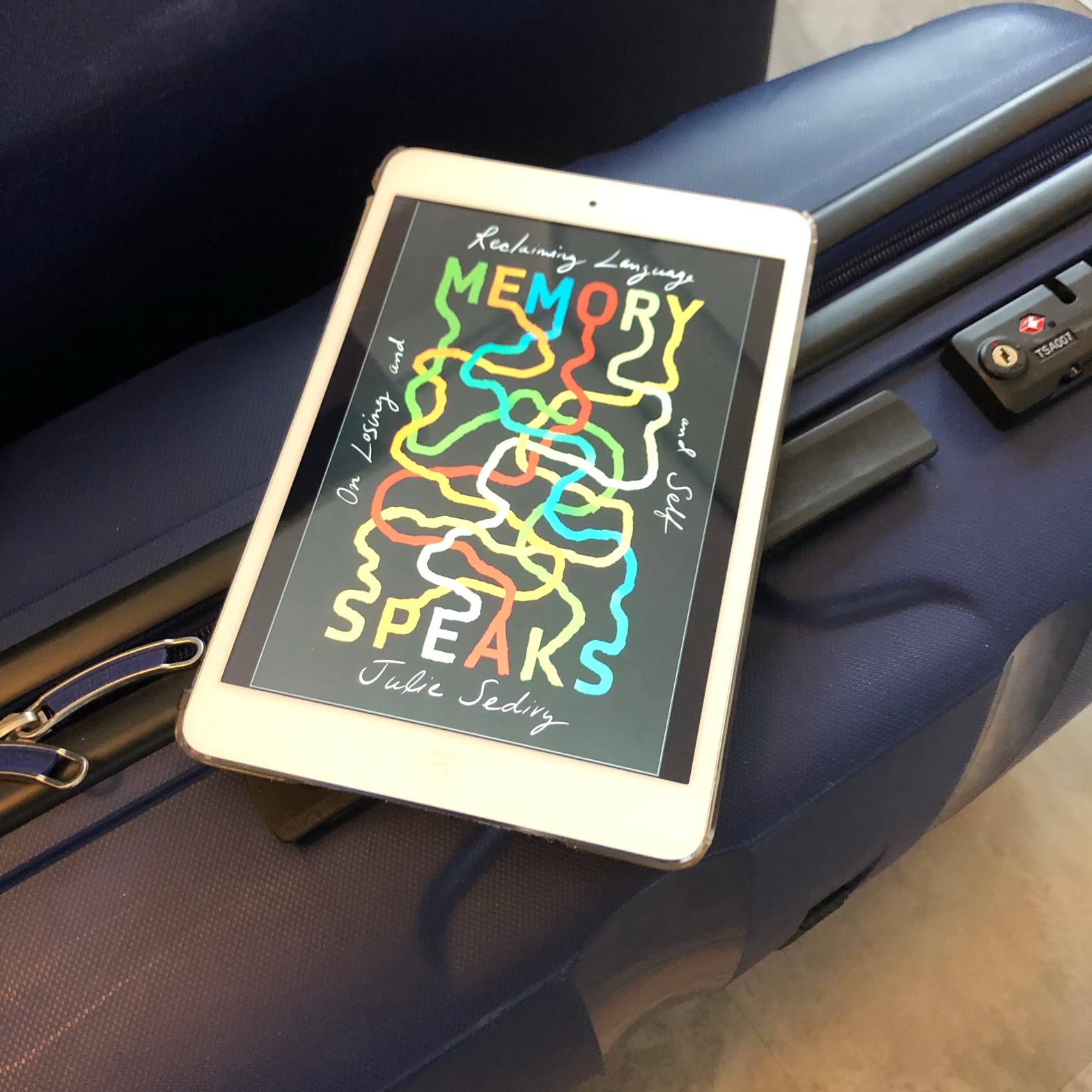
Memory Speaks

Writing in your own language is not as easy as you might think. What if you have more than one language? What if your first language is so deeply buried within you, you have real trouble digging it out? What does that do to your brain, your heart, and the society you live in?

In Memory Speaks Julie Sedivy addresses all these questions. Her reflection on losing and reclaiming language and self is searing. I pre-ordered it as an e-book from Harvard University Press as soon as I heard about it, and devoured it in a couple of days.

Sedivy came to Canada from Czechoslovakia, as it was then, as a young child. She identifies with Nabokov’s experience of “language being yoked to memory.” Although he wrote in English (his “stepmother tongue”), his memoir had to be in Russian, the language of his childhood.

Sedivy has a linguist’s passion for endangered languages, not least to defend the indigenous ones in the land of her new home. She weaves her academic expertise into her personal story.

And she can write. Her book brims with vivid metaphors.

“Languages can co-exist, but they tussle, as do siblings, over mental resources and attention. Like a household that welcomes a new child, a mind can’t introduce a new language without having some impact on the languages already living there.” The effect of this is a lot more nuanced than the newspaper headlines would have us believe. I could recognise myself in Sedivy’s descriptions of compartmentalising (healthcare happens in the language of the state you live in, Christmas cooking in the language of your maternal grandmother). I can understand how the desire to reconcile complex differences comes from having your brain firing on all cylinders in several linguistic directions.

“All speakers of minority languages, whether they realize it or not, carry within themselves a tally of their language’s value, a sense of the price they would be willing to pay to keep it.” This is a political issue. My job is to translate into English and edit in English for academics, so they can get published in the most valued language of the moment, but I live in a small multilingual country that’s been independent for just over a century. So I am hyperaware of the politics of language. Sedivy addresses this deftly, looking at the impact of policy, language nests, and migration on how languages thrive (or not).

“A grammar usually describes a language as if it were an object that can be dissociated from its speakers, like an image of a dress laid out on a bed ready for someone to put on. But native speakers also know what their language looks like when it’s worn—how the language drapes and flows…” Sedivy lost much of her Czech once she and her siblings switched to English at school, but relearned it by spending time there once she could, as an adult in the 1990s. Researchers have found that babies tune in to the sounds of the language around them even in the womb. Her preschool Czech did return when she returned there.

“Children learn language the way they learn to ride a bike—without the benefit of diagrams about muscle physiology or the physics of motion, but relying on raw intuition and repeated trial and error.” So (re)learning a heritage language is very different from being an adult student who is new to it. Classes should reflect this. Even language nests are not enough – the more people around you speaking the language, the stronger it grows. And language is a question of biodiversity as real as it is in the plant and animal world. It takes interventions to preserve that diversity.

“Many bilingual people think of language as a portal into alternative ways of being.” What this means for you personally, or for all of us as writers, is that we need to write in our other languages. Not just in English. Different kinds of writing. One person like this said:

“I am like a Swiss army knife. Multiple tools, and you can pretty much deal with anything, if I need a screwdriver, it’s in there. So if I need to be American, I’m in there.”

You choose whether you want to write academically or creatively in a language other than English. It is important for the language itself that you do. And it might make you a better academic, more creative. It might make your English, and your voice in the other languages, more interesting. You might make new connections and see things that, monolingually, you wouldn’t. Sedivy says it best:

“I’m drawn, like a moth flinging its body against a light bulb, to in-between spaces and intersections, to hyphenations, to situations in which there will always be two sides. This is, for me, where all the heat and light can be found.”

new retreat dates – seuraavat retriitit
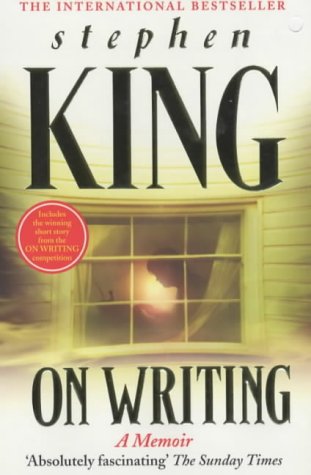
King On Writing

I resisted reading King’s On Writing for a while. A friend doing a clearout passed it on. A colleague who’s committed to writing well reviewed it. And then my brother gave it to me as a late birthday present. “It’s good,” he said.

So I read it, in a day.

Here are ten things from the book that are worth repeating:

1. If you write bestsellers, “no one ever asks about the language” (Amy Tan) – but you must be doing something right.

I’ve not read any of King’s fiction; horror isn’t my thing. But I share his love of a good story, and after reading his “memoir of the craft,” I know he knows how to tell one. He begins with his own story, the one around the ones he writes. And he soon had me hooked.

2. Writing means rewriting – “to write is human, to edit is divine.”

It is always nice when writers appreciate copyeditors and King does. He recalls learning from the sports reporter who handed back his first copy and “only took out the bad parts, most of it is pretty good…”

King stresses that “when you rewrite, you are taking out everything that is not the story.” Or, in the words of my A-level history teacher in the margins of my essays, “why are you telling me this?”

3. If you don’t take your writing seriously, who will?

“You must not come lightly to the blank page.” If you want to do a good job, you need to have your toolbox in order and the knowledge to use everything in it. This includes finding out enough about the basics of grammar and style, and taking time to correct mistakes. King doesn’t have time for complex plot mapping or gimmicky tricks. His gut feeling is that writing workshops and courses distract from the core business of getting your words on the page. He wants you to get on with it.

4.“If you want to be a writer, you must do two things above all others: read a lot and write a lot.”

King is far from the first to say this, but reading is essential to writing. It was easy to identify with his own description of always reading, on the treadmill, on transport, everywhere. Seeing how others do it will help you do it. But then you do have to put the hours in.

5. Stick to a system.

2k per day, every day, in the mornings until it’s done, is King’s system. Alone and without distraction, behind a “door you are willing to shut.” Everyone will have their own routine, and not everyone is a morning person. Like sleep, however, regular habits help create the space to dream things up, and to write them down.

6. The story comes first: “stories are found things, like fossils in the ground.”

Like translation, there are a thousand and one metaphors for writing. This is King’s. The story is there, buried, waiting to be unearthed with care, without shattering them. I warmed to his explanation that he doesn’t know what will happen next either: if it’s too obvious to him, why would a reader care? His drive to write more is the desire to find out. The “fossil” could be a situation — “what if…?” Finish that sentence and you’ve started your story.

7. Create critical distance

At this point, King lays down the law. Don’t let anyone at all see your first draft till it’s done. And then only show one person – but don’t let them talk to you about it till you are ready. At best, let it sit for at least six weeks, start the next thing, move on. And reread in one sitting if possible. While rereading, King says, “I’m looking for what I meant” – the big themes. Then a handful of friends get to look at it, and the editing is in full swing. Five friends might have six opinions. So to decide who is right, consider what your ideal reader would think.

8. Cut, cut, cut: 2nd draft = 1st draft -10%

I warmed to this formula too, as everything I edit comes out shorter. You need to do your research, to have a back story in mind, but don’t put too much of that detail in. King shows how he does this with before and after versions of a long extract from one of his own drafts. Again, the story drives him. “As a reader, I’m a lot more interested in what’s going to happen than what already did.”

9. You can help readers find you.

King was very successful very quickly but he quoted an author who had to work harder to find an agent. “You can’t make them like your story, but you can at least make it easy for them to try to like it.” This author had their pick of agents from one carefully worded letter of enquiry. You can show what you’ve achieved but be approachable.

10. Remember why you’re doing it.

“Writing is about enriching the lives of those who will read your work, and enriching your own life, as well.”

King is honest about the times in his life when he was not living to write, but writing to live. Do you recognise this feeling? I do. I won’t rush out and read Carrie (though that’s the one I’d go for, after hearing about the characters that inspired her). But I will keep his top ten pinned up somewhere. And if you’ve also been meaning to read On Writing, go for it. My brother was right: it’s good!

How easy is your language?

Imagine that…

everywhere in Europe, it is easy to find information

it doesn’t matter how well you can read

writers make their message easy for everyone to understand.

The Handbook of Easy Languages in Europe imagines just that. It shows what works and what still needs doing to make language easy for everyone. Camilla Lindholm (University of Tampere) and Ulla Vanhatalo (University of Helsinki) edited it, and Alice Lehtinen (another fantastic Finn) is the copy editor. I was delighted when Frank & Timme sent me a review copy. (It’s volume 8 in their series on easy, plain, and accessible language.) So I was feeling favourable towards this tome before I even opened it.

At 658 pages, this is not for the faint-hearted. To read it, I had to break it down. So I started with my working languages. I’ve trained in Plain English (with the CIEP) and Polish (a workshop with Tomasz Piekot and the ITI Polish Network). I’m doing a course on accessible Finnish (at the University of Tampere). I want to learn more about how Germans use easy language to inform people about elections. And I know how useful easy language can be. Learning Finnish in Finland, some of the first books I read were easy reads. I started consuming easy news (Selkouutiset) long before I could cope with the “real thing.”

Except easy is the “real thing.” It is not dumbed down. It is for all sorts of people who find reading difficult. This includes language learners,  people with learning difficulties, and older or ill people. Easy language is for adults. I would suggest that if plain language is at about CEFR level B1, easy language is at level A1 to A2. But each country has a different classification system. One of the problems with this is that what is easy for one person is difficult for another.

The variety in this book is startling. “Europe” here doesn’t only mean the EU. After a few chapters, if you know a bit about a country, you can guess about how they handle easy language. Ex-empires Russia and the UK have made government communication clearer. Multilingual Switzerland has a patchwork of initiatives that don’t integrate. The Germans are big on theoretical research, but less good on user-led practice.

But the stereotypes don’t hold. Austria has produced some excellent practical resources in German. Bilingual Finland has learned from Sweden to join forces to promote easy language. Countries that take pride in their literary tradition can relax the rules. Easy Spanish guidelines recommend ditching the subjunctive. You can write literature in easy language – it works best if readers help you do it.

This book is worth it for the bibliographies alone. Each chapter includes a list of the latest theoretical literature and practical guidelines. This offers a great way in to easy writing in a particular language. Dipping into countries you do not know much about can give you ideas about what could work in your country.

The authors show that context matters. Socioeconomic and postcolonial factors influence how people learn to read. Reading and writing well mean different things in different languages. If you find reading difficult, you might find accessing the internet difficult too.

Yet there are some surprising omissions. No chapter on France – is easy language not used there? I’d like to know more. The editors give a brilliant overview in the introduction. But they did not collate recommendations from across the continent in a conclusion. In such a big book, was there no space?

Important questions for future research and practice come up in different chapters. Does easy language create an “information ghetto” or do easy reads meet real needs? Is giving people access to audio-visual information in apps or online more important?  Do readers with learning difficulties and reading difficulties need  different texts? Who should  make the rules for easy language? Researchers, translators, teachers, social workers… or service users and readers? How can countries honour international commitments to accessibility in practice?

On the principle of “nothing about us, without us,” some authors recommend writing abstracts on the topic in easy language. So I did that for this book here:

The Handbook of Easy Languages in Europe is a big book.

50 writers wrote it.

They say that easy language for everyone.

It is easy to read and understand.

It started 50 years ago in Sweden.

Now people use it in many countries.

This book has chapters about 21 countries.

It answers 5 questions about each country:

1. What is the language like?

2. Are there rules about easy language?

3. Who uses easy language?

4. Can people learn about easy language?

5. How can we make language easier for everyone?

If you want answers to these questions, (get your library to) buy the Handbook of Easy Languages in Europe. It will inspire you to make language easier for more people, wherever you are.

new retreat dates – seuraavat retriitit
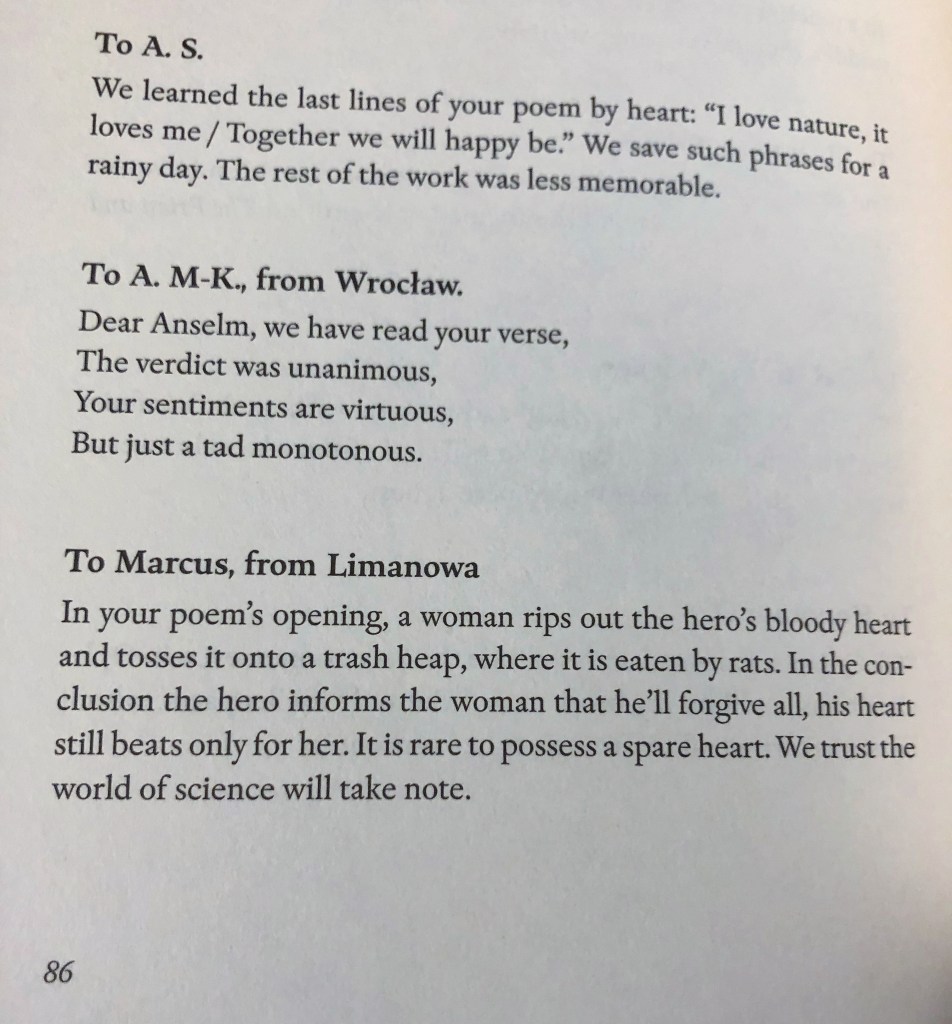
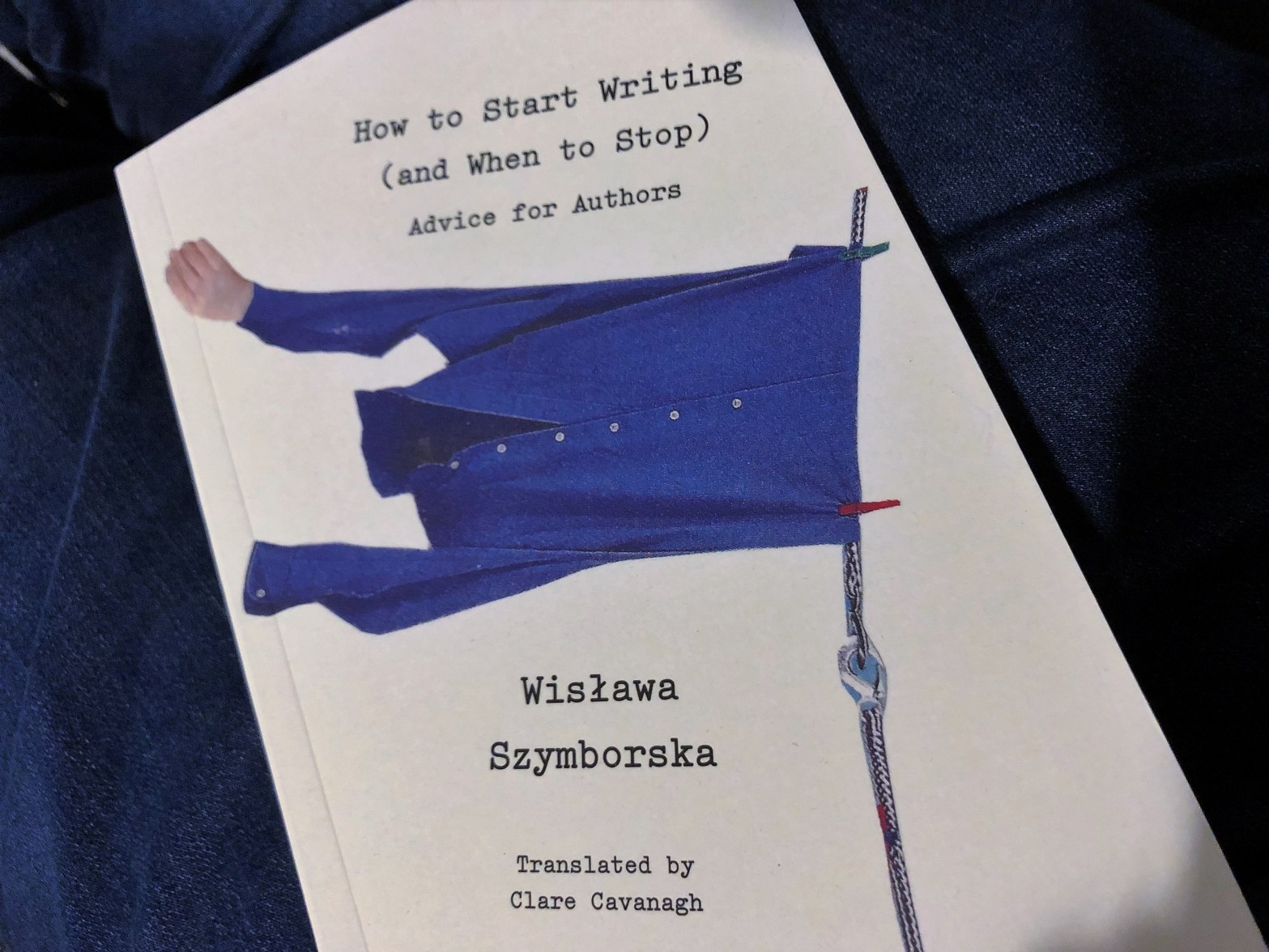
How plain is your English?

Clear writing has clear results. And I love helping writers say exactly what they mean so readers can understand. But I was sure I could write better myself. Then I started mentoring someone who specialized in plain English and I wanted to learn more.

If you’re interested in it, too, do the CIEP Plain English for Editors course. It costs about £200 (less for CIEP members) and takes about 30 hours depending on what you know already. It’s worth it for the reading list alone. I learned a lot in a very short time:

Did you know that technology can help make your English plainer? You can customize Word grammar checks, use macros, and make PerfectIt style sheets. I also tried some software. StyleWriter highlights words that “bog” a text down and “pep” a text up, making it harder or easier to read. Online, you can use the Hemingway Editor for free. But all these tools have their limits.

You can calculate how plain a document is by measuring it in different ways:

  • The Flesch Reading Ease score should be about 65/100 for plain English.
  • The Flesch-Kincaid Grade Level should not be higher than 9 (a reading age of 15) for plain English. In the UK, the average reading age is 13.
  • Both these measures count word length and sentence length. A plain English sentence should be shorter than 20 words.

But long words and sentences are only one problem. Sometimes, a short statement can be complex, e.g. “I think, therefore I am.” Sometimes, you need to use more difficult language, but you can explain what you mean.

You can use some excellent online guides to help you write in plain English:

But you won’t absorb everything by visiting the websites. On the course, you do exercises and can talk to your tutor or other students. The best way to write in plain English is to try it and see what real readers think. They will tell you whether they understand or not.

It’s most important to plan before you start writing. Wh-questions are a clear, easy way to organize a text – who is doing what, where, when, and why?

The CIEP Plain English course taught me 10 things:

1.        Plain English is flexible

You just need to ask: “what do I want to say?” and “who am I writing for?”

2.        Plain English is interesting

You can vary it. Complicated, official language can be much more boring!

3.        Plain English is for sharing complex ideas

What you say is not simple, but the way you say it is clear.

4.        Plain English is for formal writing

A clear message sounds strong. Trying to sound clever might not work.

5.        Plain English is for taking readers seriously

How often do people say “that’s too easy to read”?

6.        Plain English is for university

Researchers can reach more people if they explain their ideas well.

7.        Plain English is for law

People find it easier to keep and enforce clear laws.

8.        Plain English is useful for reaching readers

You can use it give many people large amounts of information briefly.

9.        Plain English is hard work

You need to check words and sentence length, plan, and test.

10.      Plain English is faster and cheaper

It takes time, but it can save time – and money. If your text is clear, you don’t need to explain it.

I tried to write this in plain English, using all the tools and links I learned about. Can you see where I could have made it plainer?

new retreat dates – seuraavat retriitit
A Room of Our Own

Virginia Woolf was clear: £500 a year and a room of one’s own is what one needs to write. More than a century later, more than a year in, we are still mostly stuck in our rooms, but whether those rooms are solely our own is another question.

Unlike many, for me the move to homeworking made my workspace much more noisy and crowded. I’d had a home office for years, with a standing desk and even a mini trampoline. It’s off the living room and doubles as a guest room, but – apart from the private income – I was living Virginia Woolf’s dream. Until everyone else started working from home, including my musician partner, and the internet got a lot louder. Now, if there’s a book launch in Poland, a new collaborator on the East Coast of the US, or a group to give a talk to in Germany, they’re a click away. Yesterday I was using all four of my working languages in different meetings and barely had time to write. Or get up and move. I should say “no” more – but BC (before covid) I would have done a lot of this anyway, travelling there and back to warm up and wind down, with more walking, more thinking time. I do some of my best writing on public transport, often in the notes on my phone. That’s gone now and won’t be back in the same way.

While writing together online has kept us sane, I’m still hearing from other writers, especially women with caring responsibilities, that logging on from home is not enough. It’s not just the internet pouring noisily in. It’s the domestic space invading. Other people in the house want to eat, talk, be cared for –you can’t shut them out. And when you log off, there is no transition time.

“you know the little tug – the sudden conglomeration of an idea at the end of one’s line: and then the cautious hauling of it in, and the careful laying of it out?”*

That’s the thread women lose all the time. It happens to a man once, he writes about that, and everyone remembers it – the Person from Porlock. It happens to women numerous times a day.

Jane Austen wrote all her novels like this, in the shared sitting room, taking the manuscript out when she had a moment and tucking it away to be brightly social (and searingly observant) or dutifully domestic as the need demanded. But she, the Brontës, Eliot and Gaskell did not have children (nor do I, but plenty of women who write do, and yes, not all men, but it mostly affects women).

What those women writing before Woolf did have, though, was the money to write. And when Woolf’s aunt left her £500 a year – about £30k these days, the average UK schoolteacher salary – she could do the same. “Before that I had made my living by cadging odd jobs from newspapers, by reporting a donkey show here or a wedding there; I had earned a few pounds by addressing envelopes, reading to old ladies, making artificial flowers, teaching the alphabet to small children in a kindergarten. Such were the chief occupations that were open to women before 1918.”*

Woolf is clear that material conditions make writing possible. As she notes, almost all the men who had done well from writing in her day were rich. Her comparison of the Oxbridge colleges with money (for men) and without (for women) is biting. Literally. The difference is in the dinner they get served, which makes for a different postprandial mood. “One cannot think well, love well, sleep well, if one has not dined well.”* I had that on a postcard on my student bedroom wall once – I didn’t think how political it was.

What the income gave Woolf was freedom:

“No force in the world can take from me my five hundred pounds. Food, house and clothing are mine forever. Therefore not merely do effort and labour cease, but also hatred and bitterness. I need not hate any man; he cannot hurt me. I need not flatter any man; he has nothing to give me.”*

She was aware of how rare that was. Shakespeare’s sister (not the band), she imagined, would not have even got to London as a woman alone, never mind got her plays on stage. But in two lectures at Newnham and Girton, Cambridge in 1928, Woolf asked her audience to remember that things were looking up for many Englishwomen:

“there have been at least two colleges for women in existence in England since the year 1866; that after the year 1880 a married woman was allowed by law to possess her own property; and that in 1919 – which is a whole nine years ago she was given a vote? May I also remind you that most of the professions have been open to you for close on ten years now?”*

This gave her and her listeners a responsibility to make it easier for the women who came after them to write, by working for it, and by writing themselves. A century later, Woolf predicted, things would look very different.

She was right. For the centenary of Woolf’s essay based on those lectures, the Royal Society of Literature asked its fellows to return to her theme. Some contributors did not even have a desk until their mid-twenties. Or books in the house at all. Or two coins to rub together – though one made the deliberate choice to teach full time, then part time, to have both time and money to write on. All these RSL Fellows say that waiting for the perfect conditions may well mean you never start writing. Their essays, collected in A Room of Our Own, are brilliant. In the closing one, Nadifa Mohamed gets to the point:

“But, what do feel you need to write? A room… privacy and silence… a trust fund, a mother with a PhD who read books to you in the womb… an aunt… who knows someone who knows someone in publishing… long dinners with intellectuals you don’t like very much…

But, what have you got? A shared room, no privacy, no silence… a dead-end job, an illiterate mother who recites long, ancient poems, an angry god… long bus rides that feel like free theatre… a best friend, a council house, city parks and library books, a childhood spent translating letters…

Do you need more? No.

And what is there to write? The world.”

But Mohammed was writing BC. What about now, when the public parks, libraries and transport have been largely off limits for so long? Shared spaces that could be rooms of our own have shut and may not reopen in the same way. We’re not as far from Jane Austen as we’d like to think.

Woolf and Mohammed were talking about fiction. But much of what they say applies to nonfiction and academic writing. “Being productive” in an academic context today often means “doing everything except writing, but still somehow also writing up your research to great acclaim in high-impact journals on top of a full teaching, admin and public engagement schedule – oh and do you have a personal life and family? How quaint.” The tyranny of Zoom meetings takes away your time to think, let alone write. Some Finnish universities declared a “summer peace” with no meetings for the last two months, but that didn’t cover what was deemed “essential.” It’s up to us to decide what’s essential and prioritise our writing. If all else fails, call your writing time a meeting, and meet to do just that.

Without people popping in from Porlock – except your best friend? – you’re more likely to get that writing done. With food and a house, ancient poems and a public library, you’re more likely to get that writing done. With the right people, perhaps a (Zoom?) room of our own, we can balance the writing and the rest (in both senses of the word). As Woolf said, it’s up to us. For me that means still going online, regularly, often in very short bursts, often inevitably interrupted, but more quietly. Muting all other notifications, and then the volume button, together, to write.

* All citations (except the last one) from “A Room of One’s Own,” Delphi Complete Works of Virginia Woolf (2012). Thanks to The Feminist Association Unioni (Naisasialiitto Unioni ry) for the opportunity to return to classics like these.

The Writer’s Map

Portolan of Granada by Ottoman Admiral Piri Reis, 1525, from The Writer’s Map (Thames and Hudson, 2018)

A beautiful illustrated book from Thames and Hudson is always a delight, but if that was all The Writers Map: An Atlas of Imaginary Lands was, I wouldn’t be writing about it here. It’s a map to, by, with, from, and for writers.

The maps themselves are truly glorious and transport you across space and time – from the Mappa Mundi to the moon landings. They lead you into other worlds – from Atlantis to Westeros. They chart lands we’ve loved since childhood – from Neverland to Narnia. They were written by colonizers and colonized peoples – from explorers plotting portolans to Shanawdithit, the last Beothuk woman in Newfoundland. I defy you not to get lost in this book for hours, if not days, exclaiming over old favourites and new ones.

Map by Shanawdithit telling the story of European violence against her Beothuk people in Newfoundland, 1915
from The Writer’s Map (Thames and Hudson, 2018)

The most important thing I took from all this is the connection between map and story. Joanne Harris reminds readers that a plot can be both the way the story goes, and the marking of the journey. Charting it, mapping it out, is the beginning of the telling. She quotes Joan Aiken: “Why do we want to have alternate worlds? It’s a way of making progress. You have to imagine something before you do it.”

Some writers need a map to work out how the story is going to happen and how to make sure it works. Can the heroine get over the mountains and down to the sea in two days on foot, for instance? As Tolkien put it, “if you’re going to have a complicated story, you must work to a map.” Stevenson started Treasure Island by drawing a map to cheer up his stepson on a rainy holiday. You don’t have to draw your own: Kiran Millwood Hargrave’s partner gave him Judith Schalansky’s Atlas of Remote Islands to get him writing again.

Part of Tolkien’s own sketch map of Middle Earth, from The Writer’s Map (Thames and Hudson, 2018)

The mapmakers faced the same distractions and trials that other writers do. Ursula le Guin, the navigator of the sea of story, mapped Earthsea “on butcher’s paper in a house full of children.” Miraphora Mina, who made the Marauder’s Map for the Harry Potter films, had to make multiple copies for different stages of filming; getting your props burned, dowsed, or otherwise destroyed was something she just had to accept.

And in mapmaking, as in storytelling, what you leave out is as important as what you put in. The art is in the selectivity. This doesn’t mean that all maps should be like the blank ocean chart in Lewis Carroll’s The Hunting of the Snark. It is more, as Isabel Greenberg puts it, that you need to leave room for the unexplored. Carroll (in Sylvia and Bruno Concluded) also who gave Borges the idea of one-to-one scale map that would cover the earth and block out the sun.

Yet in storytelling, as in mapmaking, what you put in is as important as what you leave out. As Sandi Toksvig reminds us, the women got left out too often. The indomitable “queen of the desert” Gertrude Bell wrote and mapped Arabia. Phyllis Pearsall wrote the London A to Z and self-published it when nobody else would.

Constellations of illustrators and writers fill these pages with ideas. Robert McFarlane, self-confessed “cartomaniac and islomaniac,” is one of them. He draws a distinction between grid-maps (modern cartography?) that gridlock, and story-maps (older cartography?) that chart memory and culture.

Ursula le Guin’s once asked “are Americans afraid of dragons?” since they seemed to be afraid of reading fiction. Editor Huw Lewis Jones takes up the “here be dragons” aspect of mapping to conclude:

“Maps remind us that there is so much more out there, and so much more at stake.”

What more could you hope to achieve your writing?

The Subversive Copy Editor

  1. Is this the book that will finally get me on Twitter?
  2. Do writers need to read a book for editors?
  3. Should you judge a book by its title?
  4. Why write about this classic now?

Carol Fisher Saller answers tricky questions for a living, as editor of the Q&A for the Chicago Manual of Style online. To answer the questions The Subversive Copy Editor raised for me in reverse order:

4. Saller’s book is an absolute classic, well into its second edition. Any editor should read it: it’s about your relationships with writers, colleagues, and yourself. It’s from an in-house perspective, so some of it won’t apply to freelancers, but Saller is the woman who knows about how editing works and if you haven’t read her book yet, you should; you will learn a lot.

3. The subversive in the title absolutely had me sold. I know that writing the story down (from histories to minutes) puts you in a position of power. Editing the story once it’s written is also a position of power, as Saller is very aware. She shows you how you can be a force for positive change in the texts you work on and in the relationships around them. This sometimes means breaking conventions and rules – so long as you know why you’re doing so.

2. Yes, this book is for writers too. It’s a concise, clear introduction to what copyeditors do (I prefer closing them up and I’m not alone), how they can do it better, and why it matters. Saller’s key message is that copyeditors work with writers for readers. I often tell authors that I’m their “first reader”; if I notice that something jars, a reader will too, and we can sort it out before they ever notice. Writers have their own chapter in the book on getting the most out of your relationship with your copyeditor. Saller stresses that copyediting is not meant as an insult, but a gift.

1. I’m writing this just after a large online conference (ITI 2021) where the parallel conversation was on Twitter. I’m not, because I’m fierce about protecting my headspace to write and given my magpie personality, I’m not sure I’d have that space between tweets. If we aren’t back to in-person events in 2022, I will stop teetering and try it. Saller makes very a good case for doing so – it’s where the wordsmiths are – but there are other places for us to meet.

Good relationships around your text are good for you. By being careful, transparent and flexible, copyeditors can help subvert the power imbalances in publishing and writing. Done well, copyediting makes for better texts, happy authors, and happy readers.

new retreat dates – seuraavat retriitit

The Tender Narrator

Czuły narrator is the book Olga Tokarczuk finally had time to write in 2020. When the world slowed down, she could, too (her beautiful picture book The Lost Soul, also illustrated by Joanna Concejo, was ever so prescient about slowing down). Much of her writing in this collection premiered for a different audience, including political essays (in Polityka and Krytyka Polityczna) and lectures to students of philology at the University of Łodź. Yet Tokarczuk sees things so clearly and often so far ahead of most other people, that those pieces have become all the more relevant in 2021.

If you already a fan, you will enjoy this collection enormously, as it gives you insight into Tokarczuk’s ideas and experiences before, during, and after writing her novels. Even if you haven’t read a word of hers before, she has a lot of interesting things to say about the writing process itself, how it works, and why it matters: “Language is the knife and fork we use to consume reality.”

Reading shapes our writing, as Tokarczuk is well aware. I didn’t know – but wasn’t surprised – that her father was a librarian, and she learned to read sitting on the floor between the shelves of the library where he worked. Reading her book, I learned some splendid new words – “ognosia” (the opposite of agnosia) and metaxy ( “in-betweenness”). And she gets you thinking about some very interesting questions.

Do we change the books we read, and the characters in them? Do they learn from us, because we read them? Who are those characters and most interestingly, who is the narrator? If writing is making the word flesh,the act of creating a story, who is the “I” telling that story?

Culture, for Tokarczuk, is a delicate balancing act between personal and collective languages. Literature is so important because it shows us that shared language works differently in other times and places, giving us different visions of the world. And now, more than ever, we need not only shared stories, but stories to help us understand why others’ visions are different.

We’ll have to wait a little while for The Tender Narrator to be translated into English – her epic, extraordinary The Books of Jacob is coming first – but while you’re waiting, you could do a lot worse than return to Olga Tokarczuk’s Nobel Lecture, translated by Jennifer Croft and Antonia Lloyd-Jones. As Tokarczuk concludes in that lecture, also entitled The Tender Narrator: “I must tell stories as if the world were a living, single entity, constantly forming before our eyes, and as if we were a small and at the same time powerful part of it.”

The Writer at Work

A lot of writing about writing is about you, the writer. Which is understandable, and done well, incredibly useful, but can shift the focus away from the broader structures that keep you down and hold you up. Who helps you write, and who hinders you? What needs to change, what can you let be, and what are your sources for knowing the difference? bell hooks gives some answers in Remembered Rapture: The Writer at Work, as she looks back on her writing life.

Every time I facilitate a retreat, most of us are women and White people of different sexualities, different linguistic and class backgrounds, writing together. I’m aware that this is partly because of who is facilitating – me, a queer, middle-class, immigrant, White, multilingual woman. But it is also is because of the structures at work, in writing, in academia, in publishing, in society. And bell hooks has plenty to say about those structures.

She grew up knowing that stories are essential, and storytelling, powerful. But writing those stories down was not for everyone. Keeping a diary was ok, for a teenage girl: nobody was going to read it and she’d grow out of it. Elder members of her family could not read or write, because of structural racism. But using those skills to make a living was not realistic. Jobs came before careers and being a teacher would provide a secure income. Writing would not. Anyhow, who would want to read what she’d written? Publishers are not willing to sell a Black woman’s ideas, unless they fit into a narrow “marketable” category. She is scathing about the publishing industry, particularly how it commodifies writing. Writing at the end of the last millennium, bell hooks is wary of “inclusive tokenism” and asks a question that still needs an answer: how many Black women writers of nonfiction are there? Who publishes them? Who takes them seriously as authorities on any topic other than, perhaps, “being a Black woman”?

bell hooks revels in the form of the critical essay, a chance to “talk back” to the writer she’s been reading. She has harsh words for critical theory however; it is too “colonial”. We need to acknowledge our identities – to be conscious about our biases – as much as we need critical rigour. But for her, academia was a censor, forced careerism, and a hindrance. Her “day job” teaching at institutions like Yale encroached on her time and space to write, but also paid for it.

Writing, for bell hooks, is sacrament and vocation. She describes her process in terms of spiritual practice, encounter with the divine, and “remembered rapture” of that encounter, when the words go right. If male poets in the past could have their muses, she can have her spirit to sustain her on the hard road to publication. She believes we are called to love, but this call is not just personal: it is political and intellectual, and leads to action.

Public, free spaces where writers can meet readers and share ideas without cost were few and far between when bell hooks was writing Remembered Rapture (published 1999), and they are even rarer now. Libraries and bookshops need us more than ever, and we need them. Women still need rooms of their own to write in. Some of the women hooks writes about in this book shared solidarity through that solitude, from their own rooms, like Emily Dickinson. Others – like Ann Petry, Lorraine Hansberry, Toni Morrison, and Toni Cade Bambara – came out of their rooms to support other writers. We need to create and sustain more spaces for those conversations to happen.

Striving to better, oft we mar what’s well

Striving to better, oft we mar what’s well (King Lear, Act 1 scene 4)

Shakespeare said it first, but it’s worth saying again and it’s probably every editor’s or reviser’s biggest fear. If revisers are like doctors, aiming to make a text better, should they be bound by the Hippocratic oath – or at least “first, do no harm”?* If in doubt, don’t change it. If you do change something, be prepared to justify it. That is the main message of Brian Mossop’s revision course, hosted by the Institute of Translation and Interpreting (I did it this February, it’s rerunning this July but already sold out).

The key question we asked on the course was: what level of readability do we want? Quality is not absolute, but relative to needs. It is the “degree to which a set of inherent characteristics of an object fulfils requirements” (ISO 9000, 2015: 3.6.2). So what do you (or your client, author, and most importantly your reader) need? Do you want the text to be intelligible, informative, publishable, or polished? People like me, who mostly work with publishable and polished texts, can find it hard to accept that for some readers, intelligible is just fine. Readers often care more about the subject and content of a text than the language and style. Of course it makes a diffference whether you’re revising your own work or someone else’s. While it was wonderful to see colleagues on the course, to discuss these issues and compare our own revision techniques, I felt that we could have interacted even more (even on Zoom).

Which prompted me to return to the book.

Brian Mossop’s Revising for Editors and Translators (4th edition Routledge 2020) is an essential handbook for any translator editing monolingual texts or revising bilingually to compare a source to its translation. For students and early-career translators, it is a map of everything you need to know, with plenty of examples and an exhaustive reading list. For experienced translators and teachers, it updates you, shows you how to turn the content into a course, and reminds you not to be overconfident in your own trusted solutions and habits. For everyone, it offers useful parameters and procedures – what are you actually doing when you revise or edit, and how do you measure that?

Two new chapters have been added to the fourth edition, one on post-editing machine translation (much discussed elsewhere) and the other on trans-editing. Trans-editors are journalists who transform news in one language into stories relevant for readers in another language. This involves prioritising, maybe adding information for the new audience, and taking a lot out. While the techniques mentioned are interesting, in Finland at least, translators have been very concerned about how journalists actually do this. Recently the biggest Finnish daily literally translated then Speaker of the House of Commons, John Bercow,** telling Mr Stewart that he “didn’t give a flying flamingo” about something (let’s face it, it could have been anything). In another lanaguage, without the alliteration or connotations to an idiom and a swearword, airborne pink birds make NO sense. A reviser’s or editor’s job is to notice things like this before they get to print.

Two new appendices have been added to the book, too. One is on grading revisions. Are the changes Good, making the text Worse, Retranslation, Unnecessary, Inadequate, or didn’t the reviser Notice something that should be changed? (good, worse, or ruining it, GWRUIN, is the best acronym I could get, let me know if you can do better). Once you have a number of these types of changes for a sample text, you can grade it.

The other new appendix is about research. Bilingual revision is not a natural reading process – reading two texts at once makes it doubly hard to stay focused and spot problems. Empirical research on this process falls into four types – think-aloud, keystroke-logging, video-recording and eye-tracking studies. I have participated in research like this – the researcher videoed me revising and talking about my choices. Because of the volume of data they generate, these studies usually have less than ten participants, and not repeated. This makes it difficult to draw conclusions about procedures that work on a larger scale. Mossop suggests investigating why revisers miss and introduce errors, what leads them to make unneeded changes, how they relate to others, how much revision costs, and how useful it is. He has done some of this work himself in a brand new book he co-edited with Maarit Koponen, Translation Revision and Post-editing: Industry Practices and Cognitive Processes (Routledge 2021).

In practice, a good reviser’s rule of thumb is that if you need to read a sentence twice to understand it, something needs to change. If you don’t have time for the book, or the course, you could ask yourself three questions and try three things.

Three questions to ask when revising or editing others’ work:

  • Can I justify 9 out of 10 of the changes I made?
  • Can I make a small change that is less invasive than a big one?
  • Have I imposed my own preferences?

Three things to try on your own and others’ work:

  • Save a draft separately, and revise the same draft six months later; did you make changes in the same places? If not, you might not be very systematic and may need to change your procedures (I am definitely going to try this).
  • Change the font to make the text look different so you can spot errors (I’ve not tried that one, but I have tried plenty more: start reading from the bottom, or get Word to read it to you, or print it out, or open it in a different programme, or leave it to ‘sit’ overnight; anything that will make the text feel new to you).
  • If you don’t do it already, read the translation first (before the source).

After all, a reviser or editor is a reader looking for things that might need changing, to make it easier for all the other readers that come after them.

* And what about “first, do no harm?” Turns out it isn’t in the Hippocratic oath at all, although Hippocrates said it in his (newly-apposite) Epidemics. You could translate part of the oath a bit like that, but that is not exactly what it said. As Robert Schmerling MD reminds us, doing no harm might mean doing nothing at all, and that won’t make anything better. You need to know why you’re intervening: assess the risks and benefits before you act.

** updated on 14 June 2021 with thanks to Isabelle Weiss, who spotted that Bercow said this, not Johnson.