Writing vengeance

I will write to avenge my people, writes Ernaux.

Revenge, writes Szymborska.

Why do these Nobelists write vengeance?

Sixty years ago, Ernaux wrote a sentence in her diary, that was the springboard for her Nobel lecture:

‘I will write to avenge my people, j’écrirai pour venger ma race’. It echoed Rimbaud’s cry: ‘I am of an inferior race for all eternity.’ I was twenty-two, studying literature in a provincial faculty with the daughters and sons of the local bourgeoisie, for the most part. I proudly and naively believed that writing books, becoming a writer, as the last in a line of landless labourers, factory workers and shopkeepers, people despised for their manners, their accent, their lack of education, would be enough to redress the social injustice linked to social class at birth…And so, without being aware of it at the time, that first book, published in 1974, mapped out the realm in which I would situate my writing, a realm both social and feminist. Avenging my people and avenging my sex would, from that time on, be one and the same thing.

Nobel lecture 2022 by Annie Ernaux, translated by Alison L. Strayer

Writing in her diary as a student, Ernaux was clear who she wanted to avenge, and that writing was the way to do it. Decades later, she thought she’d been naïve – but when she had a worldwide audience, she started with the same thing. Vengeance.

Sixty years ago, Szymborska wrote a poem that ended like this:

The joy of writing.
The power of preserving.
Revenge of a mortal hand.

The Joy of Writing by Wisława Szymborska, From No End of Fun (1967)
Translated by Stanisław Barańczak & Clare Cavanagh (1996)

Whenever I think about writing, I think of this poem, The Joy of Writing, or Radość pisania in Polish. I think of joy with power, and revenge. Of the joy in discovering Szymborska as a student, seeing how simple the words were and how complex the meaning was. And how amazing the translators were – a pair of poets writing another poet from one language to another. And that a woman like me, yet so different from me, can win the Nobel Prize for Literature. That was in 1996, when we wrote our translations with paper and pencil. Only later in my degree did we go into the library to type up our essays on the computer. I got my first laptop in 1998, to start my PhD. Writing changed. But the joy, power, and revenge have not gone. And I have moved outside the academy walls. Writing on retreats, I am trying to recapture the joy I first felt inside the academy, to preserve it for others in another space. To take revenge, perhaps, on a negative writing culture by creating a positive one.

Write with us throughout 2024

How far in advance do you block out writing time? I’ve just got my own writing retreat dates sorted for the rest of the year. There might be more to come, but now we know that every couple of months, we have a couple of days to write together in person.

Your fellow writers have spoken! Here are our writing retreat dates for the rest of 2024. All retreats are bilingual, in English and Finnish, except Tohtoriverkosto retreats which are in Finnish only. You can write in any language. When I asked, you wanted a mix of locations, online and around Finland, and these dates were the most popular. If you want a retreat tailored to your group or department on a particular date, please contact me at least a couple of months in advance, as I tend to book up quite far ahead.

10. toukokuuta, Tohtoriverkoston verkkoretriitti

Yksi paikka vapautui, vain Tohtoriverkoston jäsenille mutta jäsennys ehdottomasti kannattaa! Lisätietoa tästä. Lisää verkkoretriittejä tulossa 13. syyskuuta sekä 14. ja 15. marraskuuta, ilmoitauttuminen Tohtoriverkoston kautta lähempänä.

16 & 17 May, Säynätsalo ­­Town Hall

Write in a unique Aalto venue on an island in the middle of Finland’s second biggest lake. If you really want to get away from it all and focus, Säynätsalo Town Hall is the place for you to write. Just a couple of spaces left, book by 2 May here.

15 & 16 August, Porvoo, One Breath Workshop

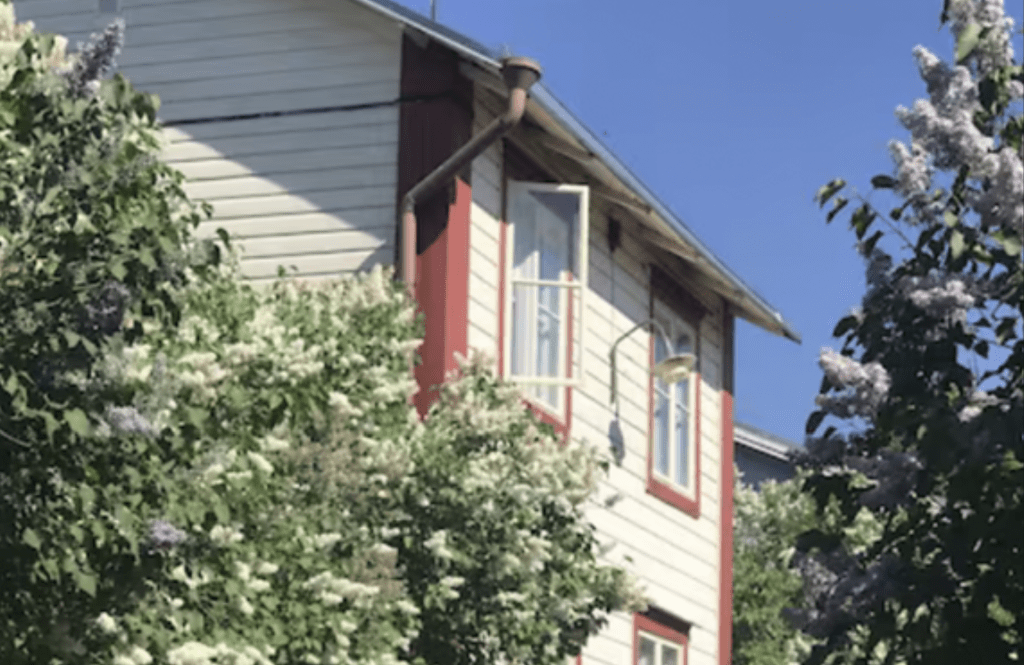
Jie Zhao’s delightful small venue in the old town of Porvoo, One Breath Workshop has a few places to stay overnight or is easy to get to from the southern coast and Helsinki. This is our first retreat in Porvoo! Book here.

3 & 4 October, Tampere, Unity

You loved Unity so much this new year, that we are going back for more. Just ten minutes by bus from the railway station, on the ridge by the lake in forested Pyynikki, this is a beautiful place to write. Book here.

4 & 5 December, Helsinki, Valo Hotel and Work

Valo is a firm favourite, and before Christmas, we are back in this award-winning venue. Friday 6 December is Independence Day, a public holiday in Finland, so this retreat is Wednesday and Thursday instead of the usual Thursday and Friday. Book here.

New year 2025, Jyväskylä and Säynätsalo. We will come back to Central Finland again in the new year. Keep your ideas for venues coming, it is time we went back to Kirjailijatalo in Jyväskylä, and later next year, should we try Tekstin talo?

If none of those dates are good for you, help me choose next time by joining our mailing list. We write for an hour on Zoom on Wednesdays too, which is also bilingual and free.

Sign me up for monthly news

Prove you wrote it yourself

Recently, I had to prove that I’d written 300,000 words myself. Why? I’m now a qualified member of the UK Institute of Translation and Interpreting (MITI) for all my three source languages: Finnish, German and Polish into English. If you translate into or out of the “big four” languages, or FIGS (French, Italian, German and Spanish), you qualify as a member by doing an exam. The assessment is as close as possible to a real translation assignment. You get a text, a couple of days to research and translate it, and then you submit it, with a commentary explaining your decisions. I did this for German into English years ago, and now I assess other translators’ assignments. But if your working language is not so easy to study in the UK, there are not enough assessors to mark the exam. Helping with assessment was my motivation to qualify as a MITI in two “smaller” languages (Finnish and Polish). That process was different: I had to gather a portfolio of evidence about my translation work. But if I say I’ve translated something, how can they know it was me? It should be easy enough, when translators are named. While my name is in the published books I’ve translated, for other texts, we don’t always know the translator. The author or publisher of that writing might not acknowledge their work. Or the translator might not be able to say, if the document is confidential.

Proving it was you is getting difficult for other kinds of writers. A few weeks ago Lizzie Wolkovich explained in Nature how a journal wrongly accused her of using ChatGPT to write a research paper. It works the other way too; large language models are using authors’ work without their consent, breaching copyright. In its response to this issue, the UK Society of Authors is clear that “machines cannot be authors. Our copyright regime relies on concepts of human originality and skill and labour. Only humans can create and receive copyright protection.” The Russell Group universities in the UK have come up with very broad principles on the use of generative AI in higher education. They raise ethical concerns and make a commitment “to ensure that academic rigour and integrity is upheld.” In such a fast-changing field, the practical policy is much harder work.

If you write yourself, assess people’s writing, or help others to write better, I’m sure you’ve been thinking about this. I have, too, with my editor and translator colleagues, and the academics I work with. We’ve been talking about how machines affect human writing at writing retreats, on training courses, and in committee meetings. While some have already had more than enough of it, the conversation is only beginning. Shaping policy is hard work – but exciting. We can prove the value of human originality and skill and labour. When you write, you should be able to prove it.

new retreat dates – seuraavat retriitit

Cyborg writing

We are cyborg writers now. Can we write at all without machines?

When my laptop broke, I felt bereft. I decided to write by hand. But how could I share it? Could anyone read it? Writing offline felt scary: it was clumsier, less secure, more precarious.

While my laptop was being fixed, I started writing this in a google doc on my partner’s laptop. None of my programs and files were on this strange machine, it worked differently, everything was slower. To work, I needed to find stuff online: references in GoogleScholar, notes in my encrypted cloud drive, and VitalSource books in the app on my phone. How could I write well without my companion screen (a laptop is like a companion animal, isn’t it, or at least like a farmer’s horse)? I discussed this in our social writing group on Zoom and we shared our stories of tech glitches. In a browser, you can connect with others, but writing is clumsier, less secure, more precarious.

You could start to translate this post at one press of a button (I did, to use a version of it in another language I speak less well). Lots of writers use machine translation, never mind generative AI. But who gets access to your text, then? Finishing and polishing it might need as much work, if not more, as translating or writing yourself from scratch. You’d need another human to read it, to make sure it sounded right. The text the machine made might feel clumsier, less secure, more precarious.

We are human writers still. Can we write at all without each other?

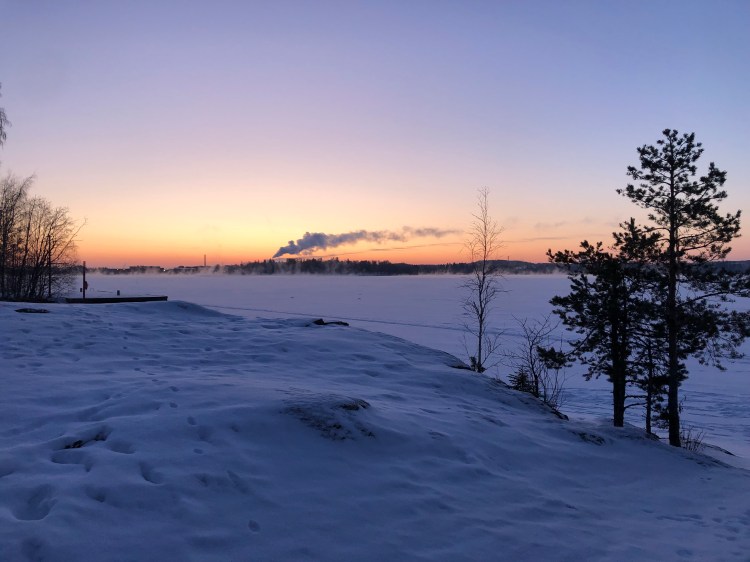
We write with our bodies, senses, and feelings. I started writing this on a retreat I also facilitated, in a sunny rooftop room, with other writers, after a good lunch. An hour before, we were walking outside on the frozen lake. Despite the technical glitches, because the community was supporting me, I felt better, and my text felt better. Even if I’d been writing alone, other people would have been with me, whether they’d written things I’d read or were going to read what I wrote.

When I trained to facilitate writing retreats, I remember thinking that as a facilitator, I won’t be able to write anything myself. Now, if I’m not facilitating, I struggle to find time to write. The community has become essential to the process. But so has the machine. We need to get together online, even in oder to meet offline. Still, for our writing retreat to work, for us to connect with each other and our texts, we have to disconnect. We have to get away from our phones, email, and social media. We might even draft and create with pencil and paper, by hand. It feels less clumsy, more secure, less precarious.

vegan snacks on the writing retreat where this post was drafted

new retreat dates – seuraavat retriitit

Women writing socially in academia: the lineage of an idea

You might not notice when you started writing something. An idea can take years to develop, and years more to come to fruition. But looking back can be revealing and help you look forward. If you’ve never tried this, I absolutely recommend it. Inspired by Margy Thomas and Helen Sword in #Acwrimoments8 I decided to trace the lineage of the idea for our book on social writing. It goes back almost a decade…

September 1998 – I start writing my PhD, living in a shared house with five other humanists (all but one are women). Some of us go to the brand-new British Library to write. We meet for lunch, plan what we’ll have for dinner at home, and talk about our writing. I didn’t know this had a name…

September 2015 – at international translation day in Helsinki, my colleague Virve Juhola talks about Nordic Editors and Translators. I join NEaT straight away.

October 2017 – METM17 – my first METM, or Mediterranean Editors and Translators Meeting, in Brescia. Professor Rowena Murray gives a keynote. I can see the potential in my work for social writing.

April 2019 – I train to facilitate structured writing retreats with Rowena Murray in Scotland and write that retreating is engaging when you put writing first, together.

November 2019 – Ridge Writing Retreats has its first day retreat. We write in the former city library designed by Wivi Lönn, the first woman architect with her own office in Finland. I’ll go on to write more about her later…

March 2020 – we move all our retreats online. Writing together virtually becomes increasingly important when we can’t meet physically.

June 2020 – retreat facilitators start meeting together online. These zooms see us through the Covid-19 restrictions and we realise we have more to share with others.

July 2020 – with Wendy Baldwin and Joana Pais Zozimo, we plan a book proposal to Palgrave Studies in Gender and Higher Education.

November 2021 – The book is born. Our proposal is peer reviewed and accepted by the end of the year.

2022 – we write the book! A dozen authors contribute from all over the world, mostly in Europe but also in New Zealand, Canada and Australia.

November 2023 – I start writing a chapter for another book about social writing, edited by a member of our writing retreat facilitators group.

December 2023 – we finalize and submit the proofs of our book to Palgrave.

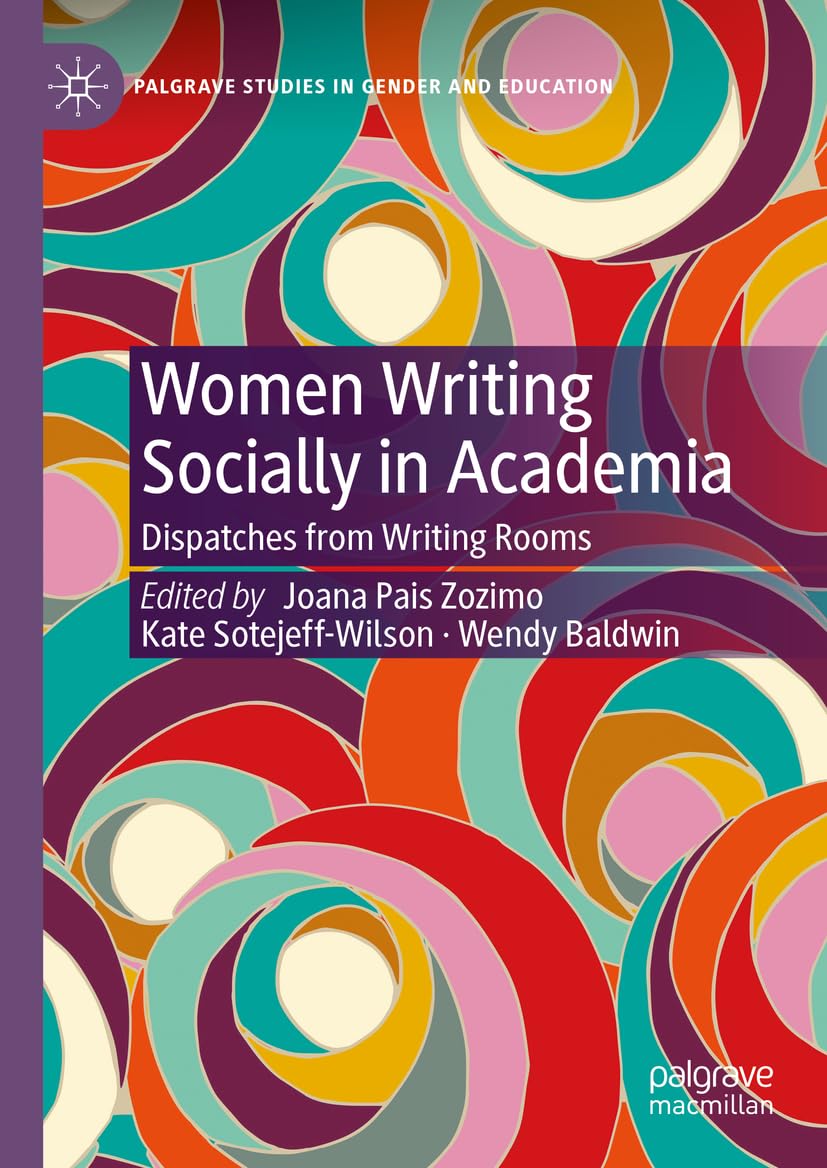
January 2024 – the book is published: Women Writing Socially in Academia: Dispatches from Writing Rooms

February 2024 – we plan the launch.

March 2024 – we present the book at the launch meeting of the WRAP network for social writing, research and academic practice. Join us at the summit on 18 March! Find out more about WRAP and register for the summit here.

new retreat dates – seuraavat retriitit

New year, new words

At the end of the year, the English dictionaries hit us with words of 2023 thick and fast. In 2024, which ones do you think will stick?

Artificial intelligence (Collins)  was the obvious choice. In 2023, this meant generative AI based on large language models you could ‘talk’ to, like ChatGPT (the Economist). But these technologies hallucinate (Cambridge), which means they make stuff up. So how do you distinguish between what’s artificial and what’s real, to find what’s authentic (Merriam-Webster)? Generative AI charmed a lot of people – did it have charisma, or rizz (Oxford)? But a lot of others worried about losing their jobs and the cost of living, or cozzie livs (Macquarie). The Germans went further and picked Krisenmodus, or crisis mode (Gesellschaft für deutsche Sprache). You might relate to that: the Polish youth word of the year is rel (PWN).

The Institute for the Languages of Finland (Kotus) added five thousand words to their database in 2023. These ranged from ahneusinflaatio, or greedflation, to äänikloonaus, or voice cloning. See, Finnish is easy! I have two personal favourites from the Finnish list. Käärijänvihreä, or käärijä green is the neon shade worn by the Finns’ 2023 Eurovision candidate. Heviballetti, or heavy metal ballet, was born through a surprisingly successful collaboration between Black Sabbath and Birmingham Royal Ballet. I think those two will stick, but will they? We’ll find out this year.

Mystical dictionary in käärijä green from HDWallpapers.

new retreat dates – seuraavat retriitit

All I want for Christmas is time to write

The holidays are coming closer and so are deadlines, but if all you want for Christmas is writing time, we have new dates and a new venue for the new year. Looking forward to writing with you in 2024!

Writing in a Winter Wonderland, Unity Tampere 8&9.2.2024

Unity is a brand-new venue for us, in Pyynikki, with a beautiful light-filled writing room, accommodation, restaurant and sauna overlooking the lake. If you are staying overnight, ask me for an accommodation discount code. If you aren’t, you can still stay after writing to use the sauna with us for free. Book here.

Write in the Light, Valo Helsinki 21&22.3.2024

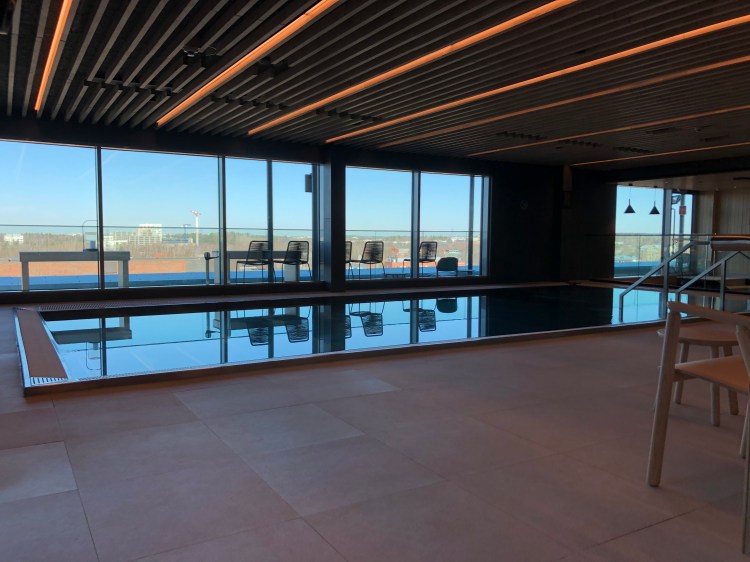
This will be our fifth retreat at Valo, our most popular venue to date. If you want to stay in the capital but away from your usual writing space and up onto the rooftop spa, this is for you. If you are staying overnight, ask me for an accommodation discount code. Book here.

Spring into Writing, Säynätsalon Kunnantalo, Jyväskylä 16&17.5.2024

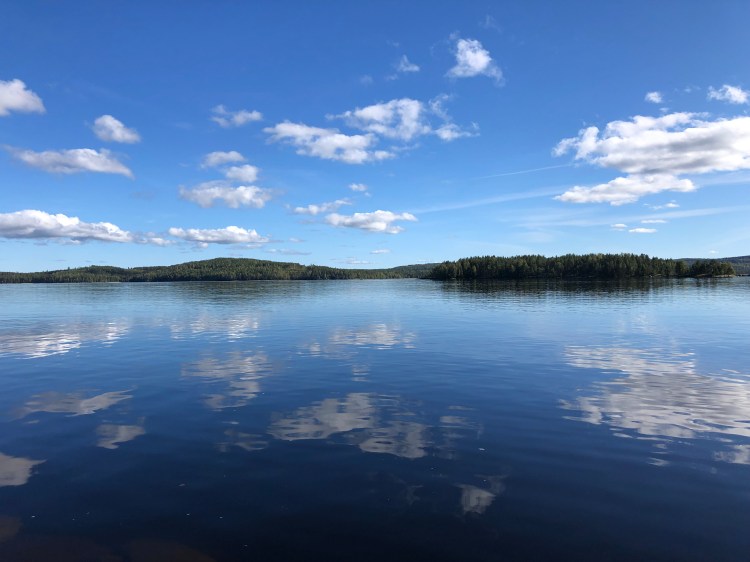
This is our fifth retreat in Säynätsalo Town Hall, too. We had a wonderful retreat last month and I’m looking forward to having you back on my home island. The venue is a unique Alvar Aalto building surrounded by Päijanne, Finland’s second biggest lake. Book here.

Scholarships

The pricing of retreats reflects the different costs of different venues; some scholarships are available so ask me before you book on Eventbrite.

Tohtoriverkoston retriitit verkossa

Seuraavat päivämäärät vahvistetaan uuden vuoden puolella. Nämä verkkoretriitit ovat ilmaisia Tohtoriverkoston jäsenille.

Retreats are in English and Finnish (except the Tohtoriverkosto ones, in Finnish only), but you can write in any language. If you can’t make these, but want to know about future dates, join my mailing list. If you want a retreat just for your own group, offline or online, get in touch.

And the Christmas chocolate in the top photo? That’s from our retreat last month. We spent 12 days writing together in 2023, not counting Wednesdays on Zoom; looking forward to more in 2024.

sign me up for monthly news

Lydia Davis – Essays One

Here is one of those delightful books that lure you into the pages of their fellows. Reading it, I kept wanting to send photos of pages to particular people. And to read what she’s been reading. By the end, I felt I had made a new friend.

Lydia Davis is deftly insightful about her own and others’ writing processes, the forces that shape them, and the books they bore.

In the opening essays she explains how she moved from forcing herself to hone classic New Yorker short stories to her own unique voice.

Essays One is also one of those books that make you want to write better. Like First you write a sentence or Steering the Craft, it urges you to pick up your own pen. And I mean pen or pencil here, not keyboard. Her micro-stories are snippets of delight. She shows you how other writers do things and what effect it has – till you have to experiment yourself. “Can you write the same thing in radically different ways? If you write it so differently, are you, in fact, saying the same thing?” Her thirty recommendations for good writing habits could be summarized as “observe, observe, observe.”

Before picking this up, I wasn’t aware of Davis‘s translations. Essays One includes essays ranging from her translation of Proust to John Ashbery’s translation of Rimbaud. Her analysis had me reaching right away for Essays Two, which focuses on translating.

This is a fat book crammed with ideas, but also a page-turner – I was drawn straight from finishing one essay into the next.

Read it – like Davis, with a notebook and pencil by your side. Essays One will keep you reading and get you writing!

Sign me up for monthly news

When should you write in a language you learned later in life?

When should you write in a language you learned later in life?

Some people never do. They are monolingual and they only write in the one language they learned to speak and listen and read and write in as a child. That is true of fewer people than you might think.

Some people always do. They have to write in a more privileged language to get published at all. Their own strongest language is not considered “serious” enough. Or the community of speakers and readers is too small to support publishing what they want to say. Or the community of readers and writers in their stronger language(s) doesn’t let them in. So they go to write elsewhere.

Some people have to. For example, if you are an academic, the pressure to publish in English is enormous. English is the lingua franca of the best recognized scholarly journals and publishers. Your funding, your project, and your whole career can depend on publishing in English. I help academics get published in English, so I know a lot about this. If you want to get published at all, you may have to write in the strongest language of the country you live in. Most of the publishing world in Finland, for instance, is in Finnish. Finland’s other languages – Swedish, Romani and Saami languages, signed languages – have a much weaker status. Not to mention the languages of people who were not born in Finland. Writers in these languages find it much harder to reach an audience. I know about this too, as I am only beginning to write for publication in Finnish.

Some people don’t want to. They want to write in the languages they learned first, to keep those languages alive and growing. They think and feel in those languages and want to help others do the same. This is essential. Languages are ecosystems that need resources: water, air, light, food. The biodiversity of languages is threatened and needs environmental activists.

Some people want to write in a language learned later. But it is not easy. It takes years of dedicated hard work to learn a language well enough to write in it and be published. You have to read widely. You have to find good teachers. You may need an editor – editing helps any writer, but some need it more than others. You need fluent speakers of the language you are writing in, who are on your side, and create space for you to share your work. You might end up creating those spaces yourself, with others. Because the traditional publishing channels are so hard to access.

The people who never, always, have to and (don’t) want to write in a language learned later in life need to talk to each other. This needs to happen on an equal footing. Soon, I’m talking about authors’ editors as access allies at a conference. Recently, we talked about writing in a language learned later at a book fair. Before that, I was at an event where somebody spoke about “us” and “immigrants who don’t have degrees.” I felt like I couldn’t challenge the speaker in plenary, in my fourth language, and say “I’m an immigrant with a PhD and I’m here.” Next time I will. For many of us, the conversation is just beginning.

Writing with Pleasure

Writing with Pleasure is a pleasure to read. I whizzed through it on the train down to facilitate a writing retreat. I was travelling to a pleasurable writing experience, with people I had written with before as individuals, though not in the same group. But I also knew the experience would be a pain. I had to make corrections to a text I’d started months ago, and I expeted it to be hard work. Could this book help?

It did.

Helen Sword writes beautifully, using metaphor to get complex ideas across in a memorable way. From Air and Light and Time and Space I knew I would enjoy her latest book too. But part of me worried it would be a bit Pollyannaish – is it possible to ignore the dark side of writing, the difficulties it causes?

Sword sees a research gap “you could drive a bus through” here. Plenty of books address the problems and inequalities that make writing a pain. Productive and creative writers must enjoy it on some level: but few books say why, and how. As in Air and Light, Sword asked over 500 academics what made writing a pleasure for them, and the book is peppered with their stories. Interspersed with these are pictures and poems by Selina Tusitala Marsh. Instead of traditional endnotes, there is a delightful reading notes section. This was scholarly and organized too, but the only piece missing from the book is an index of exercises.

SPACE is the core concept that structures Writing with Pleasure. What makes writing socially and solo, physically engaging, aesthetic, a creative and cognitive challenge, that gives you an emotional uplift? How can you do this in practice? What tools, processes, and identities help? The book closes with a road map for making that bit of your writing you hate, a bit more loveable (for Helen Sword, it’s email).

You don’t have to read the book from one end to the other and take notes. You can start at any point that interests you, pop out, and dip back in.

But you do have to do the exercises.

Exercise one is to find yourself a new notebook. You then use it to free write and reflect on what can make writing a pleasure for you. On retreat, I did the first exercises in my brand-new notebook from the Glass Mountain (the Latvian National Library). I talked through them too with my fellow writers. We remembered when we had enjoyed writing, such as in the early hours before anyone else was up. We shared what else we enjoy doing that could feed into our writing SPACE. One said that ballet is like research – there is a strict framework, rules within which you can create. We got ideas from each other.

Starting to work through this book, I realized – again! – that I love starting writing, but hate finishing. The bit I dislike doing for myself is something I love doing for others; the final edit. The details of that last text need to be right, but by then I already have one foot, one hand, and one brain lobe in the next. Once I’ve finished the exercises, I should have found a way to make that last self-edit more of a pleasure.

If you’d like to write the exercises together and talk about them, let me know. But first, get Writing with Pleasure from Princeton University Press. Here it is in situ during that retreat…

Sign me up for monthly news