Do I need a developmental editor?

There are as many kinds of editor as there are species of butterfly – or at least three main types. Often, people don’t distinguish between proofreading and copyediting. Proofreading is reading the proofs, to make essential changes to the final version before publication. Copyediting is editing the or copy or raw material, to make sure it is consistent in language and style.

Most people don’t know about an earlier stage; substantive or developmental editing. A developmental editor helps you structure your content and argument or plot. Once I started writing retreats, more writers asked me questions that a developmental editor could answer. Suddenly, I was helping someone rework the draft of her first novel, which was published last month. But I hadn’t done formal training, yet.

CIEP training in developmental editing

As soon as I saw the CIEP Developmental Editing Course, I signed up. The CIEP offers some of the best courses around; their fiction and Plain English editing boosted my professional practice. So I had high expectations. Claire Beveridge’s training did not disappoint. Eight contact hours over four weeks is not too long to commit to, but with a small group of twelve, we learned a lot. There was homework every week, in-class exercises on real-life texts, and useful templates to take away. I’d signed up for an asynchronous course before but never quite got round to it. Fixed sessions worked much better. Having to turn up on Zoom to work together – even if in some time zones, it was before breakfast! – was absolutely worth it.

Participants had a wide range of experience in fields from wine to technology. Like me, some had been editing for decades, but at different stages of the publishing process. Others shared more experience in other industries to show how a text could work. This variety of perspectives was a real strength of the course. While one was checking for inclusive language, another was wondering how to market the concept.

A developmental editor gives you choices

A developmental editor isn’t there to rewrite your text for you, but to give you options. You have choices about how to make your text better. Here are three of them:

A manuscript assessment could propose possible paths to turn the text into one of three books. To appeal to readers of Book A, do X; to publish Book B, do Y; if you want to write Book C, do Z.

Do a reverse outline first, then restructure your text in different ways. Should you start with a complex problem and break it down, or take people on a learning journey, challenging them more as their knowledge grows?

If you’re thinking about how to develop your text, look for five things: content, structure, clarity, tone, and flow. To do that, you need to know your aims and your audience. A developmental editor can help you tease out who you want to write for, and why, and then help you work out how to do it.

Is it right for me?

If you’re a person who wants to work with another person, developmental editing could be for you. In an age of machines, I am most drawn to the human-to-human aspect of developmental editing. For writers, a developmental editor can be a friendly first reader who is there to help you, but has enough distance from your text to see what might not be clear to other readers. For writers, a developmental editor can be a friendly first reader who is there to help you, but can see what other readers might not understand. For editors, developmental work on your author’s text lets you intervene before bigger changes are difficult to make. If you don’t enjoy project management, though, developmental editing may not be for you. A lot of it is about helping people to keep their writing project on track.

If, like me, one of your favourite points in the editorial process is the conversations, developmental editing could be the perfect fit. When replies to comments turn into email correspondence and animated phone calls, does your heart sink, or sing? With a developmental editor, you can start from that call. You can get to know the person on the other side of the text, and work out how to make it better, together, in a way that works for you both.

Like the sound of that? If you’re an editor, book now for the next edition of the course in May. If you’re a writer, get in touch and let’s see what we can do with your text, together.

new retreat dates – seuraavat retriitit

A Bookshop of One’s Own

Once upon a time, not all that long ago, two women found a silver moon. They burnished it till it shone and let a rope ladder down to earth so that all the other women could climb up into the stories. It was only possible because then, the earth was warm red, not cold blue. But as the world turned, the earth got colder, and it got harder and harder to keep the place warm enough, and the rope ladder frayed, and broke. The silver moon moved, for a while, to a bigger place, and had its own little corner on the top floor. But being on the top floor wasn’t quite the same as having your own rope ladder to lead you up among the stars. So that was that.

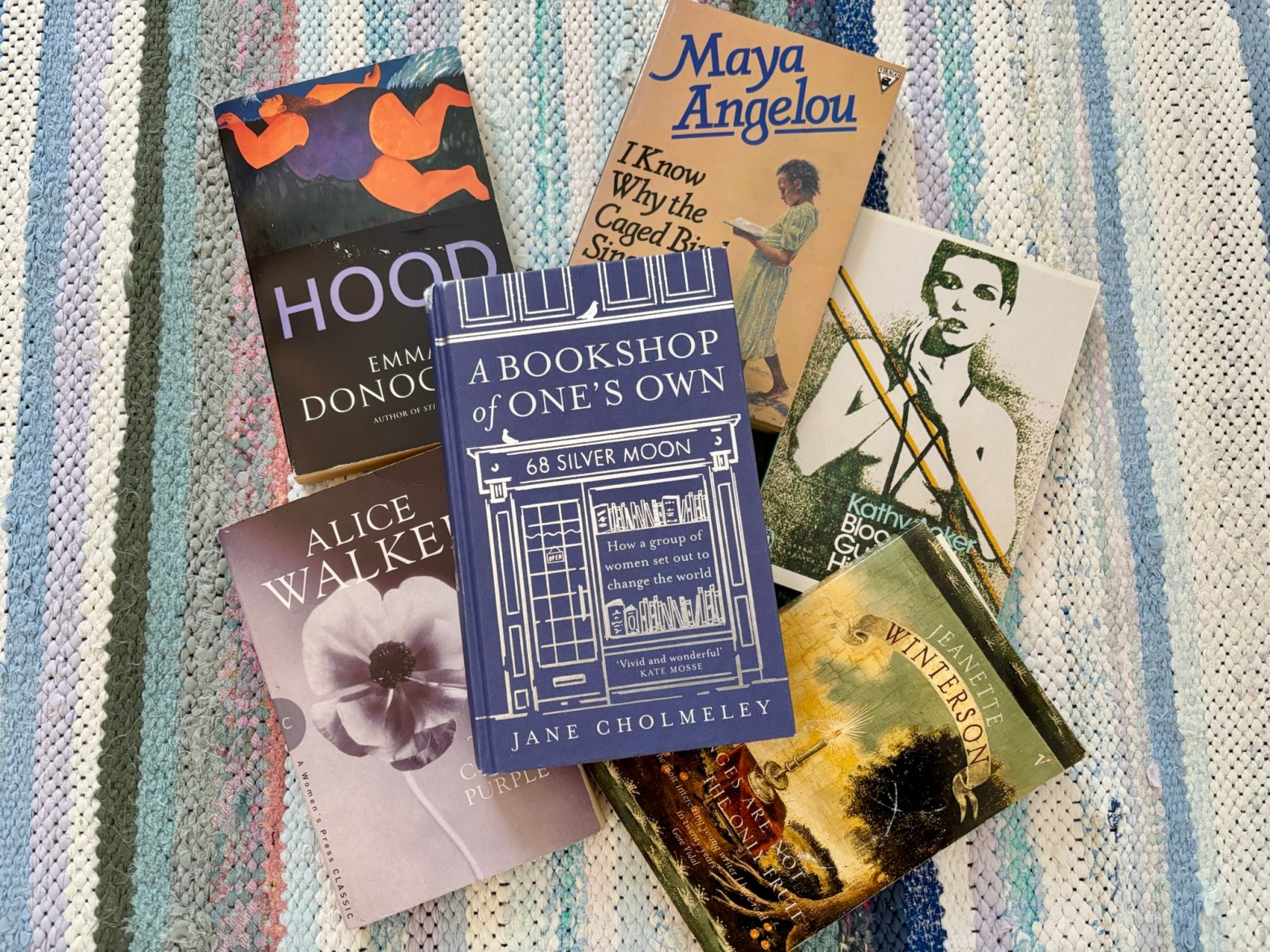
A Bookshop of One’s Own: How a Group of Women Set Out to Change the World (Mudlark 2024)by Jane Cholmeley tells the story of Silver Moon women’s bookshop. I found it in another bookshop of our own, Gay’s the Word, around the corner from where Silver Moon used to be. When I moved to London in 1998, Silver Moon was still there. I had just started my PhD and my first relationship with a woman. I remember walking everywhere; down to the new British Library and through Bloomsbury to Soho and Charing Cross Road. At number 68 was Silver Moon.

So hearing the whole story was thrilling. How difficult it was to start a women’s bookshop in 1984 and to keep it going until 2001. But how much harder it would be to start it now, without a left-wing Greater London Council subsidising your rent and with the online competition. Cholmeley describes all the ups and downs in detail. Raising the funds, which didn’t extend to an accessible lift. Who cleaned the toilets. How they fought back against Section 28. They had book signings and events with everyone from Acker, Atwood and Angelou to Walker, Weldon and Winterson.

For writers, what might be most interesting is the politics and economics of how to get books out there so people can find and buy them. This has changed a lot in forty years, of course, but the passion and personal connections and power relations are as important then, as now. As is the magic of meeting an author whose work you love, who inspires you to write.

new retreat dates – seuraavat retriitit

sign me up for monthly news

Happy new year, happy new writing!

Happy new year and happy new writing! 2025 is full of opportunities to write together and I hope you can join me for as many as possible. We are returning to some of our favourite venues and trying a new format.

Fifth birthday party: write up to teatime

Ridge Writing Retreats turned five last autumn and we celebrated by trying a new format, write up to teatime, with afternoon tea at Teeleidi in Jyväskylä. If you want to try a day like this, just let me know, I will get us writing up to teatime as often as we can get a group together.

Writing in a Winter Wonderland, Kirjailijatalo Jyväskylä, 20&21.2.2025

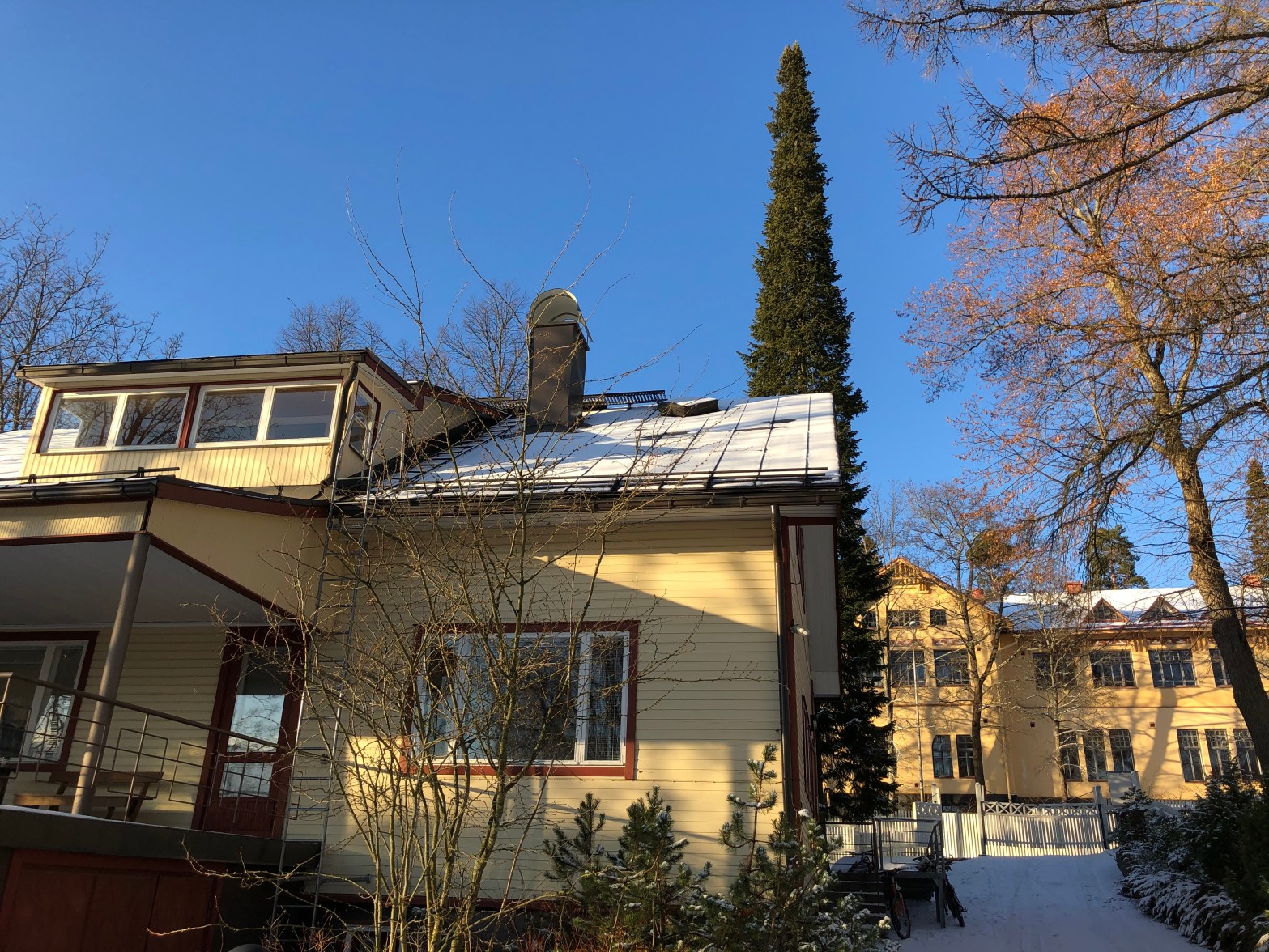
The Writers’ House (Kirjailijatalo) in Jyväskylä was the venue of our first full retreat five years ago. We are going back to our roots in this gorgeous Wivi Lönn building this February. Accommodation is offsite: treat yourself to the best boutique hotel in town or crash at a hostel round the corner. Book here.

Write in the Light, Valo Helsinki 3&4.4.2025

Valo, our most popular venue to date. If you want to stay in Helsinki but get away from your usual writing space and up onto the rooftop spa, this is for you. If you are staying overnight, ask me for an accommodation discount code. Book here.

Spring into Writing, Säynätsalon Kunnantalo, Jyväskylä 8&9.5.2025

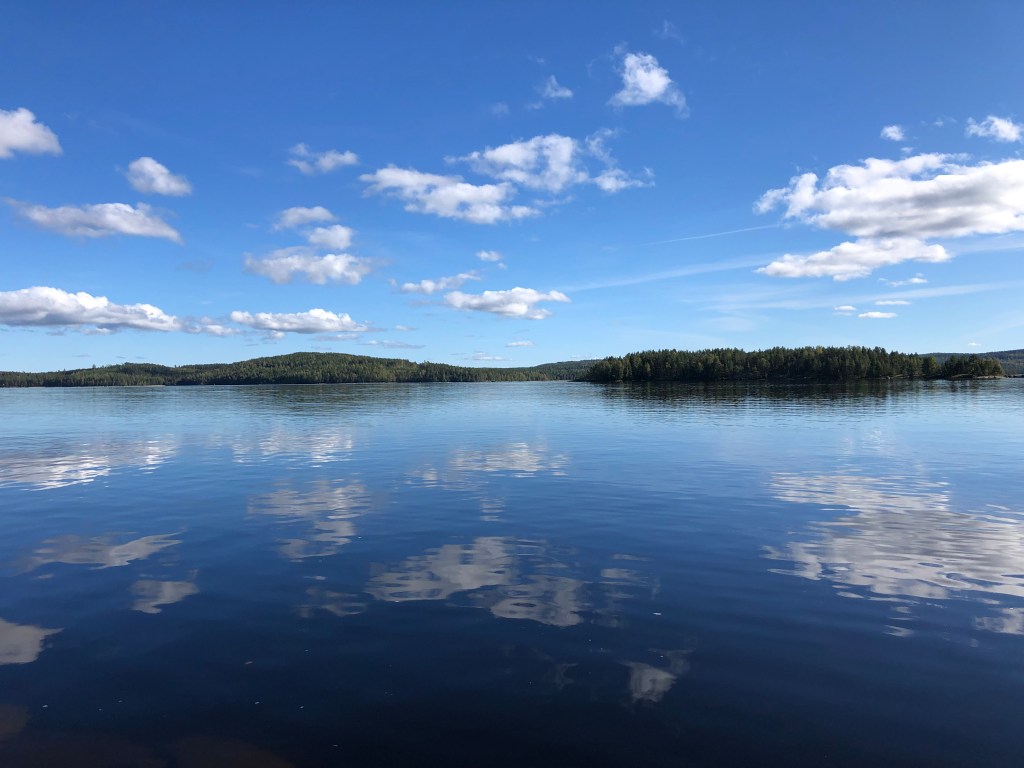
Join me to write on my home island in Säynätsalo Town Hall. The venue is a unique Alvar Aalto building surrounded by Päijanne, Finland’s second biggest lake. Book here.

Write into Autumn, Unity Tampere 25&26.9.2025

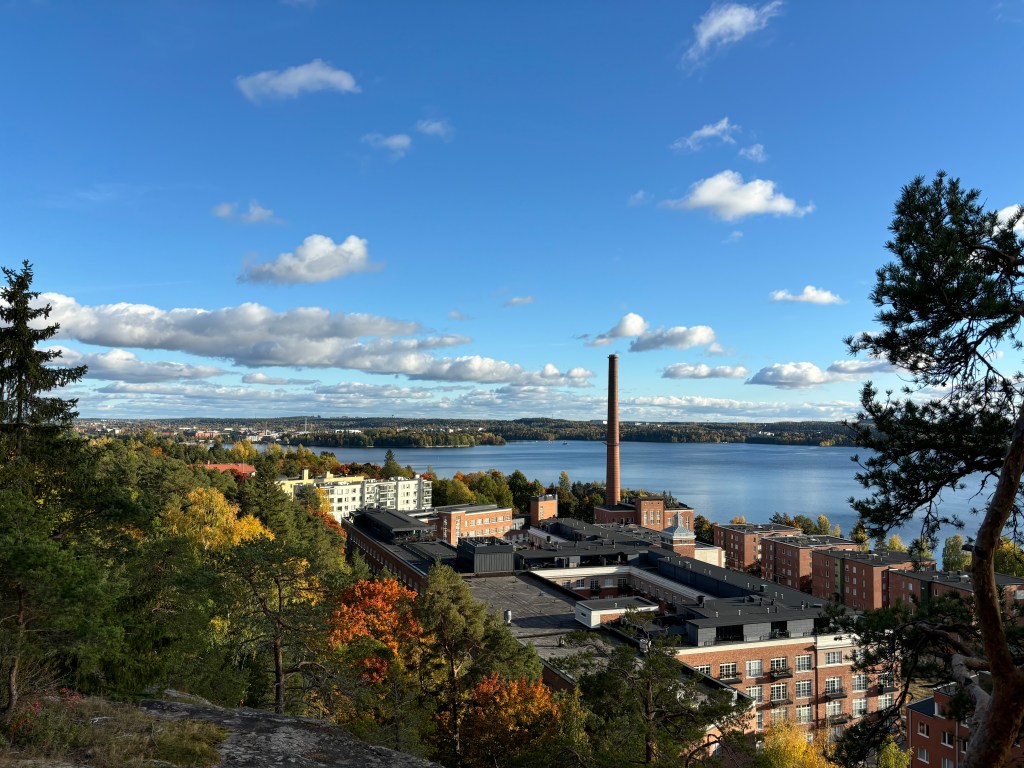
Unity in Pyynikki is gorgeous in the autumn colours. We have a beautiful light-filled writing room, accommodation, restaurant and sauna overlooking the lake. If you are staying overnight, ask me for an accommodation discount code. If you aren’t, you can still stay after writing to use the sauna with us for free. Book here.

Write up to Christmas, Valo Helsinki, 4&5.12.2025

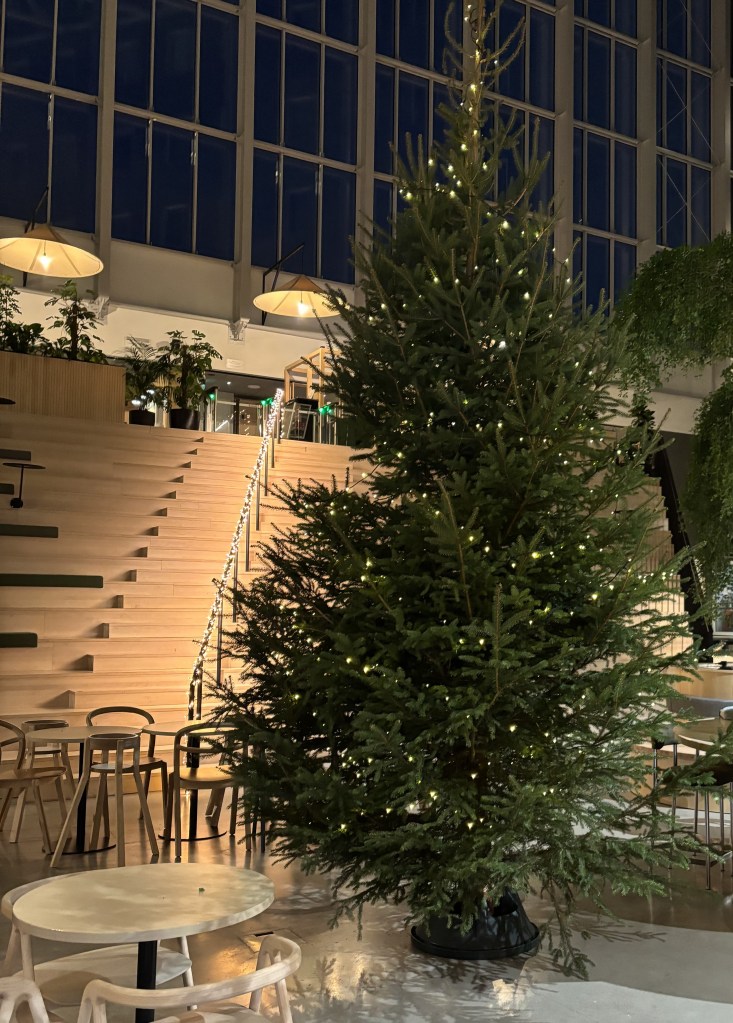
Join us back at Valo to get your end-of-year writing done just before the Independence Day weekend. This has become a pre-Christmas tradition and they have the tree up for us! If you are staying overnight, ask me for an accommodation discount code. Book here.

Scholarships

The pricing of retreats reflects the different costs of different venues; some scholarships are available so ask me before you book on Eventbrite.

Tohtoriverkoston retriitit verkossa

Seuraavat päivämäärät vahvistetaan uuden vuoden puolella. Nämä kirjoitusretriitit ovat ilmaisia Tohtoriverkoston jäsenille. Tulee kaksi päivää verkkossa helmi- ja maaliskuussa, yksi live-retriitti huhtikuussa, ja samaan verraan taas syksyllä. Tervetuloa!

Write on Wednesdays restarts on 8 January, too. We will be doing the creative writing for researchers exercises, if you want, and working on our own projects, for an hour online on Wednesday mornings, with time to check in and chat on Zoom before and after writing.

Retreats are in English and Finnish (except the Tohtoriverkosto ones, in Finnish only), but you can write in any language. If you can’t make these, but want to know about future dates, join my mailing list. If you want a retreat just for your own group, offline or online, get in touch.

sign me up for monthly news

Creative writing for researchers

This is a lovely little book for academic writers who want to dip their toes into creative nonfiction but aren’t sure where to start. In Finnish, it provides a great overview of what’s been happening in the field, from creative research methods to social writing. Best of all, the three authors keep their theory and methodology brief and encourage you to apply it right away in your writing practice.

The authors all teach writing at university level. They wrote this book for their own humanities and social science students. Dr Emilia Karjula published her debut novel this year. Dr Jaana Kouri researches in religious studies and runs creative writing workshops. Dr Tiina Mahlamäki teaches history of religions and academic writing.

Together, they cover the basics undergraduates need, like writing a research diary or taking fieldwork notes. But the exercises take you much further. Any researcher could benefit from writing a letter to their ideal reader, or their own writer’s creed. As the title suggests, the more creative approaches are the most interesting. What if you worked out your ideas in a completely different genre, like a ghost story? How can you use rhythm, rhyme and your five senses to bring out what you really want to say?

If you write in Finnish, you might well have a copy already. If not, you can get Luovaa kirjoittamista tutkijoille from Vastapaino. It could be just the Christmas gift for the writer in your life!

Once you’ve got your hands on the book, and even read it yourself, you might need company. Or you might be interested but can’t read it in Finnish. Myself I know I will put off putting all those creative ideas into practice. So in the new year, I’m planning to do the exercises with the Finnish PhD network (Tohtoriverkosto, in Finnish) and multilingually with my social writing group. If you’re interested in joining us, drop me a line.

new retreat dates – seuraavat retriitit

The Wordhord

The Wordhord is indeed a treasure trove of old English words, written with deep affection and expertise by Hana Videen.

If you speak a Scandinavian or Germanic language, you will be delighted to meet many older cousins of English words here. For instance, I knew that a dead body was a Leiche in German. But I hadn’t made the connection to lych and thus the lychgate to the churchyard, where the coffin rested before coming in. Or that an acorn is an āc’s, or oak’s, seed, or corn. The book is crammed with aha moments like that.

As Videen says herself, she has not so much written a primer as a family album: “Old English words are familiar but also strange, like seeing pictures of your parents as children.” Or indeed, your nth-great grandparents. You might have heard of the great vowel shift, but perhaps not of the letter swap by which hwēol became whēl (wheel). Or the wine-whine merger, by which those hyphenated words became homophones in many Englishes (but not in Scotland or the southeast US).

A delightful aspect of the book is how it brings you closer to the people behind the words. You would know that people wrote with feathers. But had you thought that

left-handed people would prefer a feather from a bird’s right wing, because it’s slanted the other way? You might know that leech is a word for doctor, but not what kind of remedies people used to treat illnesses – with much more than bloodsuckers.

Each chapter ends with a list of words introduced in it, and their meanings, like this:

They say you need to use a word six times to learn it. So the next thing would be to start using these in your writing.

When I turned the final page, I was braced to feel bereft, or at least catapulted forward a millennium and more. But all was not lost, as I now have the app on my phone and can get an old English word every day. And Santa knows that I covet the Deorhord: An Old English Bestiary.

new retreat dates – seuraavat retriitit

Starting a social writing group?

Are you based in Finland and want to set up or improve your own social writing group? Do you want to meet others who help writers put writing first, together?

Your group could be a regular hour a week on Zoom, or a one-off writing retreat in person.

You might invite people on your corridor, or for anyone who wants to join you in a local library or café.

You might travel miles, hire a venue, plan catering, and offer yoga or workshops as part of the package, for a few days or a few times a year.

You might be in the final phase of your thesis or novel and need some other writers to work with you for a month, every single weekday.

You might be writing your article in 12 weeks at home and glad of the company.

Your boss or supervisor might have told you to do it at work for your colleagues or students.

Whatever you choose, it’s your social writing group.

But do you have any training?

You might have read or written a lot about social writing in English or yhteisöllinen kirjiottaminen in Finnish.

You might have done Rowena Murray’s facilitator course, or you’d like to find out about it.

And do you know any other facilitators?

You might be the only person doing this in your department or institution or town. But in Finland, several of us are running social writing groups already. We are connected to the WRAP Network internationally. We just haven’t had the chance to meet in person yet.

Would you like to join us?

If you are facilitating a social writing group, or thinking about starting one, join us on Tuesday 3 December in Helsinki. This is an informal opportunity to meet, eat together, and share best practice in Finland, just before our next writing retreat. If you can’t make that date, but would like to meet up another time, let me know. More and more people are asking me about facilitating their own social writing groups. So I hope this will become a regular thing. So for ourselves and for others, we can make more time, space, and community to write. Sign up to meet up, here.

new retreat dates – seuraavat retriitit

English in the Nordic Countries

Would you enter an establishment offering fifty shades of skrei?*

If you would, is that still English?

Who decides who gets a piece of the English (fish?) pie? Who is English for? “Native” speakers, scholars, professionals, politicians? Or children, teenagers and gamers?

It was an absolute delight to discuss all these questions and more at English as a Lingua Nordica last month in Turku/Åbo. That’s where I got my signed copy of English in the Nordic Countries from Elizabeth Peterson, who gave a keynote about her book. I’d already read it as an open access PDF, but some books are worth having on paper, because you might lend them or refer to them again. This is one.

As Lønsmann says in chapter eight, the real question is not about the amount of English, but how it is used, and with what consequences.

The authors take time to define what they mean by Nordic. They trace the shared roots and language contact between English and its Nordic cousins, from the Vikings and the Danish kings of England. In one volume, it’s not possible to deal with the whole tangle of tongues in the neighbourhood, from Faeroese to Icelandic to Saami languages to Kven. But they’re named, and linked, and that’s a start. The first part is great on critical perspectives, like Johann Strang’s on English in the Nordic language system. The second part, with the case studies, is great fun. I particularly enjoyed Pietikäinen and Gühr’s chapter on the role of English in Nordic multilingual families like mine.

What struck me most from our discussion of the book was that for many people, the idea of English as a Nordic language is still challenging. The threat English presents to Nordic languages in some domains, particularly academia, is real, I think. But the opportunity it presents to increase understanding and communication is also real. It’s a classic move to say that there’s a third way, seeing English as one linguistic resource of many. But what I particularly liked about this book was how it connected the social to the linguistic. If there is a Nordic model of social equity, can that extend to anticolonialism and generosity with language? Is it possible to use English in the Nordic countries as one of a repertoire of many languages, to make as many people as possible flourish and feel at home?

There are lots of issues to debate here. For two perspectives, see two recent government reports in Finnish with English and Swedish summaries: English alongside Finnish national languages: towards flexible multilingualism (2023), and Finnish as the language of inclusion: report on the state of the Finnish language in Finland in the mid-2020s (2024). If you write, translate, edit or otherwise work with English, these reports and this book raise important questions for you to think about. How do you use English, and with what consequences?

* skrei is Barents sea cod. Read Hiss’s chapter in the book to find out more…

new retreat dates – seuraavat retriitit

Space crone writing

Le Guin was writing before I was born and I’ll be reading her long after she died. The first Earthsea book came into the world seven years before I did, and I loved them. Like her, it took me a little while to notice that the heroes were men. To notice the women were on the margins of that earthair (maailma = world in Finnish, maa = earth, ilma = air). After Steering the Craft and Words are my Matter, I read her Left Hand of Darkness a lot later. The joy that the king was pregnant in that story was marred by the same old pronoun. Le Guin wrote later about how her thinking on pronouns changed.

Space Crone is a selection of essays and a few shorter fiction pieces on exactly that: le Guin’s developing views on gender. She ranges back to Oliphant, Alcott, and Woolf, and forward to possible future worlds. If you’re familiar with le Guin’s work, there will be old friends in here. Indeed it might be better to read those pieces in their original collections.

But I was drawn into this collection, for Silver Press, by the Crone. Now I’m dipping into the beginning of menopause, I was glad to read how le Guin got through it. I look to in her now for how to turn into a crone, or ways of being an older woman. The one worth sending into a spaceship to both communicate what she knows of life, and to understand what lives she encounters.

One of my favourite essays here was on women writing, including the both/and, not either/or, of books and babies. A woman writing around and with her family uses every snippet of writing time to the full — this much I knew from watching other women writing. A woman close to life, helping lives grow and unfold, may have more of a story to tell. Men writing and speaking in the father tongue of politics and public reason may well miss this life source. Le Guin herself admits here that her thinking on the borders between genders, or lack thereof, may still change. But I loved her love of Jo March writing. I grew up with the same illustrations of her and her sisters by Frank T. Merrill.

When writing doesn’t come, le Guin says, she tries to write something else, to write about how the writing isn’t working. She published one piece like this, here. When a fiction character doesn’t enter her imagination, she can’t force it, but can put words one in front of the other in an essay. Or — better — try not to fill the empty space up, with new words, but — like Ogion? — let in the silence. Because out of the silence, the story can grow.

Writing for Research and Academic Practice with the WRAP Network

What do you want from a place to write?

I want quiet, a good desk, an armchair to read in, lots of natural light, space to move around, somewhere nice and green to go for a walk and listen to the birds.

And a comfortable bed and lots of lovely veggie food to eat in the breaks.

I can have all that at home, but the food doesn’t just appear and dishes disappear, I have to make it happen.

I can write with others at lots of fantastic venues (we’re all sorted for the rest of the year, join us!) near home, but sometimes I need other faciliators to share ideas about how we can better put writing first, together.

I can research and practice writing with others — we wrote a book about it — but to get our creative juices flowing, we need to meet. Writing your own project with others who have their own work to get written in the same social space might be new to you. Or you might wish you could do it better, or that you could train others to do it. Then you might want to join us in the WRAP network.

WRAP had our first strategy meeting in June at Hof Evershorst, to discuss research and practice of structured social writing. The network is international — we facilitate social writing groups and retreats all over Europe and beyond.

Hof Evershorst was a stud farm, it’s been in the family since the sixteenth century and it is now a retreat venue with amazing gourmet veggie catering. The rooms are huge! There’s bedrooms for a dozen, a big writing room, dining room, living room and games/workshop space, and a lovely garden. As you can walk to the airport between the horses in the fields you do hear some planes — and lots of birds! but otherwise it is super quiet. The area is great for walking and biking and it’s quick to get in to Hannover, where we went out to eat one evening, and from there to Hamburg or Berlin.

Desk, chair, food, venue, nature, people, new ideas, time, space, community of practice…

What more do you want from a place to write?

Tell us!

Tune in to the WRAP network here.

Founding members of the WRAP Network at our strategy meeting, June 2024

new retreat dates – seuraavat retriitit

Writing vengeance

I will write to avenge my people, writes Ernaux.

Revenge, writes Szymborska.

Why do these Nobelists write vengeance?

Sixty years ago, Ernaux wrote a sentence in her diary, that was the springboard for her Nobel lecture:

‘I will write to avenge my people, j’écrirai pour venger ma race’. It echoed Rimbaud’s cry: ‘I am of an inferior race for all eternity.’ I was twenty-two, studying literature in a provincial faculty with the daughters and sons of the local bourgeoisie, for the most part. I proudly and naively believed that writing books, becoming a writer, as the last in a line of landless labourers, factory workers and shopkeepers, people despised for their manners, their accent, their lack of education, would be enough to redress the social injustice linked to social class at birth…And so, without being aware of it at the time, that first book, published in 1974, mapped out the realm in which I would situate my writing, a realm both social and feminist. Avenging my people and avenging my sex would, from that time on, be one and the same thing.

Nobel lecture 2022 by Annie Ernaux, translated by Alison L. Strayer

Writing in her diary as a student, Ernaux was clear who she wanted to avenge, and that writing was the way to do it. Decades later, she thought she’d been naïve – but when she had a worldwide audience, she started with the same thing. Vengeance.

Sixty years ago, Szymborska wrote a poem that ended like this:

The joy of writing.
The power of preserving.
Revenge of a mortal hand.

The Joy of Writing by Wisława Szymborska, From No End of Fun (1967)
Translated by Stanisław Barańczak & Clare Cavanagh (1996)

Whenever I think about writing, I think of this poem, The Joy of Writing, or Radość pisania in Polish. I think of joy with power, and revenge. Of the joy in discovering Szymborska as a student, seeing how simple the words were and how complex the meaning was. And how amazing the translators were – a pair of poets writing another poet from one language to another. And that a woman like me, yet so different from me, can win the Nobel Prize for Literature. That was in 1996, when we wrote our translations with paper and pencil. Only later in my degree did we go into the library to type up our essays on the computer. I got my first laptop in 1998, to start my PhD. Writing changed. But the joy, power, and revenge have not gone. And I have moved outside the academy walls. Writing on retreats, I am trying to recapture the joy I first felt inside the academy, to preserve it for others in another space. To take revenge, perhaps, on a negative writing culture by creating a positive one.