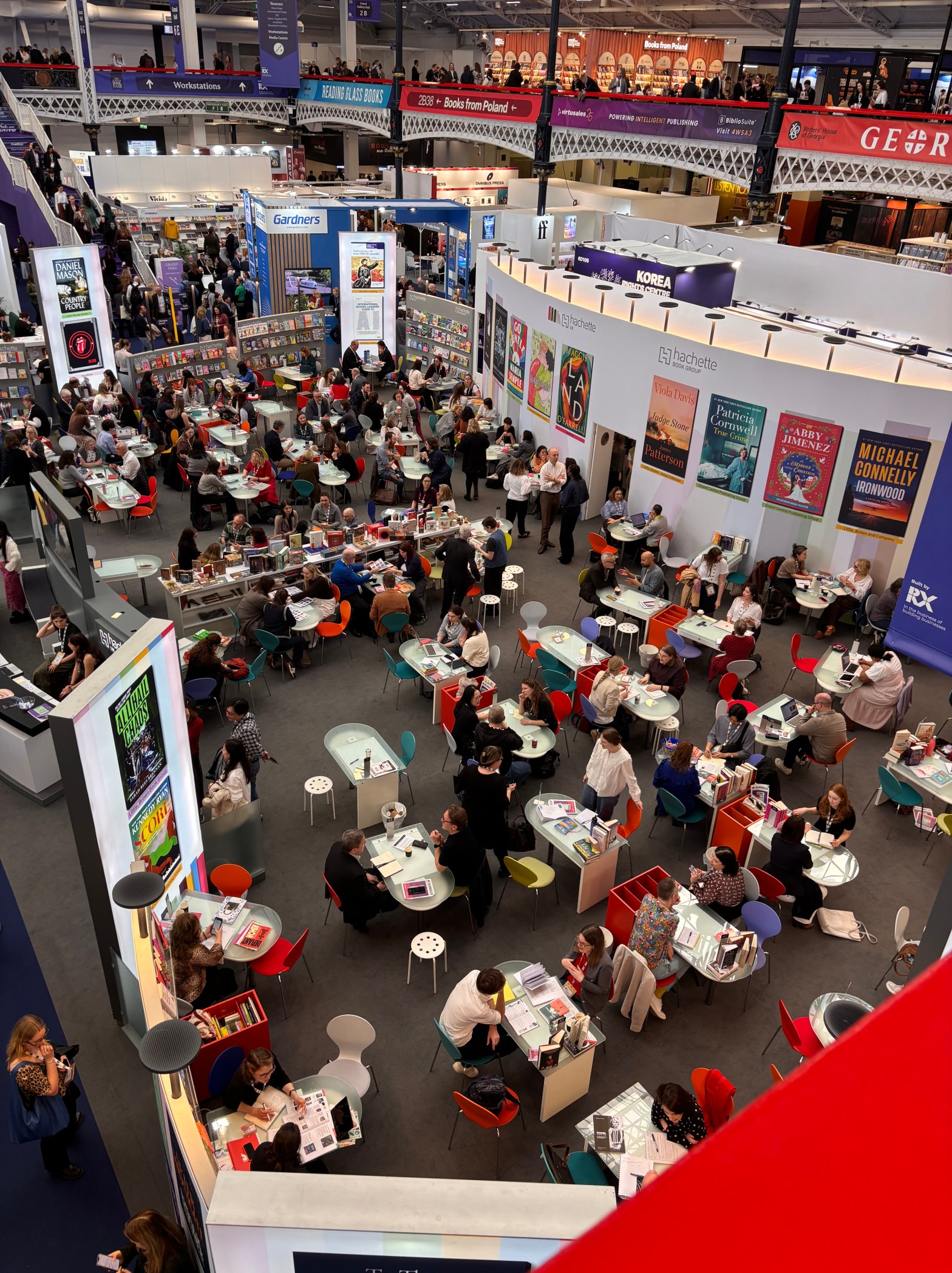
In the mayhem of the London Book Fair, one thing was clear. Human readers want books written by other humans, and they want to read them together. Publishers can now mark their works as Human Authored as part of a Society of Authors initiative. Mock-up books and a mock-up crime scene told generative AI companies, Don’t Steal This Book!
The UK National Year of Reading was a key theme at this LBF. One panel discussed coalitions for the future, libraries and democracy. Marc Lambert from EURead said “reading and writing are two of our greatest inventions, up there with the wheel.” Who needs reminding of this? Politicians’ interest in reading waxes and wanes with Pisa results. But “reading and writing are cultural accomplishments in their own right, irrespective of whether they help you pass exams.” The Scottish Book Trust shows how reading boosts mental health or helps tackle poverty. As Lambert said, critical literacy is crucial for democracy. And reading is a step towards that.
Read like a translator started by citing Ros Schwarz, “translators have to read everything.” Yes they do. And as these four literary translators showed, they can help others read. Jamie Lee Searle runs a Royal Literary Fund community reading group in Winchester. Nariman Yousef is director of the Poetry Translation Centre. Zhui Ning Chang is editor of khōréō magazine for speculative fiction. Nashwa Nasreldin is the UK National Centre for Writing programme manager.
Nasreldin said translation is “active reading, making the text a living thing.” Almost in slow motion, “translation workshops slow that process down.” Yousef shared how “exophonic writing often plays with translation.” Chang said they are “reading to find the golden nugget of a book” that is lovable in this time and place in English. They added, “readers do not always understand the number of decisions before a book is in their hands.”
At community reading session, Searle reads aloud a short story and poem. Then the group chats about them. In an age of lower attention spans, putting phones in bags for 90 minutes creates a shared experience. And as an adult, when was the last time someone read aloud to you? It is immersive art, like cinema, a way to “fight attention span issues by making reading a communal experience.” One week Searle shared three different translations of the same poem. Readers don’t usually see the possible parallel “shadow versions” and word choices, drafts. Making this process more explicit can be creative, fascinating, and build community in surprising ways.
As a person of many book clubs, I love the idea of sitting back, being read to, and experiencing a text together. Paradoxically, in an always-on, often tech-friendly event, I came away with the map to an oasis of calm.
 Ridge Writing Retreats